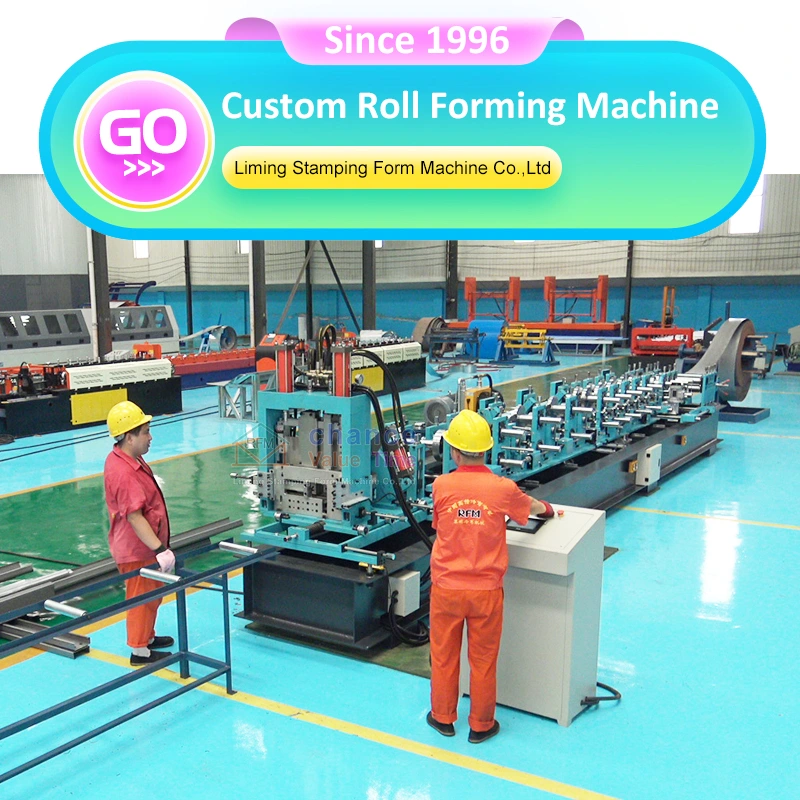
A purlin roll forming machine continuously produces C and Z profiles from coil material. The main benefits of a purlin roll forming machine include higher output, repeatable dimensions, integrated punching, accurate cutting, and flexible order control. The strongest automatic purlin roll forming machine benefits appear when a factory handles recurring projects, multiple lengths, or detailed hole patterns. The practical CZ purlin roll forming machine advantages also expand the range of roof and wall framing specifications.
What Is a Purlin Roll Forming Machine?
How the Production Process Works
A roll forming line feeds flat steel strip through successive paired roller stations. Each station bends the strip incrementally until the machine creates the required cross-section. A configured line can also combine feeding, straightening, punching, cutting, and collection.
Where C and Z Purlins Are Used
C and Z purlins commonly support roof or wall sheeting in industrial, rural, and commercial buildings. C sections often suit single-span arrangements, while lapped Z sections can suit continuous framing systems. A structural engineer must select the profile and load capacity.
How Automatic Purlin Roll Forming Machine Benefits Improve Production
1. Continuous Production Increases Output
A continuous line processes coil material without requiring workers to position every blank. The coordinated sequence can move from feeding to forming and cutting with fewer interruptions.
Punching, cutting, coil changes, and collection can reduce the effective rate below the quoted forming speed. Buyers should therefore compare realistic production cycles instead of relying only on maximum forming speed.
2. Successive Forming Passes Improve Repeatability
Each roller station completes part of the total bend instead of forcing the final shape in one operation. A properly engineered pass sequence can control the web, flange, lip, and profile shape.
Steel strength, thickness, springback, and coil flatness affect final dimensions, so buyers should define the material range.
3. Programmed Cutting Produces Consistent Lengths
A control system can measure moving material and activate the cutter at the programmed position. The system reduces manual marking and supports orders with several finished lengths.
Operators should verify the first piece for length, cross-sectional dimensions, and straightness. This verification allows the production team to correct inaccurate data before completing the batch.
4. Integrated Punching Reduces Secondary Work
A configured punching unit can produce holes or slots before or after forming. The production program can coordinate hole position, length, and quantity.
Integrated punching can reduce separate drilling when the line matches the approved drawing. Complex end details may still require another process.
5. Automation Reduces Repetitive Manual Tasks
Automatic feeding, length control, punching, and cutting reduce repeated measuring and positioning. Trained operators can focus on program selection, line monitoring, and product inspection.
Skilled personnel remain essential because production depends on correct data and quality checks. Automation improves the workflow, but automation does not replace responsible process control.
6. Integrated Processing Shortens the Production Route
Separate machines can create queues between punching, forming, cutting, and drilling. An integrated line can remove compatible transfers and reduce work-in-progress material.
One job can connect the material batch, profile data, length list, hole program, and quantity. This coordinated workflow can make order tracking and production planning easier.
7. Accurate Control Supports Better Material Utilization
Programmed lengths can reduce errors caused by manual measurement. Production planners can also group compatible orders to improve coil use.
Coil ends, setup pieces, punching waste, and rejected products still create scrap. Manufacturers should therefore calculate material yield from actual production records instead of accepting unsupported “zero waste” claims.
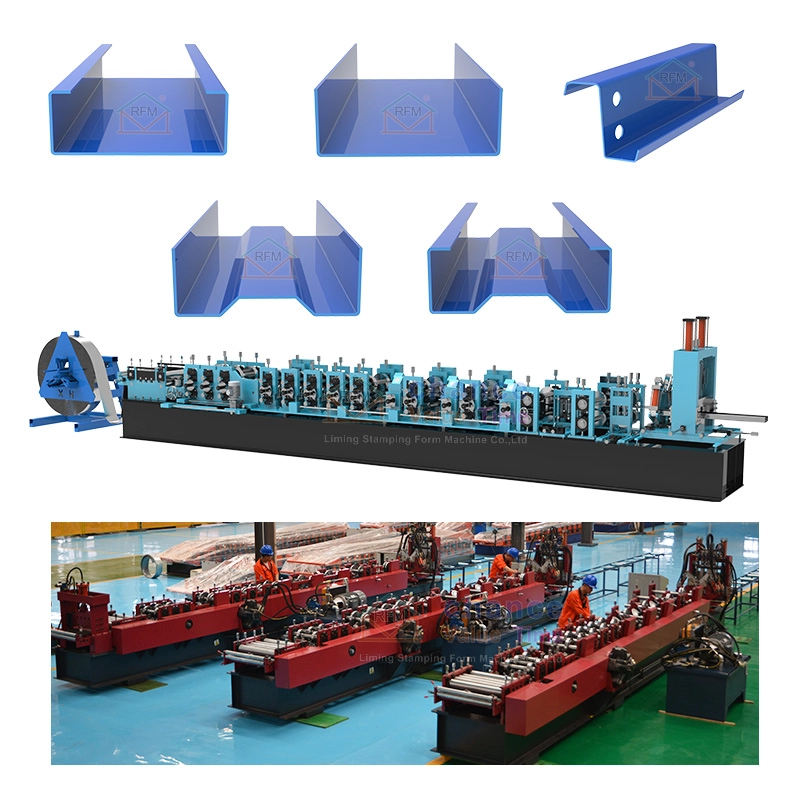
8. CZ Purlin Roll Forming Machine Advantages Expand the Product Range
A properly configured CZ line can produce both profile families within its designed range. This capability supports varied roof, wall, warehouse, and prefabricated-building requirements.
Buyers should request a complete C-to-Z demonstration because manual, assisted, and automatic changeovers require different setup times. A real demonstration can also show which adjustments require operator involvement.
9. Adjustable Dimensions Support Custom Orders
An adjustable line can change web, flange, or lip dimensions within its approved range. A programmable system can also produce different lengths and hole layouts.
Buyers should verify that the cutter and punching tools cover the stated range. Buyers should also confirm the minimum and maximum dimensions for every required profile.
10. Faster Changeovers Improve Scheduling
Stored production data can reduce repeated setup work for recurring products. Automatic positioning helps factories process many sizes in smaller batches.
Managers should measure changeover time between the last acceptable product and the next order’s first acceptable product. This measurement includes adjustment, testing, and quality approval, so it provides a realistic scheduling figure.
11. Consistent Products Can Reduce Rework
Repeatable dimensions, hole positions, and cut lengths can support smoother downstream fit-up. Consistency can reduce corrective drilling, trimming, or sorting.
An inspector should measure consecutive pieces for length, section dimensions, hole centers, twist, bow, and surface condition. Material variability can still cause deviations.
12. Better Production Control Can Strengthen ROI
A suitable line can create value through higher capacity, lower repetitive labor, fewer secondary operations, improved material use, and reduced outsourcing.
Each buyer should calculate ROI with local equipment, tooling, installation, energy, labor, material-loss, financing, and downtime costs. No supplier can provide one reliable payback period for every factory.
Which Factories Gain the Most Value?
Suitable Production Conditions
A purlin roll forming machine usually provides the strongest fit when a factory produces long profiles with repeated cross-sections. The machine can also support custom lengths, varied holes, or mixed C and Z orders.
Industrial buildings, warehouses, agricultural structures, commercial buildings, and prefabricated steel projects often use repeated roof and wall framing members.
Situations That Require Careful Evaluation
A dedicated line may provide less value when volume is low or products have substantially different cross-sections. A flexible batch process may serve irregular work more economically.
The buyer should compare annual demand, order frequency, labor cost, product range, and delivery requirements before selecting the production method.
How Should Buyers Evaluate a Machine?
Define the Product and Material
The buyer should provide drawings with profile dimensions, thickness, length, and hole details. The buyer should also identify the steel grade, coating, coil width, coil weight, and strength range.
These factors influence forming force, tooling design, springback control, and dimensional consistency.
Verify Effective Speed and Automation
The buyer should ask whether the quoted speed includes punching and cutting. The buyer should also confirm whether the line stops for each operation.
An acceptance test should use the intended material, extreme profile sizes, an actual hole pattern, and consecutive pieces.
Avoid Common Purchasing Mistakes
Buyers should avoid four common mistakes:
- Buyers should not compare machines by maximum speed alone.
- Buyers should not assume that every CZ changeover system works identically.
- Buyers should not provide only material thickness without the steel grade.
- Buyers should not accept a quotation without a layout, process sequence, component scope, and acceptance criteria.
FAQ
Can One Machine Produce Both C and Z Purlins?
A compatible CZ interchangeable line can produce both profiles within its approved range. A dedicated C-only or Z-only line does not automatically offer the same capability.
Can the Machine Punch Holes Automatically?
A line with a configured punching unit can produce programmed holes or slots. The buyer must define the hole shape, location, quantity, and cycle.
How Does the Machine Reduce Production Costs?
The machine can reduce repetitive labor, handling, secondary processing, incorrect lengths, and outsourced production. The actual saving depends on the factory’s volume and workflow.
What Information Does a Supplier Need for a Quotation?
A supplier needs profile drawings, material specifications, thickness, required speed, finished lengths, punching layouts, voltage, and expected output.
Discuss Your Purlin Production Requirements with Hebei Liming
Hebei Liming has nearly three decades of roll forming machinery experience and offers customized automatic adjustable CZ and C-profile equipment. Buyers can send drawings, material thicknesses, speed requirements, electrical standards, finished lengths, and punching layouts to the engineering team for a project-specific configuration and quotation through the official contact page.