When it comes to investing in a double layer roof panel roll forming machine, or selecting an automatic double layer roof sheet forming machine, the stakes are high: speed, precision, flexibility and long‑term serviceability all matter.
This article will explore the must‑have feature set for a double layer roofing sheet roll forming machine, guide you in choosing the right double layer roofing sheet roll forming machine for your needs, and explain why sourcing from a trusted double layer roofing machine from China manufacturer can yield cost and performance benefits.

1. What does “double layer” mean and why it matters
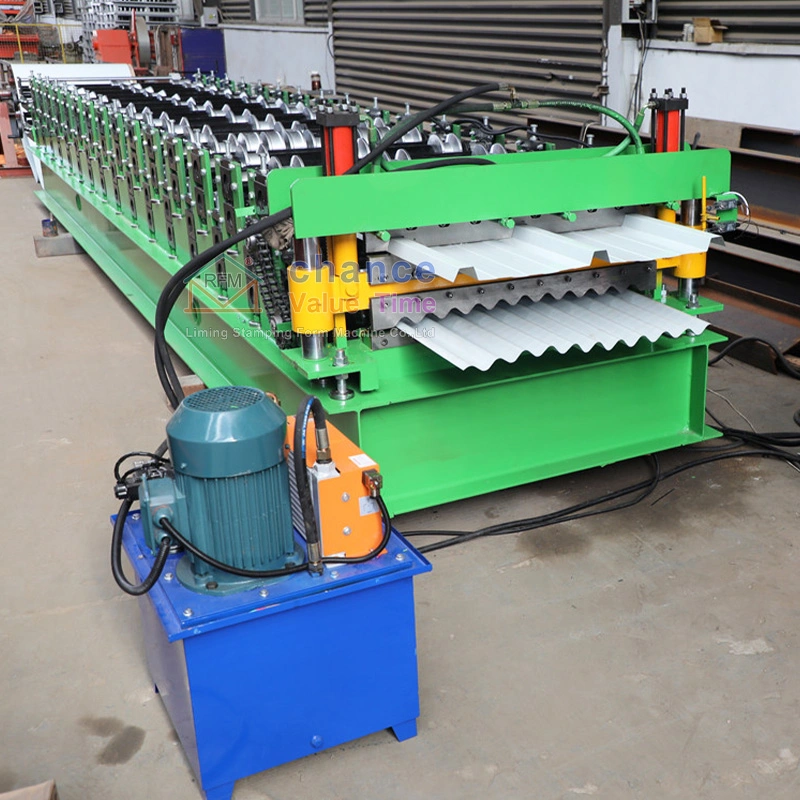
In roll forming terms, a double layer roof panel roll forming machine refers to equipment capable of producing two different sheet profiles within one compact frame. However, it cannot run both layers simultaneously. The operator must complete one profile before switching to the other. Through the electrical control interface, users can conveniently select either the upper or lower layer for production.
Compared with installing two separate single-layer machines, a double layer model can save up to 50% of floor space while offering flexible production options.
2. Structural and mechanical fundamentals
a) Frame & base structure
The base frame should be built from heavy welded steel (for example H‑section or box section), stress‑relieved and machined flat. This ensures long term alignment stability under high production hours. Some manufacturers cite frames built from 18mm thick steel plate and large‑diameter shafts (e.g., 75mm) for double layer machines.
b) Decoiler, leveling and feeding system
A reliable machine begins with material preparation. For a double layer roofing sheet roll forming machine manufacturer system this means:
A hydraulic or servo‑driven decoiler capable of supporting large coils
Uncoiling, leveling rollers, straightener and guide tables ensure flat, aligned feeding
For dual‑layer or double‑profile systems, the feed must be flexible to switch quickly between profiles or layers
c) Roll forming stations, double‑layer configuration
For a true double layer solution you’ll often see two sets of roller stations (upper/lower) or parallel forming lines within one machine. The machine must allow switching between profiles quickly (often via PLC commands) or run both layers concurrently. For example: “two independent production lines inside” was described in an advanced machine spec.
d) Cutting and finishing
Since choosing the right double layer roofing sheet roll forming machine means attention to finishing, the cut‑off station must match production speed:
Hydraulic or pneumatic shear or flying‑cut shear for zero burrs
Synchronized with the PLC so that cut length aligns with each layer/profile
Optional stacking or auto‑stacking to expedite downstream handling
e) Control system & automation
A modern system uses a PLC‑driven control panel, HMI touchscreen, encoder feedback, variable‑frequency drives (VFDs). Key features:
Batch programming for lengths, quantities, speeds
Quick profile changeover (particularly important for double layer machines)
Alarms, diagnostics and automatic stop on faults
Servo drives for precision feed and cut
f) Material and profile compatibility
A metal steel cable tray roll forming machine statement is analogous, but for roofing sheet forming machines the important parameters are:
Coil thickness range (typically 0.3mm to 1.5mm or more)
Coil width (e.g., 1000–1250mm)
Yield strength of the raw material (e.g., 235MPa steel)
Profile versatility: ability to form trapezoidal, corrugated, tile‑look profiles
Specifications for double layer machines often list coil width 1200mm, thickness 0.3–0.8mm, speed 10–15m/min in one cited example.
g) Speed, capacity and production efficiency
One of the compelling reasons to invest is increased throughput. For example, a machine article cited speeds up to 60 m/min for high‑end double layer machines.
When evaluating machines ask: What is the typical output (m/min), what profiles can it switch between, what is the setup time between profiles?
3. Key features that differentiate best‑in‑class machines
When selecting the best cable roof panel roll forming machine (or best double layer roof panel machine) you should compare on these advanced attributes:
Feature 1: Profile switching / dual‑profile capability
For many applications, ability to switch between two panel types (eg roof and wall) or alternate profiles is crucial. A machine that allows switching without changing tooling saves hours of downtime.
Feature 2: High‑accuracy tooling & rollers
Precision roller design (hardened steel, chrome plated), correctly aligned shafts and minimal deflection maintain tight tolerances. Many machines claim tolerances within ±2mm or less.
Feature 3: Robust cutting & stacking mechanism
Shearing needs to be clean and durable. Auto‑stacking reduces manual labour, speeds line turnaround and improves ergonomics.
Feature 4: Automation & user‑friendly interface
A PLC and HMI with preset recipes for different panel types, touch‑screen operation, automatic profile change, feed speed adjustment is essential.
Feature 5: Material flexibility
A machine capable of handling different raw materials (galvanized steel, aluminum, color‑coated steel) and coil thicknesses gives an edge when markets or material supply change.
Feature 6: Space & cost‑efficiency (especially for double layer machines)
One of the benefits of a double layer system is sharing resources (motors, drives, frame) to reduce footprint and cost. For some factories, a double layer roll forming machine from China offers highly competitive price while delivering high-end features.
Feature 7: Customizability, after‑sales & manufacturer credibility
Opt for a machine from a double layer roofing sheet roll forming machine manufacturer that offers custom tooling, spare parts, global support and training.
4. How to choose the right machine for your manufacturing line
When you’re in the process of choosing the right double layer roofing sheet roll forming machine, follow this structured approach:
Define your production requirements
What profiles will you produce? (roof, wall, double layer?)
Annual throughput target (m², tonnes)
Raw material types & coil sizes
Production shifts and downtime allowance
Evaluate machine specifications
Can the machine handle your required coil width and thickness?
What is its line speed under your profile?
What is the setup/change‑over time between profiles or layers?
Check tolerance data, cutting finish quality, stacking method.
Ask about dual‑profile/double layer capability
If your business scenario benefits from two parallel profiles or dual layer production, confirm the machine supports it, and what the adjustment/changeover process is.Compare automation level and ease of use
A modern automatic double layer roof sheet forming machine should offer PLC controls, recipe memory, servo feeds, automatic stopping and safety features. Operators should be able to switch profiles easily without extensive manual resetting.Consider supplier/manufacturer credentials
Look for a trusted double layer roofing machine from China (or elsewhere) manufacturer with documented case‑studies, good after‑sales service, spare parts availability and global references. Ask for factory visits or third‑party audits.Check total cost of ownership (TCO) not just purchase price
A competitive price steel double layer roofing sheet roll forming machine might seem attractive, but check maintenance costs, downtime risk, tooling costs, spare part availability and energy consumption. A better machine might pay back quickly in increased output and reduced scrap.
5. Why manufacturers increasingly choose machines from China
Many production lines are sourcing dual‑layer machine systems from China due to:
Cost‑effective manufacturing (skilled workmanship, efficient supply chain)
Improved feature sets (PLC, servo, dual‑layer design) at lower price points
Availability of tooling and spare parts locally
6. Case summary: What a specification might look like
Here is a sample spec for a strong machine built to handle double layer tasks:
Coil width: 1250mm
Coil thickness: 0.4–0.8 mm
Two forming lines (upper + lower) in one frame
Speed (production): 15‑20 m/min
Roller stations: 18‑20 rows per layer
Cutting: Hydraulic shear, auto stacking
Control: PLC with touch‑screen, batch program
Setup change‑over: <30 minutes between profiles
Material: Galvanized steel / aluminum / color‑coated
Footprint saving: ~50% when compared to two separate lines
Frequently Asked Questions (FAQ)
Q1: What is the difference between a standard roof panel roll forming machine and a double layer roof panel roll forming machine?
A: A standard machine produces one profile at a time. A double layer roof panel roll forming machine is engineered to handle two profiles or two layers within one machine—either simultaneously or via rapid change‑over—yielding greater flexibility and efficiency.
Q2: Can an automatic double layer roof sheet forming machine handle different materials like aluminum and galvanized steel?
A: Yes—provided the machine is specified for the required coil width, thickness range, and yield strength of the materials. Many machines allow for color‑coated steel, aluminum and other alloys with suitable tooling and adjustment.
Q3: What is a competitive price steel double layer roofing sheet roll forming machine?
A: While “competitive price” varies by market and configuration, it means a machine offering robust features (dual layer capability, automation, quality tooling) at a cost lower than combining two separate single‑layer machines, without compromising durability and service. Always evaluate TCO, not just upfront cost.
Ready to Elevate Your Roofing Production? Contact Hebei Liming Today!
With a robust frame, precision rollers, and an intelligent control system, Hebei Liming‘s innovative double layer roof panel roll forming machine guarantees consistent and accurate forming of various roofing profiles. Hebei Liming’s innovative double layer roof panel roll forming machine is suitable for a wide range of materials, including galvanized steel, aluminum, and coated metal sheets, allowing for versatility in production.
Manufacturers can produce roofing panels in different shapes and sizes, including corrugated, trapezoidal, and standing seam profiles, catering to diverse market needs.
Reach out now for a free consultation and custom quote—your next breakthrough in roofing fabrication starts here!