In large-scale metal profile making, extrusion and roll forming stand as two trusted shaping ways, each with clear strong points. While extrusion fits special tricky shapes, roll forming leads for lengthy, steady sections at big numbers—offering top speed, low cost, and steady quality. This guide looks closely at both methods, showing why roll forming comes out as the better pick for most building, design, and factory uses. Makers wanting highest output, little scrap, and quick returns now choose improved roll forming tools.

What Are the Basics of Roll Forming?
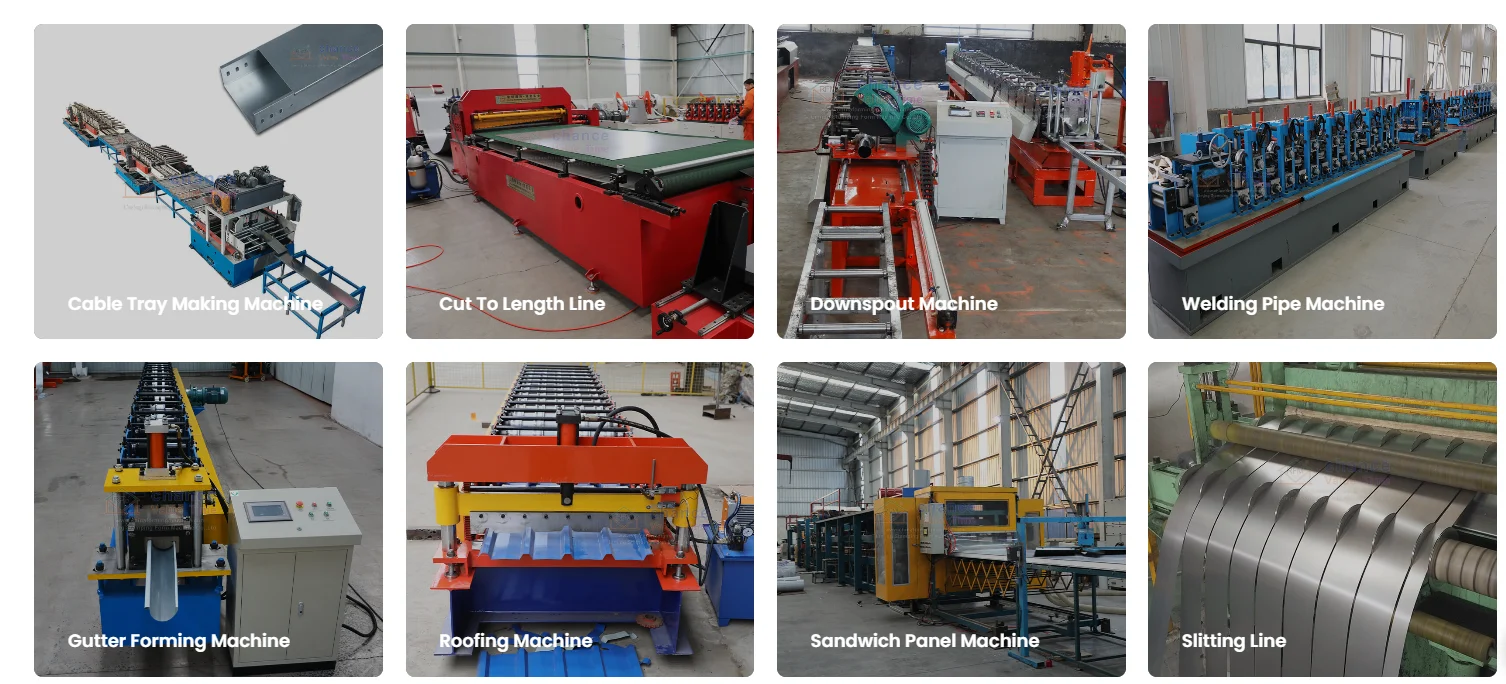
Roll forming turns flat metal rolls into ready profiles through steady, step-by-step bending. A roll feeds into many exact roll stands—usually 10 to 24 stations—where each pair adds small bends. The outcome: endless lengths of even cross-sections with limits as close as ±0.3 mm. New lines add in-line punching, welding, and cut-to-length tasks. They allow full part making in one go.
This cold-shaping way shines in fast making. Line speeds hit 120 meters per minute. It handles hard yet steady profiles like C-channels, sigma sections, and decking systems. These suit building, storage, and transport fields well.
How Does the Roll Form Process Work?
The process starts with coil payoff. Then comes leveling to clear leftover stress. Material next enters the forming part: each roll stand cuts bend radius bit by bit. This stops cracking or twisting. Sensors check thickness, width, and line-up right away. After forming, flying cutoffs give exact lengths. The line keeps running.
Improved systems use quick-swap cassettes. They cut profile switch time from days to under 30 minutes. This bendiness, plus non-stop work, makes roll forming the core of current profile making.
What Materials Are Best for Roll Forming?
Roll forming takes a wide material range:
High-Strength Steel: HSLA grades up to 800 MPa for light structural frames.
Pre-Painted/Galvanized Coils: Rust-proof finishes added before forming. This skips after-coating.
Aluminum: 5000/6000 series for design cladding and solar frames.
Stainless Steel: 304/316 for clean food processing lines.
Copper: Exact busbars with strict limits.
Thickness goes from 0.3 mm to 8 mm (with heavy-gauge lines). This beats usual extrusion caps.
What Are the Advantages and Disadvantages of Roll Forming?
Advantages:
Top Speed: 50–120 m/min steady output—10x quicker than extrusion for straight profiles.
Cost Edge: Tooling spreads over millions of meters; per-part cost falls below $0.10 for big amounts.
No Length Caps: Make kilometer-long sections without joins.
Better Strength: Cold work raises yield strength 20–50%.
Little Waste: Scrap under 1%, versus 10–20% billet loss in extrusion.
In-Line Links: Punching, welding, and packing in one line.
Disadvantages (mostly fixed by new design):
Starting Tooling: $15,000–$80,000 per profile—paid back in 3–6 months at scale.
Steady Cross-Section: Best for even profiles (changing sections need mixed lines).
Sharp Corners: Inner radii ≥ material thickness (fine for 95% of structural jobs).
How Does Extrusion Differ from Roll Forming?
What Is the Extrusion Process?
Extrusion pushes a warmed billet through a die. It makes fixed cross-sections up to 15 meters long. It can do hollow shapes. But it has slow cycles (1–5 m/min), high power use, and much material loss from billet ends and flash.
How Does Extrusion Work for Aluminum and Other Metals?
Aluminum leads because of lower flow stress. Yet steel extrusion needs 1,200°C heat and special presses. Each billet gives one length; growing needs more presses. Surface flaws like die lines often want extra polishing.
Comparing the Metal Forming Capabilities
| Metric | Roll Forming Advantage | Extrusion Limitation |
|---|---|---|
| Production Speed | 120 m/min continuous | 1–5 m/min per press |
| Length Capability | Unlimited | 15 m max per billet |
| Material Waste | <1% | 10–20% (butt + flash) |
| Energy Use | Cold process | High-heat billet preheating |
| Tooling Changeover | 30 min cassettes | 4–8 hours die swap |
| Volume Economics | 100,000+ meters | 1,000–50,000 kg |
Roll forming wins clearly for long-run, even profiles. It gives 90% lower per-meter costs at scale.
Why Choose Roll Forming Over Extrusion?
What Are the Key Differences?
Roll forming bends coils step by step; extrusion forces billets through dies. The first grows without end in length and speed. But extrusion stays batch-bound with high setup costs.
When Is Roll Forming More Beneficial?
High-Volume Production: 500,000+ meters yearly—roll forming rules.
Long Linear Profiles: Roofing, racking, guardrails—no length limits.
Pre-Finished Materials: Use painted/galvanized coils for no after-treatment.
Quick Design Changes: Cassette systems allow weekly profile shifts.
Structural Applications: Cold-hardened steel beats extruded aluminum in load jobs.
What Are the Applications of Roll-Formed Profiles?
Construction Dominance
Roll forming makes 80% of global light-gauge steel framing, purlins, and decking. Lines run 24/7. They feed straight into prefab work.
Automotive & Transportation
Trailer side rails, chassis supports, and EV battery trays use roll forming’s exactness and speed.
Renewable Energy
Solar panel frames and wind tower insides need kilometer-long sections—roll forming’s strong suit.
How Does the Rolling Process Compare to Extrusion?
Understanding Advanced Roll Forming
New lines add servo-driven flying presses, vision checks, and AI-tuned roll plans. They push limits to ±0.2 mm and speeds past 150 m/min.
What Are the Strengths of High-Speed Roll Forming?
Digital Twin Design: Test profiles in hours, not weeks.
Zero-Downtime Changeover: Hydraulic cassette systems.
Industry 4.0 Integration: Live KPI tracking and forecast care.
What Makes Roll Forming the Preferred Choice for Metal Parts?
For 90% of structural and design profiles, roll forming brings:
Lowest Total Cost: $0.05–$0.15 per meter at scale.
Fastest ROI: Tooling payback in 3–9 months.
Greenest Process: Cold forming + 99% material yield + recyclable steel.
Frequently Asked Questions (FAQs)
Q: Why does roll forming outperform extrusion for structural steel?
A: Unlimited length, 120 m/min speed, and <1% waste make it 5–10x more efficient.
Q: Can roll forming achieve complex profiles like extrusion?
A: Yes—modern 24-station lines produce multi-bend, embossed, and punched sections with precision rivaling dies.
Q: What’s the minimum volume for roll forming viability?
A: 50,000 meters annually justifies tooling; below that, hybrid lines with cassettes serve low-mix needs.
Q: How does surface quality compare?
A: Pre-coated coils deliver flawless finishes; extrusion often requires anodizing or painting.
Q: Is roll forming limited to steel?
A: No—aluminum, stainless, and copper run at full speed with adjusted roll gaps.
Q: What about hollow sections?
A: Lock-seam welding inline creates closed profiles; no billet waste.
Q: How quickly can new profiles launch?
A: 4–6 weeks from design to production with digital roll engineering.
Partner with the Premier Roll Forming Machine Manufacturer & Factory
Hebei Liming stands as China’s leading manufacturer, supplier, and factory of advanced roll forming equipment since 1996. With 500+ annual installations across 80 countries, Hebei Liming delivers turnkey solutions: C/Z purlin lines, highway guardrail systems, sandwich panel production, light steel villa framing, and custom profile machinery.
ISO 9001-certified with CE compliance, every machine features Siemens PLC, Yaskawa servo drives, and precision-ground rolls (HRC 60+). Production speeds reach 150 m/min with ±0.3 mm accuracy. From 3D simulation and roll design to installation, training, and lifetime support—Hebei Liming ensures maximum uptime and ROI. Contact the factory today for a customized quotation and virtual demonstration.