Highway guardrail roll forming machines hold an important place in today’s infrastructure growth. These special systems make tough, wavy metal barriers. The barriers keep vehicles and people safe on highways, bridges, and expressways. They take flat steel coils and shape them into exact profiles with steady cold bending. In this way, the machines give steady quality and large amounts of safety parts.
As road networks around the world keep growing, the need for dependable guardrail making equipment gets stronger. This piece looks at the basic points of highway guardrail roll forming machines. It covers their main traits, how they work, and the good points for makers who want effective tools.
What Is a Highway Guardrail Roll Forming Machine?
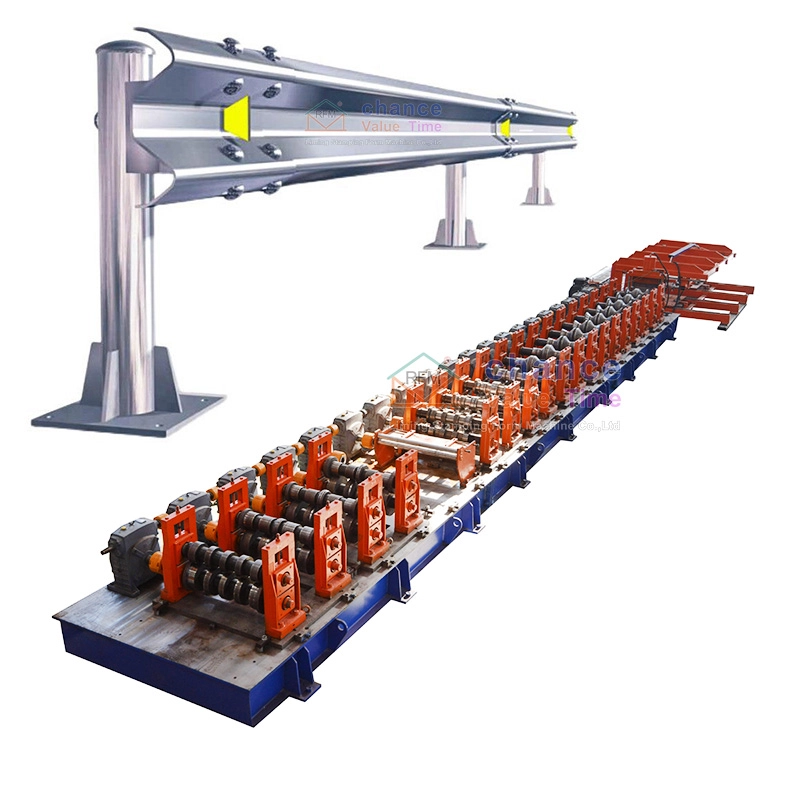
A highway guardrail roll forming machine serves as factory gear built to create guardrail beams from metal sheets or coils. The method feeds raw material through many rollers. These rollers slowly form it into wavy shapes, usually called W-beam (two-wave) or thrie-beam (three-wave) styles.
Such machines help make barriers that follow global safety rules. They take in crash energy during hits and cut down on vehicle breakthrough. Usual places for them include highways, city roads, bridges, and factory areas where side protection matters a lot.
Key Components of Highway Guardrail Roll Forming Machines
Knowing the setup makes it easier to see the machine’s accuracy and steadiness. Normal parts include:
- Uncoiler (Decoiler): It deals with heavy steel coils. Often it uses hydraulic tension control. This keeps the material flat and stops harm while unwinding.
- Leveling Device: It has several rolls (like 7-9 rolls) to make the sheet straight. This clears waves or bends so forming stays correct.
- Punching System: Hydraulic parts make exact holes for links, extra support, or fixing. Dies come from very hard stuff like Cr12 steel.
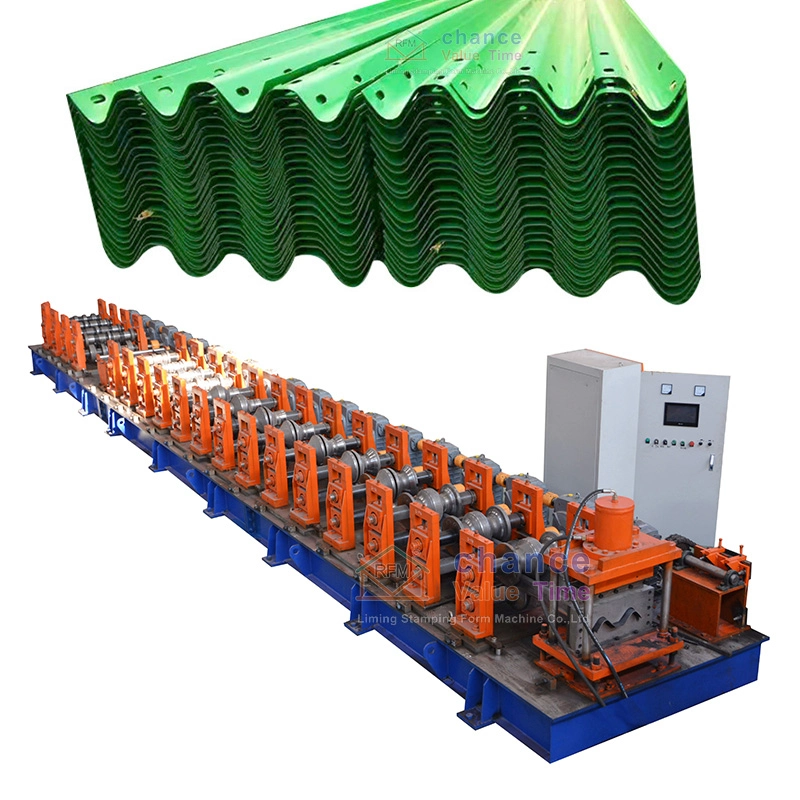
- Roll Forming Host: This main part has 15-20+ roller stations. They bend the material step by step into the wanted wave shape. Rollers get made from strong GCr15 bearing steel. Many times they get hardened and covered with chrome to last longer.
- Cutting Device: Hydraulic cutting gives clean cuts at set lengths. This keeps everything even.
- Hydraulic Station and Control System: Controls based on PLC come with touch screens. They let users change speed, set lengths, and run things automatically.
- Output Rack: It holds ready products. Some types add automatic stacking to make work smoother.
These parts link together. They build a complete automatic line from coil start to ready guardrail panels.
Types of Profiles Produced by Highway Guardrail Roll Forming Machines
Guardrail shapes differ by area and safety needs. Usual profiles include:
W-Beam (Two-Wave)
This type spreads the most. It gives good strength and bend for normal highway tasks.
Thrie-Beam (Three-Wave)
It offers better crash energy take-up for risky spots or busy traffic.
Custom Configurations
Certain machines allow changes for various wave heights, thicknesses, or extras like stronger edges.
Highway guardrail w beam roll forming machine variants center on the common W-profile. At the same time, multi-use lines manage both two- and three-wave choices.
Advanced Features in Modern Highway Guardrail Roll Forming Machines
New tech has lifted how well these machines perform in the field. Main improvements include:
- Automation Levels: Automatic highway guardrail roll forming machine models use PLC frequency change. This gives smooth control over speed and length. It cuts down hand work and mistakes.
- High-Speed Capabilities: Advanced highway guardrail roll forming machine options reach 8-15 m/min or more. This raises output to a few tons each hour.
- Precision and Durability: Rollers and dies with high hardness keep profiles steady with little change. Strong frames help them last a long time.
- Customization Options: OEM highway guardrail roll forming machine solutions let users fit to certain coil widths, thicknesses (typically 2.0-4.0 mm), or rules.
Automatic highway guardrail roll forming machine and advanced highway guardrail roll forming machine variants add power-saving hydraulics and servo setups. These give sure, exact making.
The Production Process: Step-by-Step Overview
The work follows a clean order:
- Coil Loading and Uncoiling: Steel coils (often Q235 or galvanized) get loaded and unwound with steady tension.
- Leveling and Feeding: The sheet goes through levelers and guides. This makes flat and straight entry.
- Punching: Holes get punched right in line for putting together or water flow.
- Roll Forming: Slow shaping happens over many stations to build the wavy profile.
- Cutting to Length: Hydraulic shears slice panels to right sizes (e.g., 4-6 meters).
- Output and Stacking: Ready pieces get gathered, often in an automatic way.
This ongoing method cuts waste and keeps things even.
Benefits of Using Highway Guardrail Roll Forming Machines
Putting money into these machines brings many good points:
- Efficiency: Fast output helps big projects move without hold-ups.
- Quality Consistency: Automatic controls bring exact sizes and shapes that fit safety rules.
- Material Versatility: It works with carbon steel, galvanized sheets, or better coatings to fight rust.
- Cost-Effectiveness: It lowers worker needs and material loss when set against hand ways.
- Scalability: It fits both usual and special production lots.
Highway guardrail roll forming machine manufacturers focus on these good points to answer worldwide infrastructure wants.
Factors to Consider When Selecting a Highway Guardrail Roll Forming Machine
Picking the correct gear means looking at:
- Production speed and capacity needs.
- Material thickness and profile kinds required.
- Automation level for better work flow.
- After-sales help and spare parts supply.
- Meeting local safety and quality rules.
Best highway guardrail roll forming machine options mix good work, steadiness, and flexibility for lasting use.
Market Trends in Highway Guardrail Roll Forming Machines
China stays a top center for China highway guardrail roll forming machine production. Factories there give advanced and custom answers. Demand rises with building projects in Asia, Africa, and other places. It stresses fast, automatic lines to finish work quicker.
China highway guardrail roll forming machine factory groups bring strong edges in tech and size.
Conclusion: The Role of Highway Guardrail Roll Forming Machines in Infrastructure Safety
Highway guardrail roll forming machines stand as key tools for making strong, useful road safety barriers. From simple parts to automatic highway guardrail roll forming machine progress, these setups let makers handle growing world needs well.
For makers, sellers, or plants looking for solid highway guardrail roll forming machine solutions, working with skilled producers gives the best gear fit to exact wants.
Partner with a Leading Manufacturer and Supplier
Hebei Liming, established for over 28 years in Botou, Cangzhou, Hebei Province, China, stands as a trusted manufacturer, supplier, and factory specializing in high-quality highway guardrail forming machines and other roll forming equipment. With expertise in customized automatic high-speed models, advanced automation, and durable components, Hebei Liming delivers precision-engineered solutions backed by global export experience and comprehensive after-sales support. Contact Hebei Liming today to discuss tailored highway guardrail roll forming machine options for your production needs.
FAQ
What materials are typically used in highway guardrail roll forming machines?
Common materials include Q235 carbon structural steel or galvanized sheets, with thicknesses ranging from 2.0 to 4.0 mm for optimal strength and corrosion resistance.
What are the main profile types produced?
The most common are W-beam (two-wave) and thrie-beam (three-wave) designs, with some machines offering flexibility for both.
How fast can these machines operate?
Production speeds generally range from 5-15 m/min, depending on the model, with high-speed variants achieving higher rates for increased output.
What level of automation is available?
Many modern machines feature full automation, including PLC controls, touch-screen interfaces, and automatic punching, cutting, and stacking.
Can these machines be customized?
Yes, customization options include adjustments for coil width, panel length, punching patterns, speed, and power to meet specific standards or project needs.
Why is precision important in guardrail production?
Precise forming ensures barriers meet safety standards for impact absorption, dimensional accuracy, and consistent performance in real-world conditions.