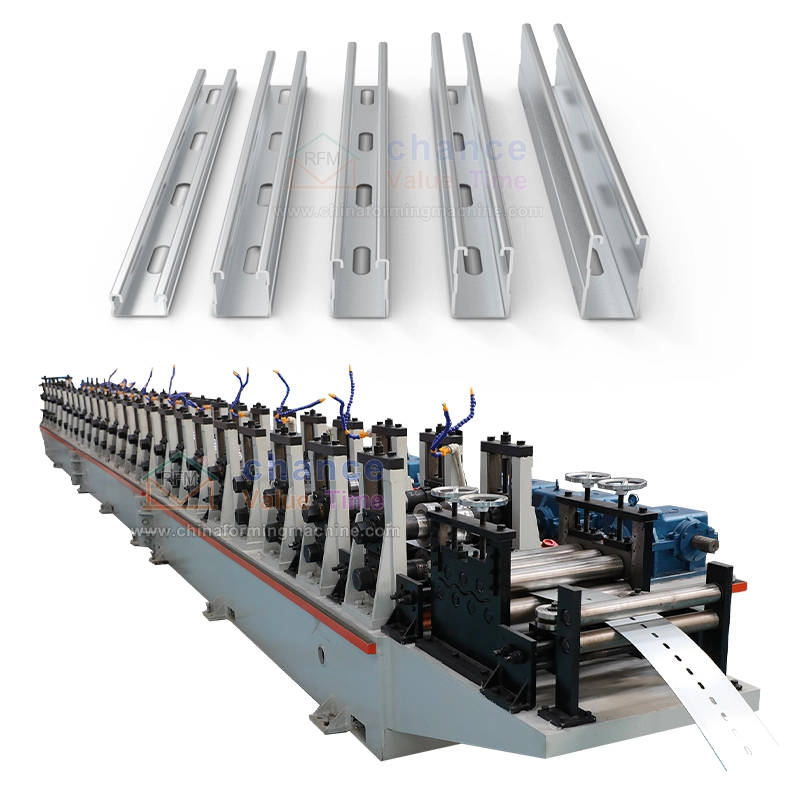
A unistrut roll forming machine functions by sending steel coil through flat making, hole making, step by step shaping, and cut systems. It makes strut channels in a steady and quick way. This auto gear turns flat metal rolls into exact C-shaped or slotted shapes. Builders and solar setups use them.
Knowing the unistrut roll forming machine working principle helps makers check its part in big output.
What Is a Unistrut Roll Forming Machine?
A unistrut roll forming machine stands as special cold roll forming gear. It aims to make strut channels. People also call them unistrut channels or slotted C channels. It shapes metal strips into even shapes through many step by step roller spots at normal room heat. It skips heating the stuff.
The machine backs steady make from steel rolls. It makes shapes with good exact and repeat. Usual specs cover stuff thick from 1.5mm to 3.0mm. It fits widths for set sizes like 41×41mm, 41×21mm, and 41×62mm. Slotted types have pre-made holes or long cuts for easy put together with nuts and fits.
What Products Can It Produce?
This gear mainly makes C-shaped strut channels and slotted unistrut shapes. These cover usual channels with turned in edges. They also include types with round holes, long cuts, or custom ways. Electric width change on shaping spots lets bend for change sizes.
Products fill needs for build strength. They stay light and easy to set up. Makers can change cut ways and full lengths by job wants. This makes the machine useful for both usual and special runs.
Key Industries Served
Strut channels help many fields due to their strong build and part design. In solar power panel set systems, they make the frame to hold panels on roofs, ground sets, or water tops. The build field uses them for framing, shake brace, and light build holds.
Other uses cover electric cable paths, HVAC pipe holds, and machine gear set. Their cut design lets quick changes without weld or drill. This cuts set time in build and work projects.
Core Components of a Unistrut Roll Forming Machine
A full unistrut roll forming machine holds a joined make line. It deals with feed, work, shape, and out in one steady flow. Each part adds to auto work, exact, and good use.
Decoiler (Coil Feeding System)
The decoiler acts as a 5T hand or oil power unit often. It holds and unwinds steel rolls. It gives steady stuff flow to the line. This stops breaks in long make runs. Some plans mix decoiler-flat units for space save.
Leveling and Feeding System
This part has 7 or more flat rollers. They make the roll even and cut inside pull. A servo power feed system with good guide makes sure right move of the strip. It keeps line straight through the whole work.
Punching System (Slot Hole Processing)
In-line hole spots, often two groups, make round holes, long cuts, or other ways before or in shaping. This join adds work parts early in the flow. It skips later work steps.
Roll Forming Stations
The main part of the machine has 18 or more spots with exact rollers from Gcr15 steel. They get heat treat to HRC 58-62 and chrome coat for long use. Top, bottom, and side rollers do small step bends. Shafts stay φ76mm 45# steel often. They use chain or gear box send.
Cutting System
A oil or servo track cut-off system (flying shear) cuts shapes to exact lengths without line stop. Length fit hits ±1.5mm for 3m parts. It backs fast steady run.
Output Table and Stacking
The out table or belt moves done channels from the shape area. Pick auto stack or pack join makes hand work easy and cuts work need.
Step-by-Step Working Process of a Unistrut Roll Forming Machine
The strut channel roll forming process step by step goes through a smooth auto order. Step by step bend shapes the stuff. In-line work cuts waste and hand. The full unistrut roll forming machine working principle trusts on slow bend to get hard shapes without breaks or back bend.
Step 1: Coil Loading and Decoiling
Workers put a steel roll on the decoiler. The unit unwinds the stuff steady as the line runs. This step sets the base for no-stop make. It gives flat strip at a set speed.
Step 2: Leveling and Feeding
The strip goes through many flat rollers to cut curve and inside pull. Servo feed then moves the stuff right into next spots. Good flat stops flaws in later shape steps. It makes sure straight line steady.
Step 3: Punching (Slot Hole Processing)
In-line hole spots make need cuts and holes. Done early in the line, this puts build parts right in the strip. Match with feed makes sure right hole spot. It lets one-way make of set-to-use channels.
Step 4: Progressive Roll Forming
The stuff goes in the main shape unit with many spots. Each spot puts small step bends with well-planned rollers. Slow change spreads pull even. It makes the known C-shape with turned in edges. It keeps stuff whole.
Step 5: Re-Forming / Calibration
Extra check or re-shape spots fix sizes and right small changes. Side rollers or last goes make sure close fits and even form over the full shape length.
Step 6: Cutting to Length
A servo track oil cutter cuts the shaped channel to set lengths while the line keeps going. This fast cut way backs top speeds up to 30 m/min (skip shear time). It gives right, no rough ends.
Step 7: Output and Stacking
Done strut channels leave by the belt or out table. They go to a stack area or pick auto pack system. The auto flow cuts work and gets goods ready for send or more put together.
Key Advantages of the Working Process
The steady flow of a unistrut roll forming machine gives big gains for makers. Fast make hits good output levels. It keeps repeat. Step by step shape and good guides give fine size steady over groups.
Stuff waste stays low. The work makes best use of roll and puts hole making right in. The plan fits big make of both usual and change shapes. It cuts cost per part over time. Long use of parts like heat treat rollers makes machine life long. It backs sure long run.
Automation Features in Modern Unistrut Machines
New lines stress full auto. They finish unroll, flat, hole, shape, and cut in one go. Main guide makes run and watch simple.
PLC Control System
A Panasonic or like PLC runs the full line. Workers set parts for speed, length, and hole ways through an easy face. It makes sure repeat results with little hand work.
Servo Feeding and Automatic Length Control
Servo motors give right feed and length check. This tech matches all spots. It keeps close fits even at more speeds.
Inline Punching Integration
Hole work goes with shape spots. The system changes on the go. It lets hard cut ways without slow the full work.
Applications of Finished Strut Channels
Made strut channels act as useful metal frame parts. In solar set systems, they make change frames for power panels. They give strength and rust fight in out doors.
Cable paths and electric holds gain from the cut design for easy path and hold of pipes. Build framing uses them for light builds, shake brace, and hang systems. HVAC and pipe uses trust the channels for sure holds. They make set up and care simple.
The part way lets quick put together and change set. This makes strut channels good for work, trade, and build projects.
Why Choose a Unistrut Roll Forming Machine?
Putting money in a unistrut roll forming machine gives good back through big make room and bend. Makers can switch fast between shape sizes or cut sets to fill change market wants. Custom plan picks back special needs without big tool change.
The auto line cuts work need and run costs. It gives steady good. Long work life and exact build add to good back on put. This fits well for firms growing output in solar, build, or hold systems fields.
Ready to Invest in Efficient Strut Channel Production?
Hebei Liming has nearly 30 years of experience in designing and manufacturing high-quality roll forming equipment. The company specializes in custom strut channel/unistrut channel making machines featuring robust components like Gcr15 rollers, Panasonic PLC control, and reliable performance tailored to solar photovoltaic brackets and construction needs. With strong R&D capabilities from engineers trained in European cold bending techniques, Hebei Liming delivers automated lines with lifetime after-sales support and global service.
Contact Hebei Liming today for a customized unistrut roll forming solution that matches your production goals.
FAQ
What is the typical production speed of a unistrut roll forming machine?
Speeds range from 0-30 m/min depending on configuration and shear time. Actual output varies with material thickness and punching complexity.
How does inline punching work in the strut channel roll forming process?
Punching stations create slots and holes early in the line, synchronized with feeding. This integration allows functional features to form in one continuous pass.
What materials can be used for strut channel production?
Common materials include low-carbon steel, galvanized steel, and sometimes stainless steel, with thicknesses from 1.5mm to 3.0mm.
What are common profile sizes produced?
Standard sizes include 41×41mm, 41×21mm, and 41×62mm, with customizable widths and slot patterns.