The IBR roof sheet roll forming machine holds a key spot in the current metal building stuff field. This special cold roll forming tool keeps turning flat metal rolls into solid, weather-proof Inverted Box Rib (IBR) roof and side sheets. Such sheets get picked a lot in factory, business, farm, and home jobs over many land areas.
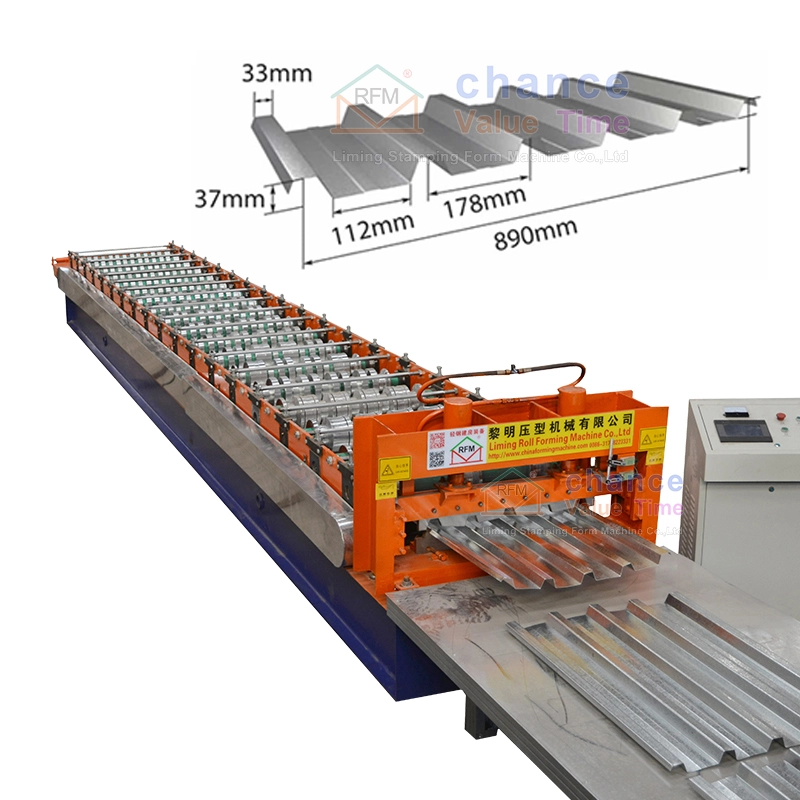
What Is an IBR Roofing Profile?
Origin and Design Characteristics of IBR Profile
The Inverted Box Rib (also known as IBR profile or trapezoidal box rib profile) got made to mix good build strength with solid water run-off. Its main mark is the high, even trapezoid ribs with fairly broad flat lows between them. This shape makes a strong turn point. As a result, the sheet shows great firmness and weight-hold power for its size.
Typical Dimensions and Material Specifications
Usual IBR profiles often give a working cover width of 686 mm, 762 mm or 890 mm. Rib height often sits between 32 mm and 40 mm. The space from rib center to rib center is often 250 mm to 333 mm. Most IBR roof sheet roll forming machines get built to take input roll widths of 925 mm, 1000 mm or 1220 mm. Stuff thickness often goes from 0.40 mm to 0.80 mm. Some tough lines can handle up to 1.0 mm or a bit more for odd jobs.
Common base stuff includes hot-dip galvanized steel (GI), pre-painted galvanized steel (PPGI), galvalume / Aluzinc steel (GL/AZ), and now and then aluminum rolls. Surface covers like polyester, PVDF or SMP get used often. They bring 15–30 years of rust fight based on weather touch.
Why IBR Remains Popular in Harsh Weather Regions
The deep, clear ribs boost water drop a lot during big hot rains or wet times. At the same time, the shape’s high part strength lets wider beam gaps (often 1.5–2.5 m or more). This cuts steel under costs. These traits show why high-speed IBR roof sheet roll forming machines stay wanted in spots with hard rain, storm chance or wild heat shifts.
Working Principle of IBR Roof Sheet Roll Forming Machine
Coil Loading and Decoiling Process
Making starts with putting a metal roll on a water-powered uncoiler (often 5-ton or 10-ton size). The uncoiler turns under set pull to send the strip even into the forming line. It stops roll fall, side harm or face marks.
Progressive Roll Forming Stages
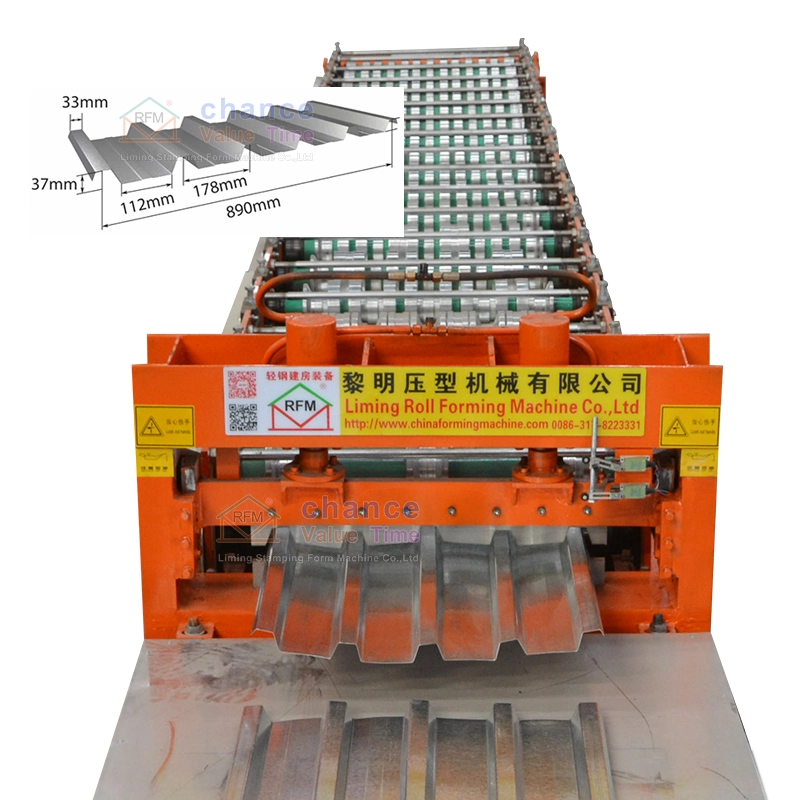
The core of any automatic IBR roof sheet roll forming machine is the roll forming mill. It often has 18 to 24 forming spots. Each spot has top and bottom roller groups that slowly shape the flat strip into the end trapezoid form. The step-by-step change gets planned well to skip stuff stress spots, side waves, or length bends.
Final Cutting and Sheet Collection
After the full IBR shape forms, a sharp water-powered cut tool (after-cut type is usual) cuts the ongoing panel to the right length the buyer needs. New tools hit length gap of ±1–2 mm even at fast paces. Cut sheets then move to a out table. It often has auto stack arms or air hold tables for good group pick-up.
Automation Through PLC Control System
Current PLC-controlled IBR roof sheet roll forming machines have work-grade touch screens. Users can put in details like sheet length, make batch count, forming pace, and even cut ways (one sheet or ongoing). The setup also gives live fault checks, make counts, and word picks. This boosts ease for world buyers.
Core Components and Technical Features
High-Quality Roller Design and Material
Forming rollers get cut exact from Cr12MoV, SKD11 or same high-carbon tool steel. Then, they heat-treat to HRC 58–62 and chrome-cover or hard-chrome coat. This mix gives good wear fight. It keeps clear shape mark even after making hundreds of thousands of meters.
Decoiler and Feeding System
Most durable IBR roof sheet roll forming machines come with water-powered uncoilers that hold roll inner size φ480–620 mm and max outer size φ1300–1500 mm. The start part often has four-roller or seven-roller straighteners plus hand or servo side leads to keep strip center in ±1 mm.
Transmission and Main Power System
Power send often uses 1.5–2 inch chains or tough gear boxes. Main motor power goes from 7.5 kW to 15 kW (some times 18.5 kW for thicker stuff). It lets steady forming speeds between 12–25 m/min based on shape hard and thick.
Double-Layer Machine Configuration
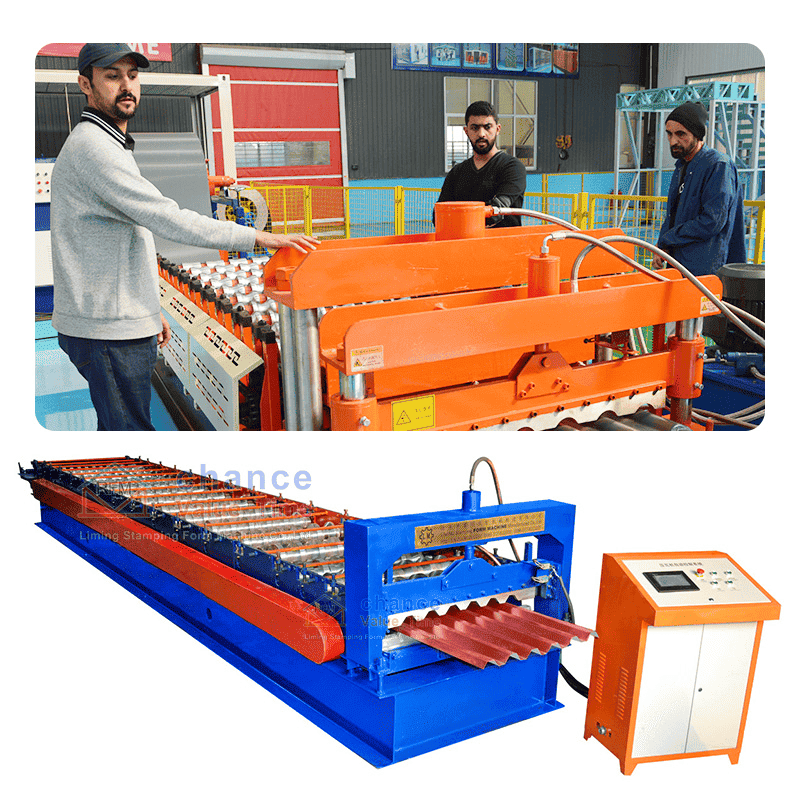
More double-layer IBR roof sheet roll forming machines let two shapes form on the same base frame. By lifting or dropping the forming cart, users can change between IBR and another common shape (corrugated, TR4/TR5, tile profile, etc.) in minutes. This cuts floor space and buy cost a lot.
Main Advantages of IBR Roof Sheet Roll Forming Equipment
High Production Efficiency and Low Labor Cost
Full auto lines need just 1–2 workers per turn. This cuts long-run work costs big next to half-auto or hand make ways.
Excellent Profile Accuracy and Repeatability
Smart roller plan with PLC length check makes sure even rib height, low width and full sheet shape. This cuts on-site fit issues and setup waste.
Long Service Life and Low Maintenance
Heavy H-beam machine bases (350–450 mm), good bearings, hard parts and strong water systems let many lines run steady for 10–15 years or more with right care.
Versatility for Different Market Requirements
The same customized IBR roof sheet roll forming machine can get tuned or re-tooled to fit varied country rules, color likes and thick ranges. Thus, it works for home sales and send-out making.
Typical Application Fields
Industrial and Commercial Buildings
Big plants, stores, ship spots, show rooms and shop builds often pick IBR roofing for its power, quick setup and low cost over big roof spots.
Agricultural and Livestock Facilities
Grain holds, bird sheds, milk barns, and open-side store builds gain much from the shape’s top water-proof and last in wet, dust or rust farm spots.
Residential and Institutional Projects
In many growing and new markets, affordable IBR roofing sheets made by these machines get used wide for low-cost homes, schools, health spots, group rooms and faith builds.
Routine Maintenance Recommendations
Daily and Weekly Checks
Workers should clean roller faces, take off metal bits, oil chains/bearings/grease spots, check water oil level and push, and look at power ends and sense tools.
Periodic Major Maintenance
Every 6–12 months, it helps to check roller line, swap worn cut edges, clean or swap water filters, check chain pull, and put guard oil on open parts.
Operator Training Importance
Right training aids workers to spot early alert signs (odd sound, sheet shift, water leaks). It cuts stuff waste rates and boosts tool up time and gain.
FAQ
What is the most common effective cover width of IBR sheets produced by these machines?
686 mm and 890 mm are the two most frequently requested effective widths worldwide.
What coil thickness range can a standard IBR roof sheet roll forming machine process?
Most machines handle 0.40–0.80 mm reliably, with customized lines supporting up to 1.0 mm or slightly thicker material.
What production speed can be expected from a modern IBR forming line?
Typical speeds range from 12 m/min to 25 m/min depending on material thickness, profile complexity and drive configuration.
Is it possible for one machine to manufacture two different roofing profiles?
Yes. Double-layer IBR roof sheet roll forming machines allow quick switching between two profiles without major reconfiguration.
How many years can properly coated IBR roofing last in normal conditions?
With quality substrate and high-grade paint systems, service life of 20–40 years is commonly achieved.
Ready to Upgrade Your Metal Roofing Production Line?
As a professional manufacturer, supplier, and factory of roll forming equipment, Hebei Liming specializes in high-performance IBR roof sheet roll forming machines and double-layer roofing solutions. With nearly 30 years of manufacturing experience, advanced production facilities, strict quality control, and comprehensive after-sales support, the company delivers reliable, customized machines tailored to different market requirements. Visit https://www.lmrfm.com/ to explore detailed technical specifications, request a quotation, or discuss your production needs with the expert team today.