Introduction
In a time of quick growth in industry and steady need for metal tubing and piping, tube roll forming machines have turned vital in making things. These tools change flat metal strip or coil — usually steel or aluminum — into empty tubes or pipes by a managed, ongoing roll forming method. The power to adjust, high making speed, and less material use make them a key part for fields from building and HVAC to car making and general production.
This blog looks at the basic ideas of tube roll roll forming machines, their good points, usual steps, and normal uses. It also shows how new roll forming tools — when made and backed by skilled makers — reach top levels of exactness, trust, and world help.
What Is a Tube Roll Former Machine
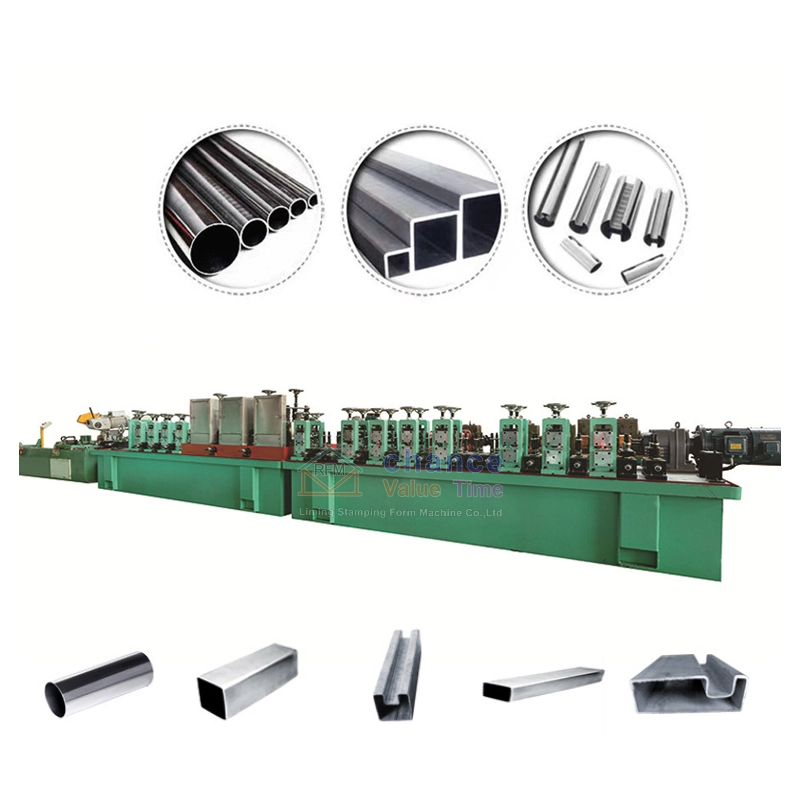
A tube roll former is a special kind of roll forming machine built to shape flat metal strips into round or other empty cross-section tubes and pipes. The work starts with a coil or flat metal strip — often galvanized or painted steel, aluminum, or similar metals — which goes into the machine and is slowly shaped by a multi-station roller setup.
In many setups, after the metal is rolled to the wanted shape, the edges are joined (for example, high-frequency induction welding or TIG welding) to make a steady tube. Then, the tube may go through sizing rollers to keep size right before final cutting to needed lengths.
This technology allows ongoing, big-volume making of steady, size-right tubes — with little material loss compared to old pipe-making ways.
Key Components & Workflow of Tube Roll Forming Machines
Though exact setups change based on the use and the maker, the usual steps of a tube roll former include these parts:
Material Loading / Uncoiling
A coil or flat strip of metal is put on a decoiler/uncoiler. The coil is then opened to give a steady strip for work.
Pre-processing (Optional)
In some cases, the strip may be made flat or even, and in certain systems pre-cutting or shearing may be used to ready the strip before forming starts.
Roll Forming / Bending
The opened strip moves through a set of well-shaped rollers. Each stop slowly bends the metal until it takes the cross-section shape needed (like round, square, rectangular).
Welding (Optional, depending on design)
If the tube needs a closed seam, a built-in welding stop may link the edges of the formed shape into a steady pipe. Ways such as high-frequency induction welding or TIG welding are often used.
Sizing and Quality Control
The formed (and welded) tube goes through sizing rollers or check stops that make sure key sizes, roundness (for round tubes), wall thickness, and total limits.
Cutting / Shearing
Once formed and sized, the tube is cut to the wanted length. The cutting tool may be hydraulic, servo-driven, or mechanical, based on the design.
Output & Stacking
The done tubes are moved or stacked for picking, packing, or more work.
This making flow helps both steady big-volume making and change — letting different tube widths, wall thicknesses, lengths, and even welded vs. seamless plans based on raw material and machine setup.
Advantages of Using Tube Roll Formers
High Production Efficiency and Throughput
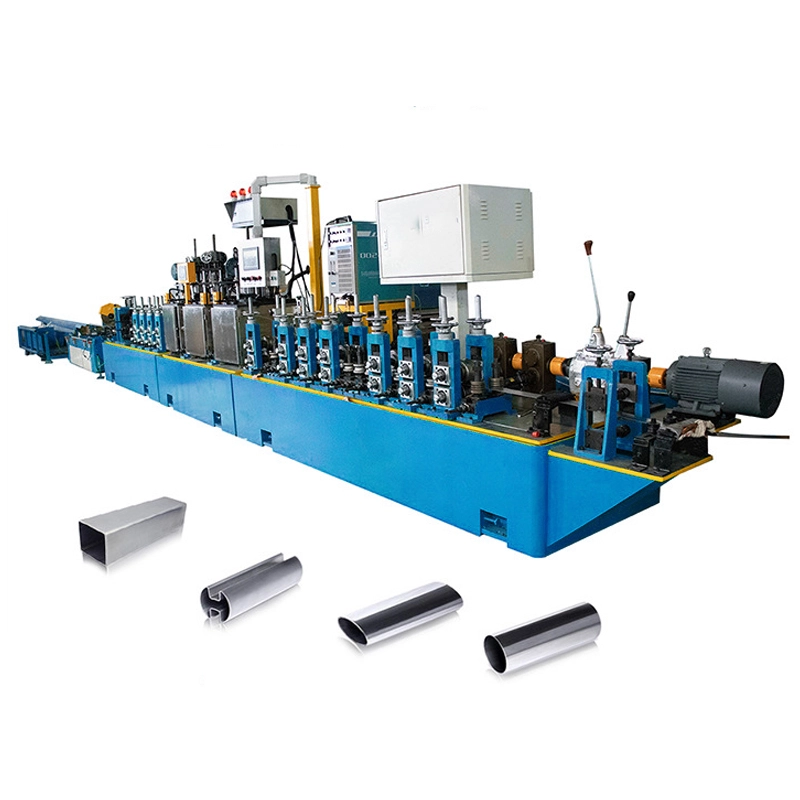
Roll forming — especially when mixed with welding and auto cutting — allows fast, steady making. This greatly beats old ways (like hand forming, bending, part-by-part welding), making it perfect for big-scale industry output.
Precision and Consistency
Because each tube is formed under the same roller shape, and quality check systems (sizing rollers, calibrators) keep tight limits, end items show high size steadiness. This ensures parts fit and maintain even quality — needed for fields like HVAC, car making, structural building, or construction.
Material Savings & Reduced Waste
Using coils or strips well, the roll forming process leaves little leftover bits. When mixed with exact forming and cutting, material use is optimized — cutting raw-material costs and reducing waste.
Flexibility & Customization
New roll forming machines are often designed so that roller sets (dies) can be swapped or changed to make different tube shapes, widths, or wall thicknesses. This change lets makers switch making between different tube kinds without buying a whole new line.
Scalability & Automation
With auto feeding, forming, welding (if needed), cutting, and stacking — plus optional CNC/PLC control — roll forming machines can run steadily for long periods, raising output while reducing labor. This makes them very suitable for industry-scale making or integration into bigger production systems.
Typical Applications of Tube Roll Formed Products
Tube roll formers help a wide mix of areas. Common uses include:
Construction & Infrastructure
Structural tubing for building frames, guardrails, handrails, metal framing, scaffolding, and supports. Empty metal tubes are used in frames, railings, safety walls, and more.
HVAC and Plumbing
Tubes and pipes for air conditioning ducts, ventilation systems, water or fluid lines, and other piping needs.
Automotive & Transportation
Light tubing for car parts, chassis, supports, exhaust systems (for certain metals), and other structural components.
Manufacturing & Fabrication
Metal covers, chassis, frames, supports, and cases for machines, tools, shelving, and storage systems.
Industrial Equipment
Tubing for conveyors, rollers, tool frames, guardrails, skids, and parts in factories or industrial sites.
Because of their precision and flexibility, roll-formed tubes are also used in special applications: prefabricated buildings, modular systems, storage solutions, and anywhere steady, strong metal tubing is needed in volume.
Why Working with an Experienced Roll Forming Machine Manufacturer Matters
Picking the right manufacturer of tube roll forming machines has a significant effect on making quality, machine life, and after-sales support. Key choice points include:
Long-standing Expertise
Manufacturers with many years of experience bring better design, proven reliability, and deep knowledge of materials, tolerances, and industry needs. This reduces the risk of costly downtime or poor output.
Customizable Solutions
Since tube requirements vary across fields (width, wall thickness, material, length), a manufacturer able to custom design and tooling ensures the roll former fits exact making specifications.
Comprehensive Automation & Controls
New roll forming machines should offer PLC (or higher) control, auto feeding, forming, welding/cutting, and stacking — allowing high output with minimal manual work.
Quality Components & Durable Construction
Use of hard rollers, strong frames, reliable welding and cutting units ensures long life — often over many years of steady production.
After-Sales Service, Spare Parts & Global Support
For global or multi-location firms, reliable worldwide support (spare parts, maintenance, technical assistance) is essential to keep uptime and maximize ROI.
Manufacturers that combine these strengths provide end users with roll forming systems capable of delivering industry-grade output, suitable for changing market demands, and backed by long-term service commitments.
Frequently Asked Questions (FAQ)
Q: What types of metal strip materials are suitable for a tube roll former?
A: Usually, steel (galvanized, painted, or cold-rolled) and aluminum strips are suitable. Material must have enough bend and consistent thickness to pass through rollers without breaking.
Q: Can the same roll forming machine produce different tube diameters or cross sections?
A: Yes — with modular roller dies or adjustable tooling, a machine can be reset to make different tube shapes, widths, or wall thicknesses. This flexibility allows switching production to meet varied project needs.
Q: Is welding always required in tube roll forming?
A: Not always. For hollow tubes that need a closed seam (like structural pipes), a welding station (e.g., induction or TIG) is often built in. For some open shapes or special applications, forming without welding may be sufficient.
Q: What kind of maintenance does a tube roll former need?
A: Routine maintenance includes lubrication, inspection of roller line, adjustment of sizing stops, checking welding/cutting units, and replacement of wear parts (rollers, cutting blades, dies) to maintain dimensional accuracy and production quality.
Q: What should a buyer consider when selecting a roll forming machine supplier?
A: Key points are supplier’s expertise in roll forming design, ability to provide custom tooling, quality of machine components, automation level (PLC/CNC control), and after-sales support — including spare parts, technical assistance, and worldwide service if needed.
Partner with a Professional Roll Forming Machine Factory & Supplier
As a manufacturer, supplier, and factory specializing in advanced roll forming equipment, Hebei Liming invites collaboration on custom tube roll forming machines. With 28 years of experience in designing and producing high-precision welding pipe and tube formers, the company provides fully built solutions from its base in China.
These machines process metal sheets including carbon steel, stainless steel, and aluminum, with material thicknesses from 0.5mm to 3.0mm and production speeds ranging from 30 to 100 meters per minute. Molding accuracy is maintained at ±0.2mm, supported by high-frequency welding at 200–450kHz and equipment power between 50 and 150 kilowatts depending on the model. All units include lifetime after-sales support and a one-year warranty.
Contact admin@chinaformingmachine.comhttps://www.lmrfm.com/contact-us/ or visit https://www.lmrfm.com/ to request a quick quote and boost production efficiency today.