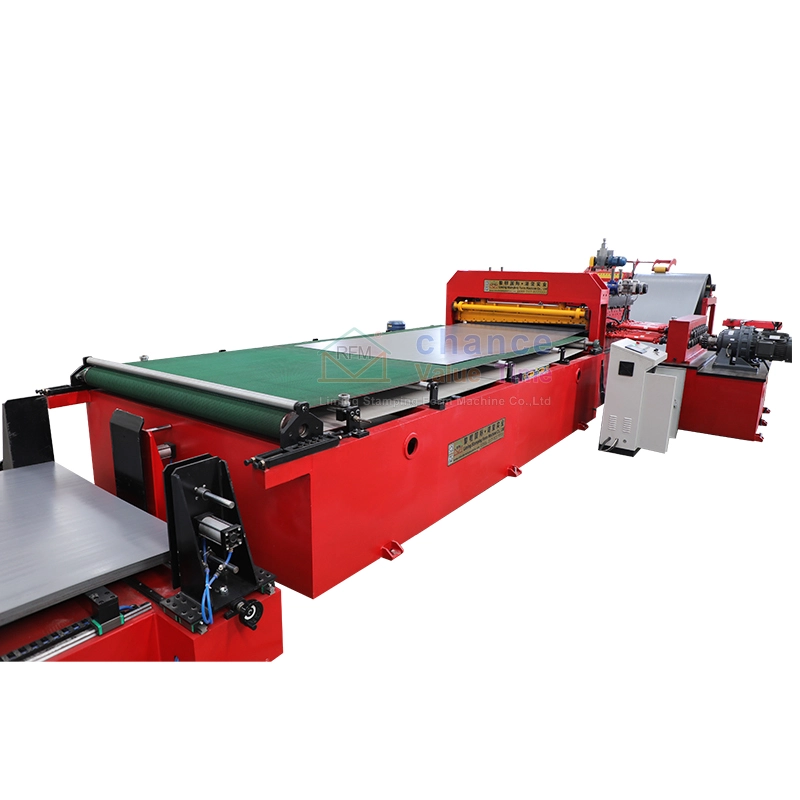
The cut to length machine stands as a key step forward in metal working tech. It changes big metal coils into flat sheets cut to exact sizes. People also call it a cut to length line machine, steel coil cutting machine, or coil cut to length machine. This tool gives great accuracy, quick work, and flexibility for tough factory jobs.
What is a Cut to Length Machine?
A cut to length machine, often shorted to CTL line, handles metal coils like steel, stainless steel, or aluminum in a clear order. It uncoils, levels, measures carefully, cuts across, and stacks the pieces. The end result is flat rectangular sheets with close matches on length, flatness, and edge finish. These sheets go straight into making parts or putting things together.
The work starts by putting a heavy coil on the uncoiler. Steady tension keeps the material safe as it unwinds. Next the strip moves through a leveler. This removes coil curve, wavy sides, and built-up stress. Good measuring tools check exact lengths. Then the shear makes clean cross cuts. Auto stacking finishes the job. It piles sheets neatly without bends.
Main steps include:
- Feeding raw materials (metal coils) into the CTL line
- Uncoiling under controlled tension
- Straightening and leveling
- Precise gauging and measurement
- Crosscutting with shear mechanisms
- Stacking and bundling
This full flow gives clean edges without burrs, very good flatness, and little waste. That makes automatic cut to length machines very useful in big production runs.
(Visual representation: A typical cut to length machine in action, showing a wide metal coil uncoiling, passing through rollers for leveling, and being sheared into uniform sheets in an industrial facility.)
Types of Cut to Length Lines
Cut to length lines change based on shear type, material thickness, and output needs. This lets them fit specific jobs well.
Start-Stop (or Stop-Go) CTL Lines
Speed the strip to place, slow to a full stop for cutting, then go again. These lower-cost setups work for light to medium thicknesses (usually up to 6-8 mm) and slower to medium speeds. They suit places where small marks from feeders do not cause big problems.
Flying Shear CTL Lines
Match the shear speed to the strip flow for non-stop cutting. This setup gives higher output and kinder handling. It fits thin sheets (under 6 mm) and fast work where stopping might cause flaws or slow things down.
Rotary Shear Lines
Use spinning blades for stop-and-go or steady modes. They make clean cuts on medium thicknesses with less shock than guillotine kinds.
Heavy Gauge CTL Lines
Take thicknesses from 6 mm to 25 mm (or thicker). They often have strong hydraulic shears, tough levelers (corrective and plate flatteners), and solid frames. These handle high strength and coil weights up to 35 tons.
Each kind weighs speed, exactness, cost, and material fit. Many modern lines mix features for more choices.
Key Components of a Cut to Length Line
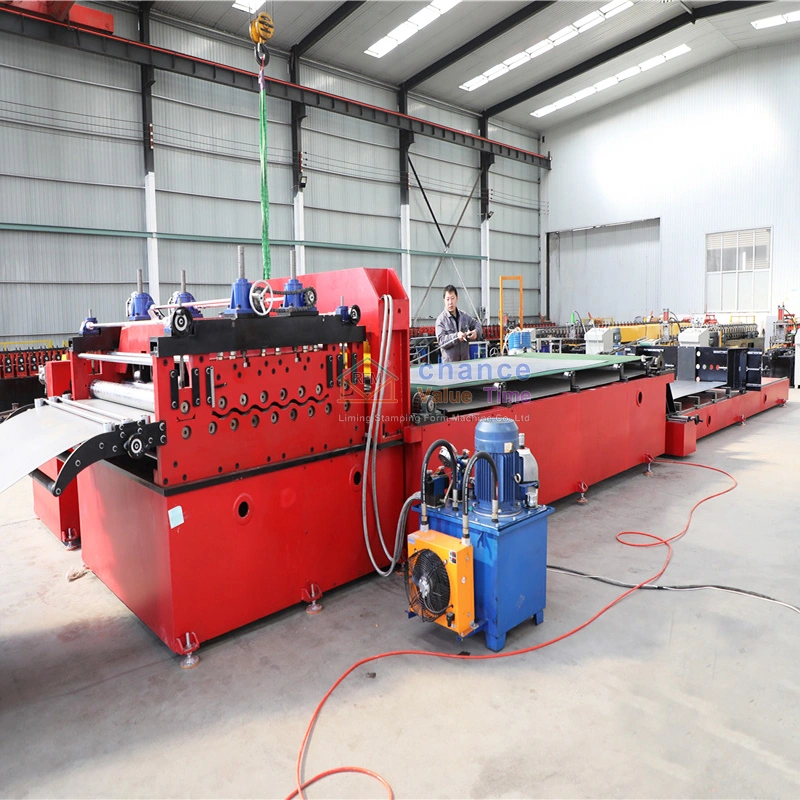
A full cut to length line brings together matched strong parts:
- Uncoiler/Decoiler: Holds coil weights up to 35 tons. It uses hydraulic expanding mandrels and brakes for smooth unwinding with steady tension.
- Straightener/Leveler: Multi-roll setups (4-HI, 6-HI, or more) take out coil memory by stretching and pressing back and forth. They reach flatness as close as 1.5 mm/m².
- Servo Feeder/Gauging System: Encoder-based feeding gives length accuracy of ±0.3 mm. Closed-loop control keeps repeats steady.
- Shear Assembly: Choices include flying, rotary, pendulum, or hydraulic guillotine shears. Pick based on thickness and speed needs.
- Stacker: Magnetic, air-blow, bomb-door, or vacuum types pile sheets neatly. They stop scratches and allow auto bundling.
Extra parts like loop pits (for buildup in start-stop modes), edge trimmers, or surface guards improve work in special cases.
Features of High Precision Cut to Length Machines
New high precision cut to length machines add smart auto controls for top results. PLC + touchscreen setups allow one-touch changes, save recipes, remote checks, and live watch with few workers (often 2-3 per line).
Servo systems cut energy use by up to 20% compared to hydraulic ones. Auto waste edge handling helps the environment. Tough leveling rollers (e.g., GCr15 steel) last 30% longer and cut stop time.
Lines handle thicknesses from 0.3 mm to 25 mm, widths up to 2300 mm, speeds of 50-80 m/min, and many materials like cold-rolled steel, galvanized, stainless, and aluminum. This fits different production sizes.
Advantages of Using Cut to Length Machines
Cut to length machines bring big changes to metal working:
- Very close size matches (±0.3 mm length, high flatness) cut down later fixes and bad parts.
- Strong auto work speeds output, shortens wait times, and drops worker needs.
- Smart material use lowers waste with exact measures and little trim.
- Steady clean cuts and good surface cut extra finish steps.
- Energy-saving builds and built-in reuse fit green factory rules.
- Wide range handles different thicknesses and mixes. This backs just-in-time making.
These points raise overall output, save money, and keep product trust high in tough markets.
Applications in Various Industries
Cut to length lines supply exact blanks needed in many fields.
Automotive Industry
Wants close matches for body panels, chassis parts, and structure pieces. Medium-gauge lines do well here. They make sure parts fit and keep vehicle strength.
Construction Sector
Turns thick coils into beams, guardrails, and support parts. Heavy-gauge setups cut waste and back big projects with steady supply.
Electronics and Appliance Manufacturing
Needs thin flat sheets for cases, brackets, and heat sinks. High-precision thin-gauge lines give perfect surfaces and exact sizes for detailed builds.
Other uses cover shipbuilding, heavy machines, and general making. There steel coil cut to length lines allow quick, high-quality work.
Choosing the Right Cut to Length Line for Needs
Picking a cut to length production line to fit work needs looks at coil weight, thickness range, width, strength, wanted speed, and yearly amount. Light-gauge lines focus on speed and surface care. Heavy-gauge ones stress power and lasting build.
Custom touches—like shear kind, leveler setup, or auto level—raise performance and return on money.
Conclusion
Cut to length machines do great at turning raw coils into exact ready sheets. They mix smart engineering with real-world speed. Their part in better accuracy, less waste, and help for many fields locks them as must-have gear in today’s metal work.
Frequently Asked Questions (FAQ)
What materials can a cut to length machine process?
Lines accommodate cold-rolled steel, stainless steel, aluminum, galvanized, and other alloys across wide thickness and width ranges.
How precise is the cutting in a CTL line?
Advanced systems maintain length tolerances of ±0.3 mm and flatness up to 1.5 mm/m², ideal for precision-demanding sectors.
What is the typical speed of a cut to length line?
Speeds vary from 50 to 80 m/min (or higher in flying shear models), depending on gauge, shear type, and configuration.
Does a cut to length machine reduce material waste?
Yes, through accurate gauging, optimized feeding, and minimal edge trim, significantly lowering scrap rates.
Are cut to length lines customizable?
Configurations adapt to specific coil parameters, production goals, and material types for tailored performance.
Partner with a Trusted Cut to Length Line Manufacturer and Supplier
Business seeking advanced cut to length line solutions benefit from partnering with experienced specialists. Hebei Liming, with over 28 years in metallurgical machinery, offers customized coil cut to length machines featuring intelligent PLC controls, high-precision leveling (±0.3 mm cutting accuracy), energy-efficient servo drives, and full support including factory layout design, on-site installation, commissioning, and operator training. Explore tailored options for light, medium, or heavy gauge needs at https://www.lmrfm.com/ or contact the team directly for expert consultation, technical details, and competitive quotations to elevate production capabilities.