In a time when building needs speed, versatility, and cost efficiency meet green aims, the triple-layer (3-layer) roofing sheet roll forming machine stands out as a key new tool. It goes past a basic step up from one- or two-layer setups. This modern gear changes making skills. It lets makers create three different roofing profiles on one small setup line.
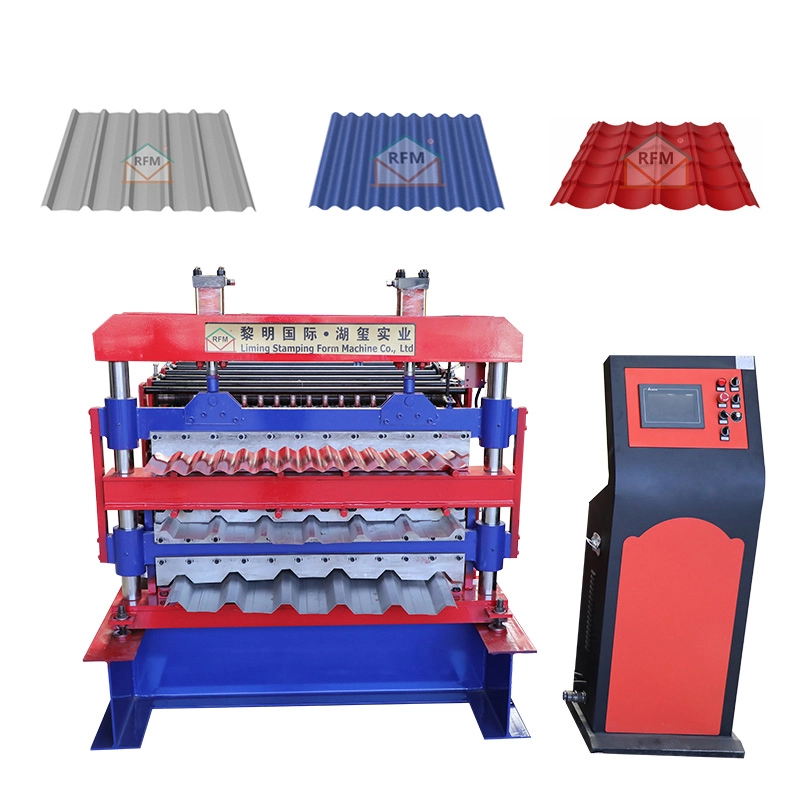
The Core Innovation: How Triple-Layer Technology Transforms Production Efficiency
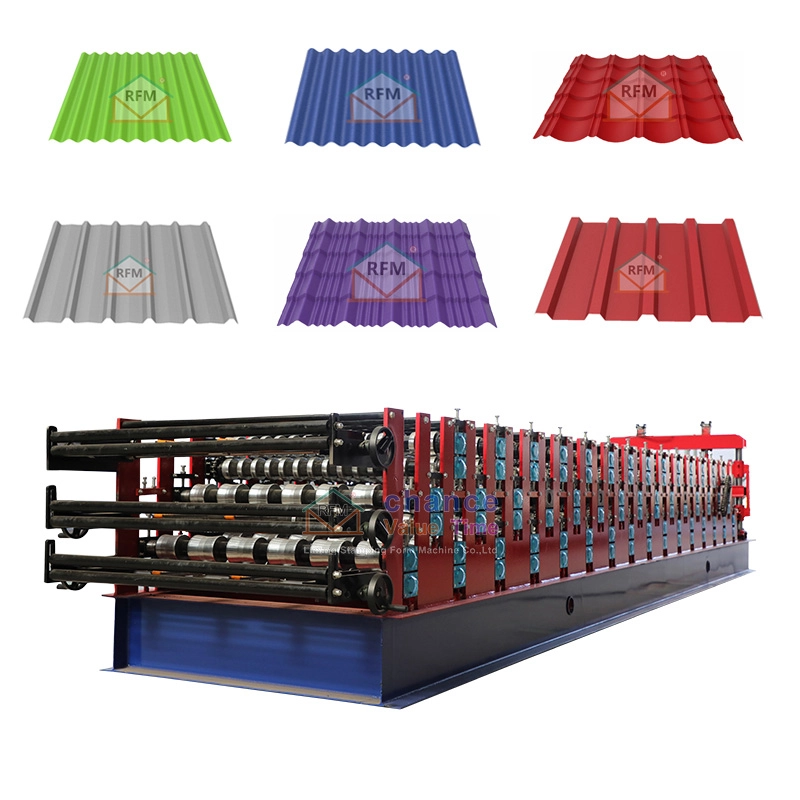
At its center, a triple-layer roofing sheet roll forming machine has three separate shaping parts (top, middle, and bottom) in one solid body. Each part has its own group of exact-made rollers. This allows smooth making of varied shapes. Examples include corrugated, trapezoidal (IBR), glazed tile, or wave styles. No need to take apart or make big changes.
Unique professional insight: New three-layer types often use fully automatic profile selection through PLC-run hydraulic lift setups. This cuts switch time from hours to just minutes. It helps just-in-time production for mixed client needs. In spots with many types but small runs, this boosts machine use from 60-70% to over 90%. It greatly raises ROI.
The steps stay mostly ongoing. Metal rolls (often 0.3-0.8mm thick galvanized steel, PPGI, or color-coated sheets) get unrolled. Then they get straightened. Next, they go through 18-24 stations per part for roll-forming. After that, they get cut to size with hydraulic tools. Finally, they stack up. New types reach speeds of 20-60 meters per minute. Cut limits stay as close as ±1mm.
Standout Features That Set Triple-Layer Machines Apart in 2026
Current top three-layer machines mix in fresh adds that beat plain multi-shape skills:
- High-Strength Construction — Bodies made from 350H-400H steel beams pair with Cr12MoV or GCr15 hard rollers (HRC 58-62). They last over 15-20 years under hard daily work.
- Intelligent Automation — Siemens or Delta PLC setups with touch screens, auto length check, and error fixes. Some types have quick-swap rafted tooling for quicker shape shifts.
- Energy and Material Optimization — Built-in servo motors cut power use by 15-25% over old hydraulic types. Exact shaping lowers waste to under 1%.
- Customization Depth — Shapes fit local likes (like high-wave trapezoidal for windy spots or nice glazed tiles for home markets). Extra choices cover online punching, embossing, or roll pre-painting add.
- Compact Footprint — One three-layer line takes about the same room as two lone one-layer machines. It fits well in plants with small floor space.
Professional observation: In 2026, the best three-layer machines add inline quality monitoring—cameras and sensors that spot surface flaws or size errors right away—fitting well with Industry 4.0 ideas and cutting fix costs a lot.
Strategic Advantages: Why Triple-Layer Outperforms Single and Double-Layer Alternatives
The real strength of three-layer tech comes from its economic multiplier effect:
- Unmatched Versatility — One machine handles the three top roofing shapes. It skips the need for many set lines and opens up funds and room.
- Rapid Market Responsiveness — Makers can change shapes to fit changing needs (like moving from plant corrugated to home tile-style sheets). No stop in making.
- Superior Cost Structure — Less work (one worker runs all three parts), lower care (fewer machines to fix), and small waste mean 20-35% lower costs per square meter than one-shape lines.
- Enhanced Profitability — Studies from big makers show return times as short as 8-14 months. This comes from more output (up to 3x one-layer amount) and power to charge more for fit shapes.
- Sustainability Edge — Less power, small waste, and fit for reused steel rolls match green build trends. This helps makers get eco-smart deals.
In growing spots like Southeast Asia, Africa, and Latin America, building growth needs cheap but varied roofing fixes. Here, three-layer machines give a lead that one-layer types just can’t reach.
Applications Driving Demand in Today’s Construction Landscape
Three-layer roll forming machines do well in making:
- Industrial & Commercial Roofing — Tough corrugated and trapezoidal shapes for stores, plants, and move centers.
- Residential & Architectural Projects — Glazed tile or wave styles that look like old clay tiles but give better weather hold.
- Infrastructure Developments — Strong sheets for roofing in move, power, and public build work.
City growth speeds up. Green build items get more pull. The need for fit, good metal roofing keeps rising. This makes three-layer tech a must for smart makers.
Key Selection Criteria for Maximum Long-Term Value
When putting money in a three-layer machine, focus on:
- Component Quality — Seek hard rollers, strong bodies, and known power brands.
- After-Sales Support — Full training, spare parts reach, and far error checks matter a lot.
- Future-Proofing — Pick types with upgradable programs and block builds for new shapes.
- Total Cost of Ownership — Think of power save, care times, and planned life.
FAQ
What makes a triple-layer machine superior to double-layer or single-layer options?
It gives three shapes on one line. This maxes versatility, space save, and ROI. It also cuts switch time and run costs.
What profiles can a typical triple-layer roofing sheet machine produce?
Usual mixes cover corrugated + trapezoidal (IBR) + glazed tile. Custom shapes like water ripple or standing seam can get built.
What is the typical production speed and capacity?
Most types hit 20-60 meters per minute. Daily make often goes over 10,000-20,000 square meters. This depends on shape hard and worker skill.
How long does it take to switch profiles on a triple-layer machine?
Auto lift setups make change take 5-15 minutes. Hand tweaks may need 30-60 minutes.
Are these machines suitable for smaller factories?
Yes—small builds and auto make them open for mid-size work. The multi-shape skill helps small makers fight big plants.
Elevate Your Production with a Proven Triple-Layer Solution
For business seeking proven, high-performance equipment, Hebei Liming offers nearly 29 years of specialized expertise as a leading manufacturer, supplier, and factory. Their automated 3 Layer Roofing Sheet roll forming machines feature customizable profiles, robust construction, advanced controls, and lifetime after-sales support. Visit https://www.lmrfm.com/ to review detailed specs, request a tailored quotation, or arrange a virtual factory tour—take the step toward greater production versatility and profitability today. Contact the team directly for personalized consultation.