
Sheet slitting line problems can reduce strip quality, increase material waste, and create difficulties in downstream production. Common coil slitting line defects include burrs, uneven strip width, wavy edges, surface scratches, poor recoiling, strip deviation, and vibration. Many factories want to know how to avoid slitting defects because slitting quality affects roll forming, stamping, welding, packaging, and final assembly.
A sheet slitting line should cut a wide metal coil into narrower strips with stable width, clean edges, smooth surfaces, and tight recoiling. When one section of the line is not matched with the material or production target, the finished strip quality can quickly become unstable.
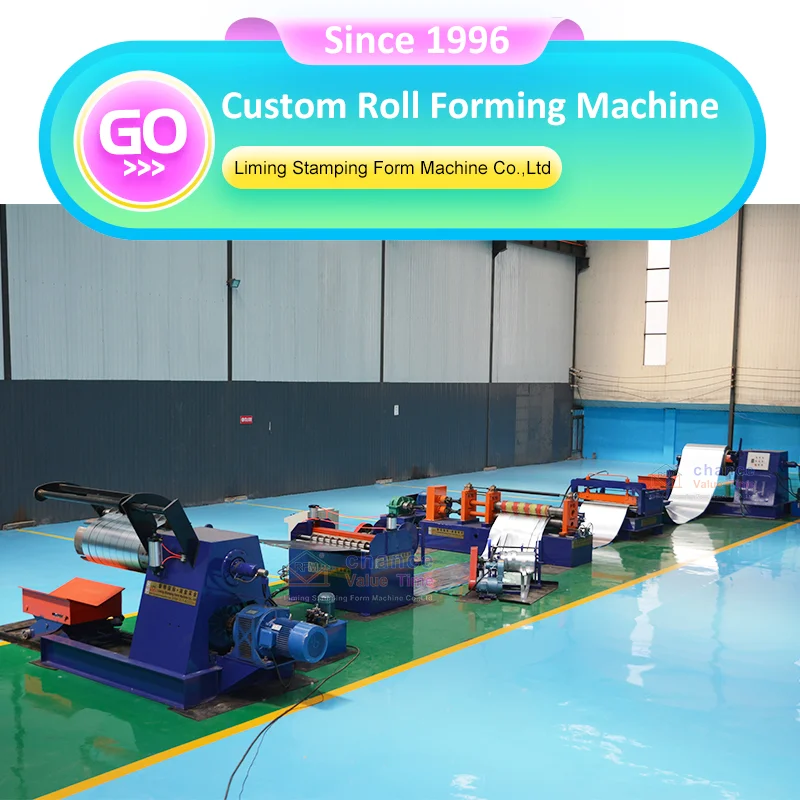
How a Sheet Slitting Line Works Before Problems Appear
A sheet slitting line consists of a series of consecutive processing stages that interact with each other.
The Uncoiler Feeds the Master Coil
The uncoiler supports the master coil and feeds it off into the line.
The material should remain centered because poor coil loading can create tracking errors before the strip reaches the slitter head.
The Guiding System Aligns the Strip
The guiding system keeps the strip on the correct path.
The side guides should control the strip without damaging the edges. The guiding section is important because poor alignment can cause uneven cutting, edge damage, or recoiling problems.
The Slitter Head Cuts the Coil Into Narrow Strips
The slitter head uses rotary knives to cut the wide coil lengthwise.
Knife clearance, blade sharpness, spacer accuracy, arbor rigidity, and cutting speed all affect the finished edge.
The Tension System Controls Strip Stability
The tension system controls strip movement after slitting.
By maintaining a stable level of tension all narrow strips are moved towards the recoiler with equal speed.
The Recoiler Winds the Finished Strips
The recoiler forms the slit strip into finished coils.
The recoiler should keep the strips aligned and tight enough for storage, handling, and downstream feeding. Poor recoiling can create loose coils, telescoping, uneven coil edges, and packaging difficulties.
Problem 1: Burrs on Slit Edges
A burr appears as a raised, sharp, or rough edge on the slit strip. A large burr can make the strip unsafe to handle and difficult to process.
Burrs often happen when the knife clearance is too tight or too loose.
Dull knives can crush the material instead of shearing it cleanly. Excessive side pressure can also create a rough edge. Poor blade alignment and unstable shaft rotation can make the burr condition worse.
How Can Factories Avoid Burrs During Slitting?
The operator should set knife clearance according to material thickness and material strength.
The factory should use suitable blades for the material. The operator should confirm blade alignment before production starts. The machine should keep the slitter head stable during cutting.
The factory should also avoid excessive speed when the material is thick or hard.
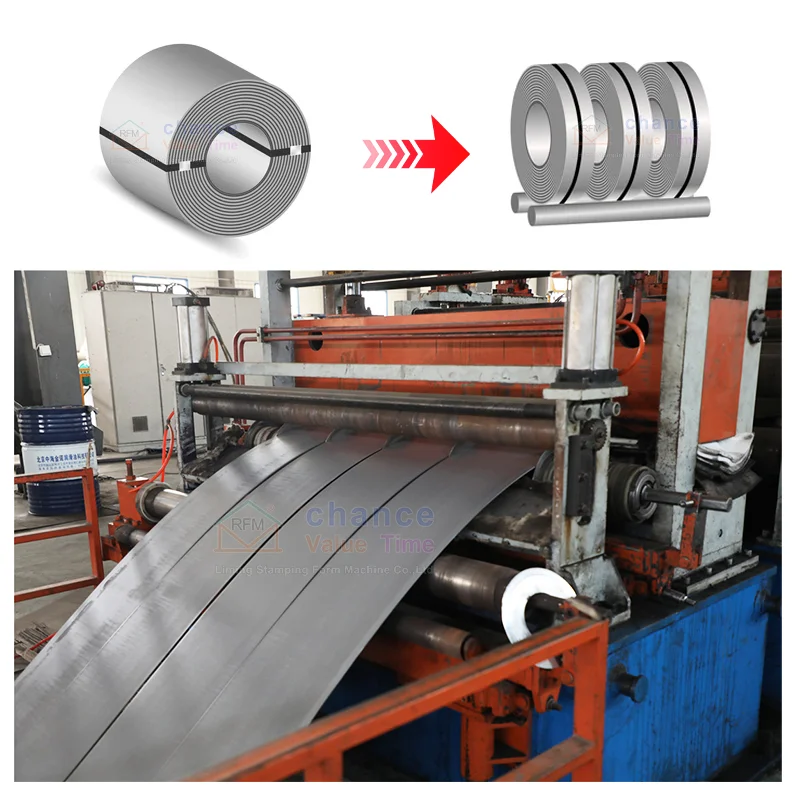
Problem 2: Uneven Strip Width
Uneven strip width causes serious problems in downstream production.
A strip that is too wide or too narrow may not fit the next process. A width deviation can create rejected coils even when the surface and edge look acceptable.
Why Does Strip Width Become Inconsistent?
Inaccurate spacers may cause inconsistent strip width.
Knife stack misalignment can also change the final strip width. Blade deflection can appear when the material load is too high for the machine structure. Coil tracking errors can move the strip away from the intended cutting position.
How Can Factories Improve Strip Width Accuracy?
The operator should use accurate spacers and confirm the knife stack before production.
The line should keep the coil centered from the uncoiler to the slitter head. The slitter head should have enough rigidity for the required material thickness and coil width.
The factory should also control tension because unstable tension can pull strips out of position.
Problem 3: Wavy Edges After Slitting
A wavy strip may not feed smoothly into roll forming machines, stamping equipment, or welding systems.
What Causes Wavy Edges in Slit Strips?
Wavy cut edges are often caused by uneven tension across the strip width.
Coil flatness prior to slitting can also generate edge waves. This may be created by inappropriate knife overlap or incorrect slitting pressure. Internal coil stress can also become apparent once narrow strips have been cut from the master coil.
How Can Factories Reduce Wavy Edge Defects?
The operator should use proper knife clearance and avoid excessive blade penetration. The buyer should choose a line that matches the material thickness, material strength, and target strip width.
Problem 4: Scratches on Sheet Surface
Surface scratches can reduce product value.
This problem is more critical for Visible products, Appliance panels, Stainless Steel strips, Galvanized steel strips, Aluminum strips and Coated coils.
Why Do Surface Scratches Happen in a Sheet Slitting Line?
Scratches can happen when the strip touches dirty rollers, damaged guides, sharp machine edges, or misaligned contact parts.
Unstable strip movement can also create friction marks. Poor waste edge handling can drag scrap against the finished strip. Improper separator contact can mark the surface during recoiling.
How Can Factories Protect Sheet Surface Quality?
Guide rollers, separator discs, and contact surfaces should be of same material surface as material. Strip should be controlled by line to prevent rubbing against other parts of machine.
Problem 5: Poor Recoiling Quality
Poor recoiling affects storage, transport, and downstream feeding.
A finished coil should be compact, aligned, and stable. A loose or uneven coil can create handling risk and production delay.
What Causes Loose or Uneven Recoiling?
Loose recoiling occurs when the recoiler tension is set too low or is unstable.
Telescoping can happen when the strip moves sideways during recoiling. Separator disc misalignment can also push strips out of position. Strip width variation and poor edge quality can make recoiling less stable.
How Can Factories Improve Recoiling Stability?
Recoiling tension is determined by the strip thickness, strip width and coil weight.
The separator discs should align with each slit strip. The recoiler should follow the line center accurately. The factory should keep strip tracking stable before the strips reach the recoiler.
Problem 6: Coil Misalignment and Strip Tracking Problems
A strip running off center can cause width errors, edge damage, scratches and poor recoiling.
Why Does the Strip Run Off Center?
The strip can run off center due to incorrect master coil loading, improper side guide settings, uneven coil edges, unstable feeding speed, and tension changes.
How Can Factories Keep the Coil Running Straight?
Before production the coil should be aligned with the machine centerline.
The side guides should guide the strip without squeezing the edges. The line should maintain stable feeding speed. Automatic guiding can help factories improve tracking when production volume is high.
Problem 7: Excessive Noise or Vibration During Slitting
A vibrating slitter head can create burrs, width variation, knife marks, and rough edges.
What Causes Noise and Vibration in a Slitting Line?
Vibration can come from insufficient machine rigidity, unstable tooling, blade imbalance, unsuitable speed, or material overload.
Thick material and high-strength material can increase cutting force. A machine that is not designed for that load may produce unstable cutting.
How Can Factories Reduce Vibration-Related Defects?
Choose a correct running speed for material. Slitter head must remain rigid during cutting. Tooling setup must remain same from first strip to last strip.
Problem 8: Knife Marks, Edge Cracks, and Rough Edges
Knife marks and rough edges create quality problems even when strip width is ok.
Forming, coating, welding and surface appearance can all be affected by defects.
Why Do Knife Marks and Rough Edges Appear?
Uneven blade pressure can produce knife marks.
Rough edges or sharp edges can be caused by the clearance, blade hardness or cutting speed not matching the material. Also edge cracks can occur by brittle material or wrong cutting pressure.
How Can Factories Reduce Edge Damage?
The operator should adjust knife clearance according to material thickness and mechanical properties. The line should avoid excessive cutting pressure. The process should use controlled speed when the material is hard, thick, or coated.
How to Avoid Slitting Defects Before Production Starts
Most slitting defects can be prevented before line reaches operating speed.
The operator should follow a clear setup checklist.
- The operator should confirm material type, thickness, width, hardness, surface condition, and coil weight.
- The operator should set knife clearance according to the material data.
- The operator should confirm the knife stack and spacer arrangement.
- The operator should align the coil with the machine centerline.
- The operator should set proper line tension before stable production.
- The operator should match production speed with material condition.
Careful setup can reduce occurrence of burrs, edge wave, width errors, surface scratches and recoiling.
FAQ
What causes burrs during coil slitting?
Most burrs are caused by incorrect clearance, dull blades, excessive side pressure, poor blade alignment, and/or blades that are too hard for the application.
Why do wavy edges appear after slitting?
Wavy cutting edges are caused by a number of factors including uneven tension, poor coil flatness, internal material stress, knife overlap and/or recoiling settings.
Hebei Liming Stamping Form Machine Co.,Ltd focuses in the design, development, and manufacturing of metal forming machines, and its product range includes Slitting Line solutions for cutting wide metal coils into narrower strips with stable performance and accurate dimensions. Buyers can contact Hebei Liming with material type, coil thickness, coil width, target strip size, production speed, voltage, and factory layout details to receive a customized sheet slitting line solution that helps reduce sheet slitting line problems and improve finished strip quality.