sandwich panel production line components, sandwich panel machinery functions, production line workflow guide
Sandwich panel production line components are crucial for the mass production of strong and insulated sandwich panels. A sandwich panel production line is a combination of Sandwich Panel Machines that produce a panel from raw materials to finished products such as roofs, walls, cold rooms and industrial buildings. Understanding the functions of the components of a sandwich panel production line and the sequence in which they are used will assist buyers, engineers and production managers to optimize their production process to achieve maximum efficiency, quality and quantity.
What Is a Sandwich Panel Production Line?
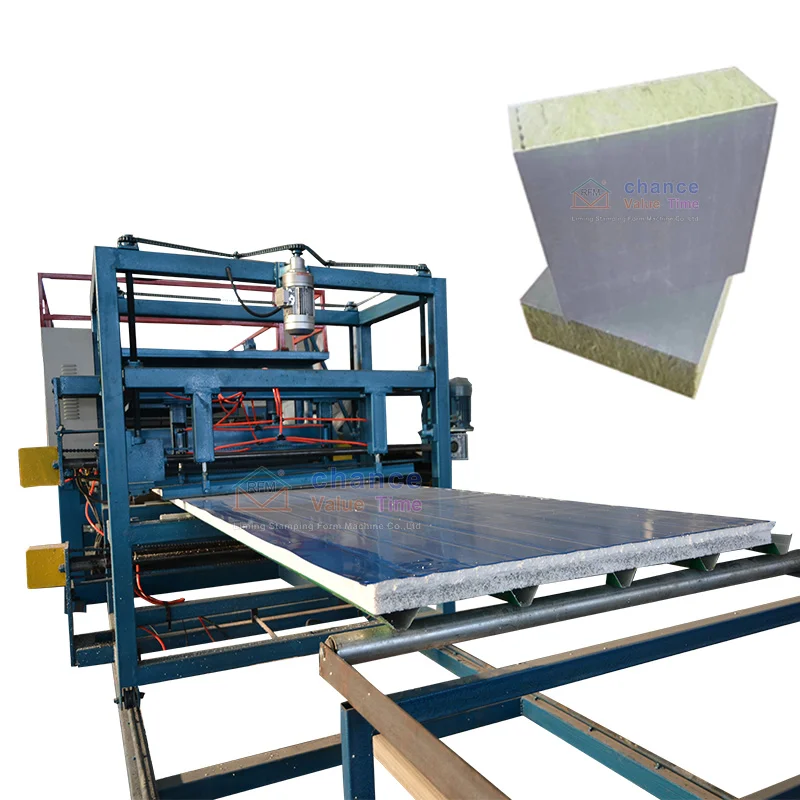
A sandwich panel production line is a production line composed of interconnected machines which will allow us to produce composite panels in an automated way. In the sandwich panel, we have two faces of metal and a core of insulation in between. The sandwich panel production line is a line which processes the input of raw materials and transforms them, through a process of feeding, forming, bonding and cutting, in high quality sandwich panels.
Definition and Core Functionality
The sandwich panel line’s primary function is to assemble facings and core materials into finished panels in a continuous workflow. The line begins with raw material handling and ends with precision cutting and stacking. Two key goals are dimensional accuracy and strong bonding between layers.
Primary Production Line Workflow
Below is a simplified sequence covering the main stages of sandwich panel production:
- Coil Feeding and Decoiling – Metal coils are prepared for processing.
- Roll Forming – Sheets are shaped into profiles.
- Core Integration – Insulation material is placed between skins.
- Laminating/Bonding – Panels are pressed and cured.
- Cutting – Panels are sized to customer specifications.
- Stacking and Output – Finished panels are collected.
Key Machines in a Sandwich Panel Production Line
Each machine in a sandwich panel line has a unique task. Below we describe core components and what they do.
Decoiler and Coil Feeding Unit
The decoiler system is used to hold and to unwind metal coils. It feeds them to the processing line with a predetermined speed. It keeps constant tension and aligns the metal in order to avoid production of wrinkles or skewed edges which can affect the quality of panels produced in the subsequent processing stages.
Roll Forming Machine
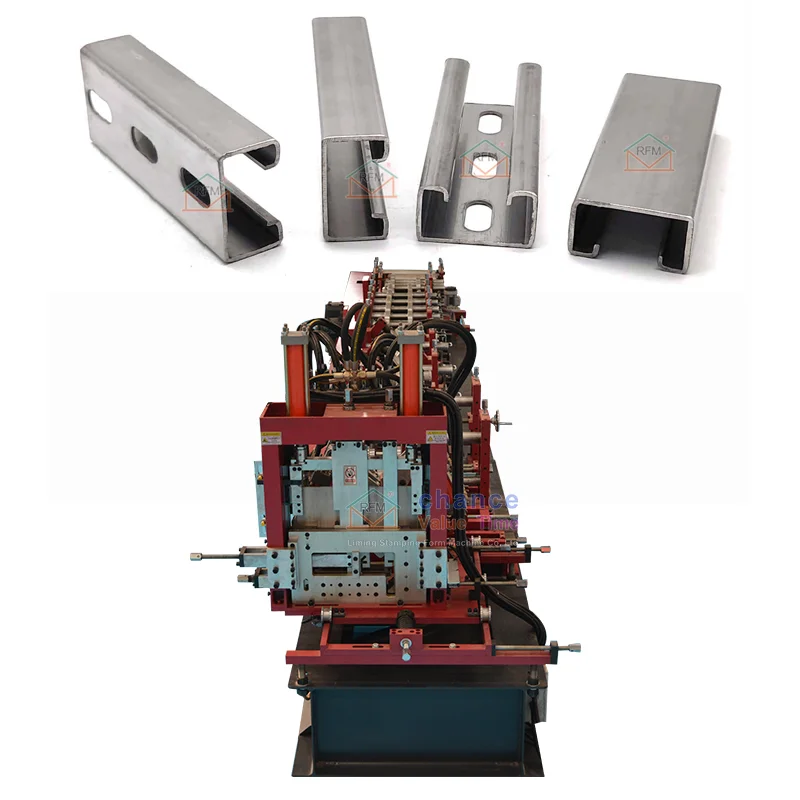
The roll forming machine bends flat metal sheets into precise profiles for the panel’s outer layers. It comprises multiple roller stations that gradually shape the metal while maintaining consistent thickness and profile accuracy. This machine is central to shaping both the top and bottom skins before they join the core.
Core Material Feeding and Foaming System
When manufacturing lines utilize insulation materials such as expanded polystyrene (EPS), polyurethane (PU) or polyisocyanurate (PIR), the core feeding system can either place the insulating medium between the two metal faces of the panel or can even inject it. An important aspect of these systems is to guarantee a uniform distribution of the medium in order to ensure constant thermal insulation and bonding power.
Laminating Press / Bonding Section
Once the core is in place, this section presses the skins and core together under heat and pressure. A double‑belt conveyor often serves this purpose on continuous lines, ensuring even pressure across the panel surface to maximize bonding.
Cutting and Sizing Equipment
After bonding, panels travel to cutting stations equipped with flying saws or fixed cutters. These machines slice panels to specified lengths with precision, minimizing material waste and ensuring uniform outputs.
Control and Automation System
A central PLC (Programmable Logic Controller) coordinates speed, temperature, and material feed across the entire line. Automating processes reduces operator error, improves consistency, and enhances overall production efficiency.
Workflow Sequence in Sandwich Panel Production
Understanding the flow between each section helps clarify how components work together. Below is the standard production sequence:
- Load Raw Materials – Coils and core stock are staged.
- Feed into Decoiler – Metal sheet is prepared.
- Shape Skins with Roll Forming – Both outer layers are profiled.
- Insert Core Material – Core is aligned between profiles.
- Bond and Cure Panels – Lamination under controlled heat and pressure.
- Cut and Stack Final Panels – Panels are cut and prepared for packing.
Each step affects the next, meaning a bottleneck early in the line could degrade quality or reduce throughput.
How Each Component Affects Panel Quality
High‑quality sandwich panels depend on tight coordination between machines and careful calibration.
Dimensional Accuracy and Material Handling
The consistency in feeding the sheets and the accuracy in roll forming also means that the resulting panels are very dimensionally stable. If this were not the case then the edges of the panels would bend, the profiles would be out of alignment and the areas intended for bonding would be weakened.
Insulation Performance and Core Integration
For best thermal and acoustic performance, uniform distribution of core material and even bonding are very important. Uneven distribution of core material can lead to poorly insulated areas or structural weaknesses in the panel.
Common Production Line Configurations (Continuous vs Modular)
Sandwich panel lines come in different arrangements:
- Continuous lines operate uninterrupted, ideal for high‑volume production with consistent quality.
- Modular systems allow adjustment of individual sections to match specific panel types or production goals, offering flexibility but requiring careful process coordination.
FAQ
Which machine is most critical?
The roll forming machine often has the greatest influence on panel shape and surface quality. Properly formed skins facilitate better bonding and durability.
How do I choose the right production line?
Define your target output, core material, panel specifications (width, thickness), and automation needs. Then match these to line capabilities, total cost of ownership, and supplier support options.
What materials can be processed?
Common materials include steel and aluminum for skins, and EPS, PU, PIR, or mineral wool for cores. Select materials based on the application’s insulation, fire rating, and structural needs.
Hebei Liming Stamping Form Machine Co., Ltd is a manufacturer with nearly 30 years of experience in producing high‑quality roll forming and sandwich panel machinery. Their systems include decoilers, roll former stations, adhesive applicators, heating and cooling units, cutters, and conveyor systems — all built for precision and long‑term performance, with integrated automation that supports reliable panel manufacturing. Contact Hebei Liming for tailored equipment solutions, custom configurations, and detailed quotes that match your production requirements. Their team can help you choose the right line based on capacity, panel type, and automation level to ensure long‑term operational success.