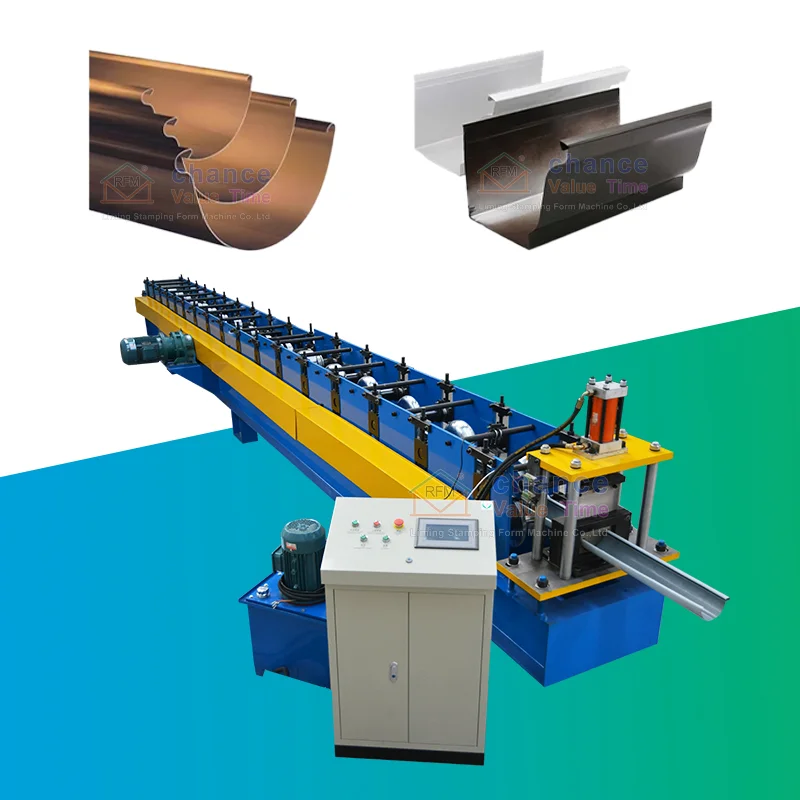
A gutter downspout machine is roll forming equipment that converts metal coil into downspouts for rainwater drainage production. A downspout roll forming machine usually works through coil loading, feeding, guiding, roll forming, seam closing, cutting, and finished product output. A complete rainwater downpipe production line helps building material factories produce square, rectangular, round, or custom downspout profiles for roof drainage systems.
What Is a Gutter Downspout Machine?
Gutter downspout machine, also known as a downspout roll former, is a type of roll forming machine that forms metal coil into finished downspouts for gutters.
The machine makes flat metal sheets into Rainwater Pipes Downspouts in a continuous forming process. The downspout can connect with gutters at the roof edge and channel water to ground drainage areas.
Our machine is capable to cut galvanized steel, aluminum, color-coated steel, stainless steel and other kinds of metal material. The materials to be cut can vary from machine design, roller die, cutting force and cutting system.
Why Gutter Downspouts Matter in Rainwater Drainage Production
A roof drainage system needs both gutters and downspouts.
The gutter collects rainwater from the roof edge. The downspout guides the collected water downward and away from the building. This function helps reduce uncontrolled water flow along walls, windows, doors, and foundations.
A downspout must have consistent dimensions. Stable dimensions help the installer connect gutters, elbows, outlets, brackets, and drainage pipes.
How Does a Gutter Downspout Machine Work?
A gutter downspout machine works through a continuous production process.
Step 1 The Decoiler Loads and Releases the Metal Coil
The decoiler carries the metal coil at the beginning of the production line.
The decoiler releases the strip into the machine at a controlled pace. Stable uncoiling helps the feeding system and roll forming system work smoothly.
The coil weight, coil width, and material type should match the decoiler capacity.
Step 2 The Feeding System Guides the Metal Strip
The feeding system moves the metal strip into the forming section.
The guide system keeps the strip centered before it enters the rollers. Accurate guiding helps reduce profile deviation during production.
A stable feeding path is important because any strip movement can affect the final downspout shape.
Step 3 The Roll Forming System Shapes the Downspout Profile
The roll forming system is the core part of the gutter downspout machine.
The metal strip passes through multiple forming stations. Each roller station bends the strip gradually until the profile reaches the required shape.
Step 4 The Seam or Locking Section Closes the Pipe Shape
Many metal downspouts require seam forming or locking.
The seam closing section helps the pipe body remain closed and stable. The seam area also affects the finished appearance and installation performance.
A precise locking structure can make the downspout easier to handle, stack, and install.
Step 5 The Cutting System Cuts the Downspout to Length
The cutting system cuts the formed downspout according to the preset length.
Automatic length control helps the factory produce consistent batches. Accurate cutting also reduces material waste and improves installation convenience.
The buyer should confirm the required cutting length and tolerance before machine design.
Step 6 The Output Table Collects the Finished Downspouts
The finished downspouts move to the output table after cutting.
The output table helps operators collect, stack, and transfer the finished products. This stage connects production with packing, storage, delivery, and project installation.
Main Components of a Gutter Downspout Machine
Decoiler
The decoiler supports the metal coil and releases the strip into the line.
The decoiler capacity should match the coil weight, coil width, and production plan.
Feeding Guide System
The feeding guide system keeps the strip aligned before forming.
The guide system helps the material enter the rollers in the correct position.
Roll Forming Station
The roll forming station shapes the downspout profile.
The forming rollers determine the profile shape, size, and surface appearance. The roller design should be based on the confirmed profile drawing.
Seam Closing or Locking Device
The seam closing device completes the pipe body.
This section helps improve profile stability and finished product consistency.
Hydraulic Cutting System
The hydraulic cutting system cuts the downspout to the required length.
The blade design and control accuracy affect the finished edge and length tolerance.
PLC Control System
The PLC control system helps operators set length, quantity, speed, and production parameters.
A touch screen control system can make operation easier and improve production repeatability.
Output Table
The output table receives the finished downspouts.
The table supports product collection after continuous production.
What Materials Can a Gutter Downspout Machine Process?
A gutter downspout machine can process several common building material coils.
Galvanized steel is often used when the finished downspout needs corrosion resistance and standard building drainage performance.
Aluminum is often used when the project needs lightweight rainwater drainage products.
Color-coated steel is suitable when the exterior drainage system needs decorative color matching.
Stainless steel can be used when the project requires stronger corrosion resistance in specific environments.
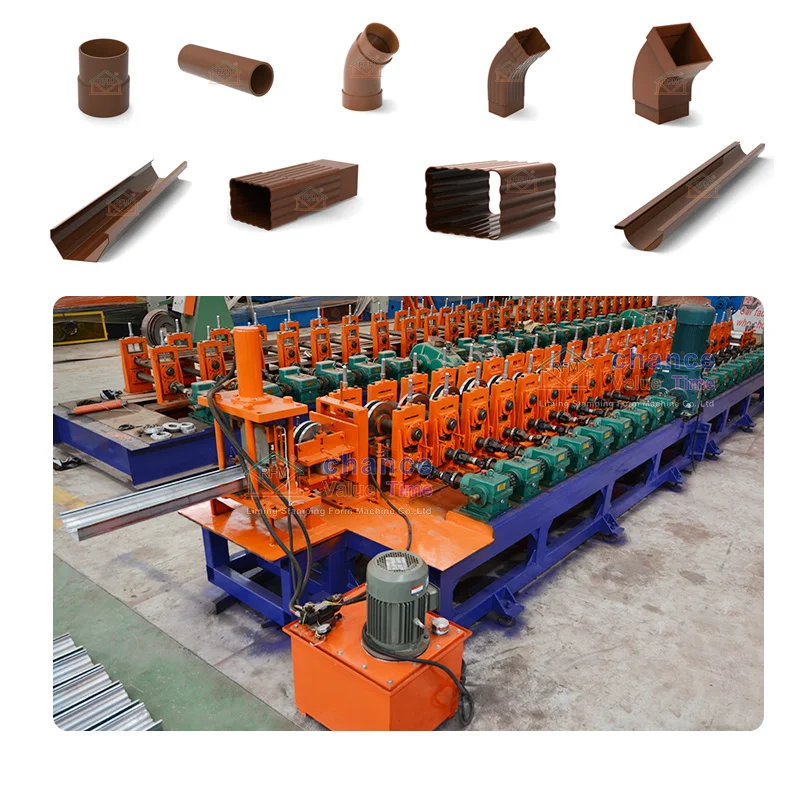
What Types of Downspouts Can the Machine Produce?
A downspout roll forming machine can produce different rainwater pipe profiles when the correct tooling is used.
Square Downspouts
Square downspouts are common in residential and commercial rainwater drainage systems.
The profile provides a clean exterior appearance and works well with many modern building designs.
Rectangular Downspouts
Rectangular downspouts are suitable for projects that need larger visual surfaces or specific drainage layouts.
The profile can match different gutter systems and architectural requirements.
Round Downspouts
Round downspouts are suitable for traditional building styles or specific drainage system designs.
The machine needs matched forming rollers and stable seam control for round profiles.
Custom Downspout Profiles
Custom downspout profiles are useful when the buyer serves a local market with specific size standards.
The buyer should provide a profile drawing, product photo, or physical sample before quotation.
Applications of Gutter Downspout Machines
A gutter downspout machine can serve several commercial production scenarios.
Residential Roofing Drainage Systems
Residential buildings need downspouts to guide roof water away from walls and foundations.
Consistent downspout profiles can improve installation efficiency for housing projects.
Commercial Building Rainwater Systems
Commercial buildings may require larger drainage capacity and consistent product supply.
Machine-produced downspouts can help standardize project delivery.
Metal Roofing and Building Material Factories
Metal roofing factories can add downspout production to expand their product range.
A factory that produces roofing sheets or gutters can use downspout equipment to create a more complete rainwater drainage offering.
Prefabricated Building Component Production
Prefabricated building suppliers often need standardized drainage components.
Stable machine output supports repeatable project specifications.
Benefits of Using a Gutter Downspout Roll Forming Machine
A gutter downspout roll forming machine provides commercial production value for building material factories.
The Machine Improves Profile Consistency
Roll forming can produce downspouts with stable profile dimensions.
The Machine Supports Continuous Production
The machine can transform coil material into finished downspouts through a continuous process.
Continuous production can improve output efficiency and reduce manual forming steps.
The Machine Reduces Manual Forming Work
Automatic forming and cutting reduce manual operations.
Fewer manual steps can improve production repeatability and batch consistency.
The Machine Supports Custom Profile Development
Roller tooling can be designed according to required drawings or samples.
Custom tooling helps buyers meet local market standards and project requirements.
The Machine Helps Expand Product Categories
Factories can use downspout equipment to expand from roofing sheets or gutters into rainwater drainage products.
This expansion can help building material suppliers offer more complete project solutions.
What Buyers Should Confirm Before Ordering a Gutter Downspout Machine
A buyer should prepare complete technical information before ordering a machine.
The Buyer Should Confirm the Downspout Profile
The buyer should provide a profile drawing, product photo, or physical sample.
The Buyer Should Confirm Material Type and Thickness
The buyer should provide galvanized steel, aluminum, color-coated steel, stainless steel, or other material requirements.
Material type and thickness affect forming force, roller design, and cutting system configuration.
The Buyer Should Confirm Production Speed and Capacity
The buyer should provide daily output or project supply demand.
Production speed affects motor selection, control system design, and line configuration.
The Buyer Should Confirm Cutting Length and Tolerance
The buyer should confirm the required cutting length.
Length tolerance affects installation, packing, and batch delivery.
The Buyer Should Confirm Voltage and Factory Layout
The buyer should confirm voltage, frequency, and available floor space.
A clear factory layout helps the manufacturer plan machine size, output direction, and production flow.
FAQ
What materials can be used for downspout production?
Galvanized steel, aluminum, color-coated steel, and stainless steel are commonly used when the machine configuration supports the material requirements.
Can one machine produce different downspout profiles?
One machine may produce different sizes or profiles when the machine design and roller tooling support the required changes.
Hebei Liming Stamping Form Machine Co.,Ltd designs, develops and manufactures specialized roll forming machines, including Downspout Machines and Gutter Forming Machines for the rainwater drainage industry of building materials. We provide customized gutter downspout machines for factory based production according to provided downspout profile drawings, material type, thickness, coil width and cut length as well as electrical details such as required voltage, production rates and plant layout. Please contact Hebei Liming for a tailored gutter downspout machine quotation.