A roll forming machine price represents more than the forming mill itself. B2B buyers must evaluate tooling, material capacity, automation, freight, installation, and acceptance testing before they approve a purchase. Many procurement teams first ask, “How much does a roll forming machine cost?” This guide also explains how to compare roll forming machine quotations on the same technical and commercial basis.
A useful quotation starts with a profile drawing, material specification, production target, and delivery destination. A headline price without these details cannot show the true investment.
How Much Does a Roll Forming Machine Cost?
A universal price range cannot describe every project. A standard roofing line and an integrated punching-and-stacking system require different engineering, equipment, and testing.
Why Roll Forming Machine Prices Vary
Several requirements have the greatest effect on the final price:
- The finished profile determines the forming sequence and tooling design.
- The material grade and thickness determine the frame, shaft, drive, and roller requirements.
- The target speed determines the feeding, cutting, control, and handling configuration.
- The hole pattern determines the punching and positioning systems.
- The required tolerance determines the measurement and acceptance process.
Tooling complexity, material strength, line speed, automation, and additional production systems are major cost drivers.
Why the Lowest Price Can Be Misleading
A low quotation may exclude the decoiler, forming rollers, punching dies, cutting tools, output table, export packing, freight, installation, or operator training.
The buyer should request an itemized scope before comparing offers. The itemized scope should clearly identify every included machine, service, option, and buyer-supplied item.
What Does a Roll Forming Machine Price Include?
Main Machine and Roll Tooling
The main machine usually includes the frame, forming stations, shafts, transmission, drive system, controls, measuring system, and cutting unit.
The tooling cost depends on the profile geometry, number of forming stations, roller material, surface requirements, and number of product sizes. A complex profile normally requires more engineering and more forming stages than a simple open section.
Feeding, Punching, and Output Systems
The production line may include a manual or hydraulic decoiler, leveling unit, servo feeder, punching system, continuous cutter, conveyor, counter, stacker, or labeling unit.
Each option should reduce labor, improve output, increase repeatability, or simplify product changes. The buyer should avoid paying for automation that does not solve a specific production problem.
Which Specifications Affect the Price Most?
Profile and Material Requirements
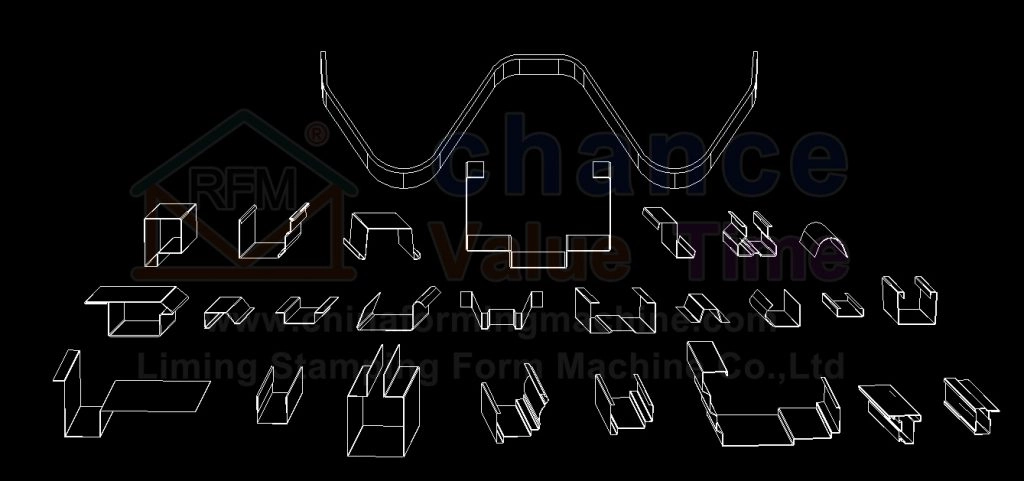
Complex returns, deep sections, narrow corners, asymmetric shapes, and closed profiles can require more forming stages. High-strength or thick material can require larger shafts, stronger frames, and greater drive capacity.
The buyer should provide the material type, material grade, yield strength, thickness range, coil width, coil weight, and surface coating. The supplier cannot design a reliable line from thickness information alone.
Speed, Tolerance, and Surface Quality
The supplier should distinguish forming speed from actual production speed. Punching, cutting, stacking, coil changes, and product length can reduce real output.
The buyer should define profile dimensions, straightness, hole position, cut-length accuracy, and surface quality. Coated products may need additional controls that prevent scratches.
How Does the Product Application Change the Price?
Building and Structural Profiles
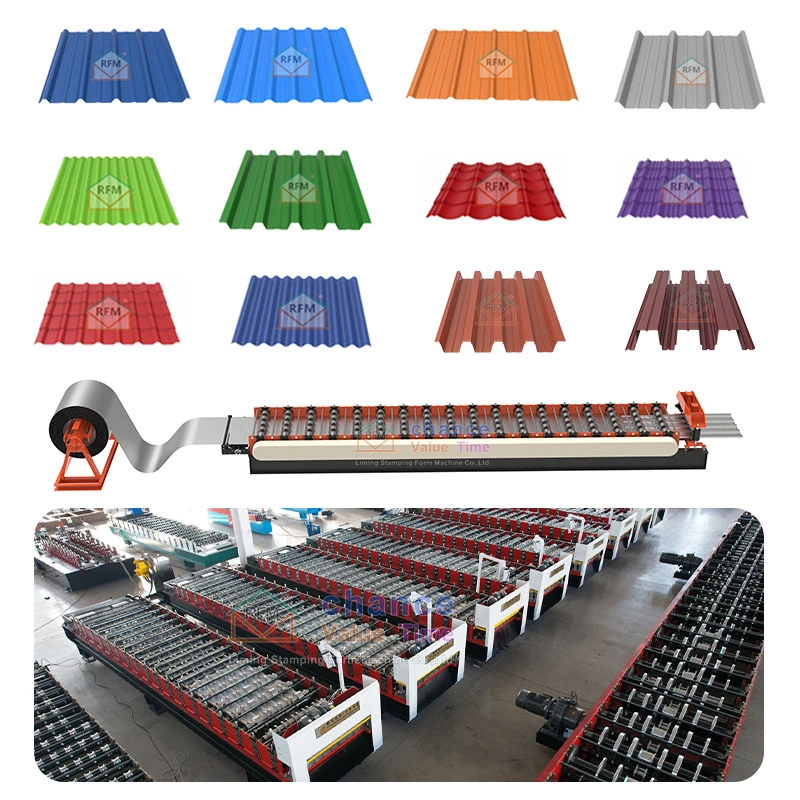
Roofing, floor deck, purlin, guardrail, and solar-support lines vary according to profile depth, material thickness, hole patterns, production speed, and stacking requirements.
An adjustable purlin line may require more complex controls and positioning systems than a fixed-profile line. A structural line may also require stronger components because it processes thicker or higher-strength material.
Multi-Process and Integrated Lines
Cable tray, shelf, door, gutter, slitting, cut-to-length, sandwich panel, and welded-pipe lines may require punching, notching, seaming, size changes, or additional processing stages.
Buyers must evaluate the complete layout and workflow. A lower forming-mill price may not reduce the total investment when the project requires several separate downstream machines.
Standard Machine or Custom Production Line?
A standard configuration can suit a common profile with stable materials and moderate output requirements. A custom line becomes necessary when the project includes unusual geometry, multiple sizes, high-strength material, integrated holes, strict tolerances, or automated handling.
The buyer should disclose future product sizes so the supplier can evaluate whether one adjustable system can cover compatible products.
A suitable adjustable design can reduce future capital expenditure. However, one machine cannot automatically produce unrelated profiles unless the tooling and mechanical structure support those products.
Which Costs Exist Beyond the Machine Price?
Shipping and Import Costs
The buyer should budget for export packing, container loading, freight, cargo insurance, customs clearance, duties, taxes, port charges, inland transportation, and unloading.
The selected delivery term determines which party manages shipment, documentation, costs, and risks. The contract should include a precise named place because vague delivery language can create unexpected charges.
The buyer should convert every offer to the same landed-cost basis. An ex-factory quotation cannot be compared directly with a quotation that includes freight or destination delivery.
Installation and Factory Preparation
The buyer may need to prepare floor space, foundations, electrical power, compressed air, lifting equipment, local labor, and test material.
The installation budget may also include engineer travel, accommodation, visas, and commissioning support. The buyer should confirm these responsibilities before signing the purchase contract.
How Should Buyers Conduct a Factory Acceptance Test?
Technical and Production Checks
A factory acceptance test should confirm the supply scope, material range, line speed, profile dimensions, cut length, hole position, surface quality, and continuous operating performance.
The test should use the agreed material whenever practical. A test with thinner or easier material may not prove that the machine can process the maximum specified material.
The test record should include measurements, nonconformities, corrective actions, and retest results. Structured acceptance testing commonly uses readiness checks, documented procedures, punch lists, hardware checks, software checks, and completion criteria.
Safety and Documentation Checks
The test should verify guards, emergency stops, alarms, interlocks, stop sequences, and restart behavior.
Machine safeguards should protect personnel from operating points, in-running nip points, rotating parts, and other hazardous movement.
The final documentation package should include operating instructions, mechanical drawings, electrical diagrams, component lists, machine parameters, and test reports.
How to Compare Roll Forming Machine Quotations
Use a Line-by-Line Comparison
The buyer should compare every offer against one technical specification. A quotation comparison matrix should cover the following points:
- Each supplier should state the material range, production speed, and guaranteed output.
- Each supplier should define the machine structure and tooling scope.
- Each supplier should list the punching, cutting, control, and handling systems.
- Each supplier should state the delivery, testing, installation, and payment terms.
- Each supplier should identify every exclusion and buyer-supplied item.
A supplier evaluation should consider technical capability, quality, delivery, project support, and total cost rather than unit price alone. A structured framework can prevent purchasing and production teams from evaluating different cost targets.
Calculate the Total Project Investment
The buyer should add the equipment package, tooling, optional systems, freight, import costs, factory preparation, installation, commissioning, and production ramp-up costs.
The buyer can estimate the payback period with this formula:
Payback period = Total project investment ÷ Expected monthly net contribution
The buyer should test conservative and expected utilization instead of assuming immediate full-capacity production.
What Information Is Required for an Accurate Quote?
The buyer should submit complete technical and commercial information:
- The buyer should provide a dimensioned profile drawing.
- The buyer should provide the material grade, yield strength, thickness, width, and coil weight.
- The buyer should define the required speed, output, tolerances, holes, and cutting lengths.
- The buyer should state the local voltage and frequency.
- The buyer should describe the required automation scope.
- The buyer should provide the delivery destination and required project schedule.
A complete inquiry allows the supplier to prepare an accurate technical proposal.
FAQ
Is Tooling Included in the Roll Forming Machine Price?
The quotation should state whether forming rollers, punching dies, and cutting tools are included. The quotation should also identify every profile and size that the tooling can produce.
Can One Roll Forming Machine Produce Different Profiles?
One machine can produce compatible profiles or multiple sizes when the tooling and adjustment system are designed for that purpose. The buyer should confirm the changeover method, adjustment time, and included product range.
Does the Price Include Shipping and Installation?
The price includes shipping and installation only when the quotation lists those services. The buyer should review the delivery term, commercial exclusions, engineer expenses, and buyer-supplied items.
Why Are Two Quotations So Different?
Two quotations may include different material capacities, machine structures, tooling scopes, speeds, automation systems, delivery terms, and acceptance guarantees. The buyer must compare the complete technical scope before comparing the final price.
Should a Buyer Choose the Lowest Quotation?
A buyer should choose the offer that meets the approved specification and provides the best total project value. A low price cannot compensate for missing tooling, insufficient capacity, unclear acceptance criteria, or an incomplete delivery scope.
Request a Custom Roll Forming Machine Quotation
With 30 years of roll forming expertise, Hebei Liming provides customized equipment for roofing, purlins, cable trays, guardrails, light-gauge steel, slitting, sandwich panels, doors, windows, shelving, and welded pipes. Buyers can submit drawings and technical requirements to receive a tailored proposal and itemized quotation. Contact Hebei Liming today for details.