This guide explains types of rollforming machines and describes the ways these machines shape metal profiles for industrial production. The article also highlights rollforming machine applications across construction, roofing, framing, and piping sectors. Rollforming machines from leading manufacturers like Hebei Liming deliver high precision, consistent output, and durable performance for long-term production needs. Readers will learn how rollforming machines work, how they support various industrial projects, and how to choose the right machine for efficient and reliable metal forming operations in modern manufacturing.
What Is a Rollforming Machine
Definition and Role in Manufacturing
A rollforming machine is a piece of industrial equipment used to shape flat metal coils into specific long profiles through a continuous bending process. The machine feeds metal strips through successive sets of rollers, with each set gradually bending the metal into the desired final profile. This cold-forming process ensures consistent cross-sectional quality and high throughput suitable for large-scale production environments.
How Rollforming Machines Work
Overview of the Processing Steps
A rollforming machine works by following a controlled production flow. First, the machine’s decoiler system unwinds the input metal coil. Next, the feed guide aligns the strip before it enters the roll stations. Then the rollers shape the material gradually at ambient temperature without additional heating. Finally, the cutting system clips the profile to the required length before stacking.
Key Components of the Rollforming Line
- Decoiler: Holds and unravels the metal coil.
- Feeding guide: Aligns the strip for consistent forming.
- Roll stations: Bend metal incrementally into design profiles.
- Cutting system: Shears the final profile to length.
- Control panel: Manages automation and operating parameters.
Key Categories of Rollforming Machines
Structural Profile Rollforming Machines
Structural profile rollforming machines are capable of producing very long metal profiles such as wall beam, roof joist, stud and channel which can be used as the main building support as well as the frame work for a building, or indeed any load bearing part of a building and are particularly suited for structural metal framing.
Roofing and Cladding Rollforming Machines
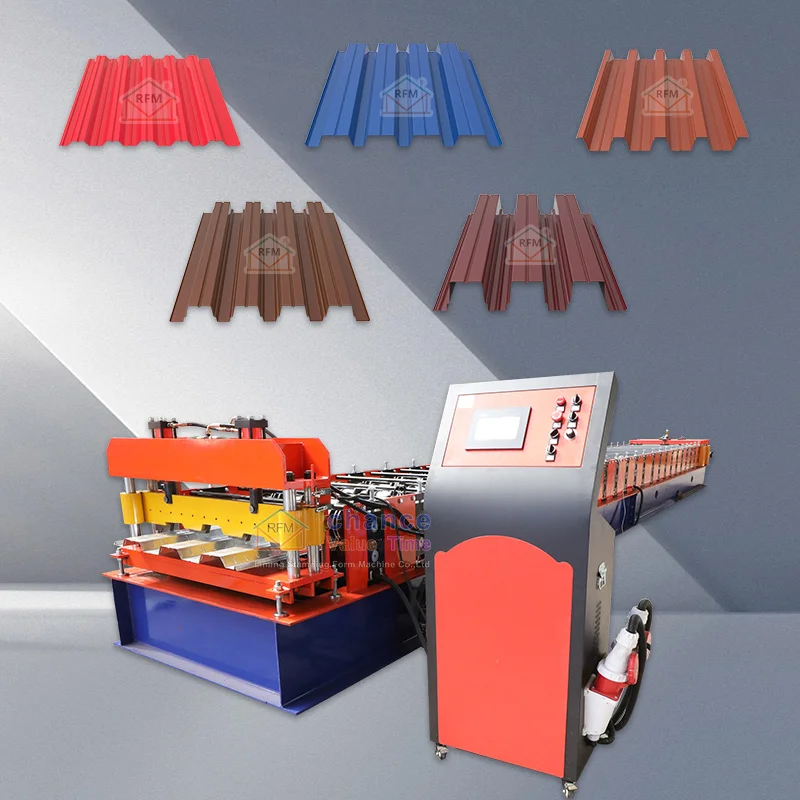
Roofing rollforming machines make metal roofing and siding panels. Each machine is designed to make a specific type of panel with a specific profile. There are machines that make trapezoidal panels, ribbed metal panels, standing seam metal roofing panels, and corrugated metal roofing and siding panels. These products are used for building enclosures and for weatherproofing.
Floor Decking Rollforming Machines
Floor decking rollforming machines are used to manufacture horizontal steel deck panels for multi-story steel buildings. The main function of these panels is to provide a base for concrete slabs or other types of building floor structures. A typical machine consists of key components including uncoilers, a forming host and hydraulic cutters to produce quality floor decking on an ongoing basis.
Purlin Rollforming Machines
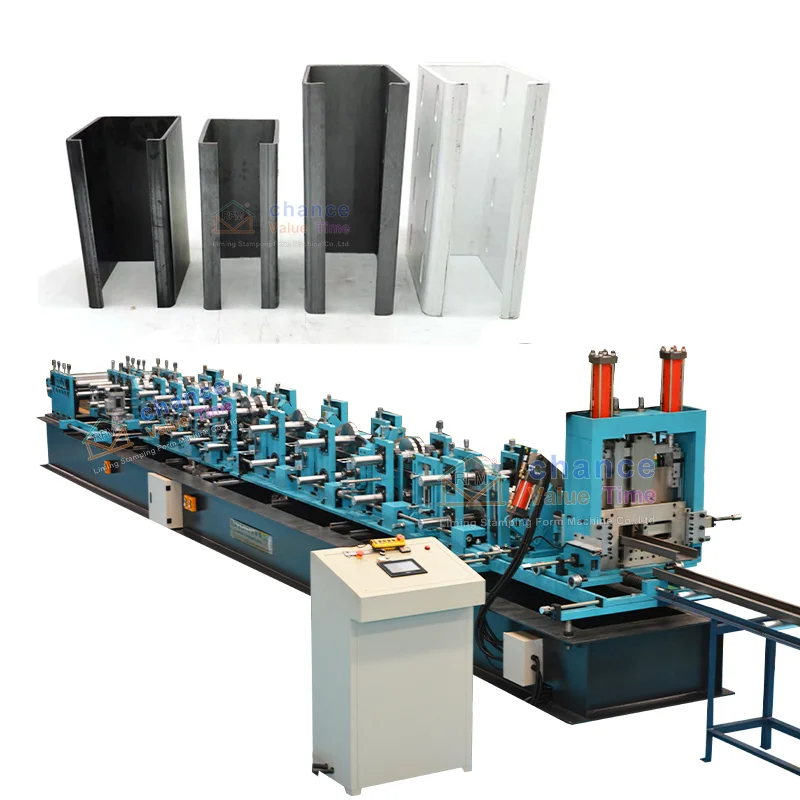
Purlin rollforming machines manufacture the main horizontal structural members of buildings, which support loads from roofs and walls and transfer these loads to the main framing of buildings. Typically Purlin rollforming machines are set up to form C Profiles, Z Profiles, Sigma Profiles and Hat Profiles using a series of roller stations. The section is folded using each station, to produce consistent accurate sections with minimal waste.
Light Gauge Steel Frame Rollforming Machines
Our range of Light gauge steel frame rollforming machines are particularly suited to producing studs, tracks & other framing members for wall systems, partitioning & also for modular buildings. The machines are designed to include features such as servo feeding and automatic punching of holes & slots all on one production line.
Tube and Pipe Rollforming Machines
Tube rollforming machines are used to form flat strip into hollow tubes and pipes. These machines are able to complete welding, cutting and forming in a single operation allowing for high volume production of tube and pipe items for use in building, HVAC, general infrastructure and mechanical applications.
Applications of Rollforming Machines
Construction and Structural Components
Construction also utilizes rollformed building components for the primary and secondary structures of buildings. Rollforming machines can produce the necessary studs, channels, joists, and decking required for the frameworks of buildings as well as residential and industrial facilities. These components provide the framework and the necessary uniform strength to withstand stress.
Roofing and Cladding Systems
The majority of rollforming machines are designed to manufacture roofing and cladding panels which form part of the external envelope of a building and are designed to withstand wind forces, to allow water to drain from the external face of the building and to provide adequate thermal performance.
Industrial and Commercial Products
Cable trays, guardrails, shelving units and machine components are produced in industry for use there. Products rolled out by formers are found in offices, in logistics buildings, in power supply installations.
Piping and Tubing Systems
Rollformed tubing and piping can be used for support of fluid transport and structural systems. Accuracy and consistency are critical for applications including HVAC ductwork, plumbing and other types of infrastructure conduits.
How to Choose the Right Rollforming Machine
Assess Production Capacity
Your production capacity is determined by the profile, the material and the run length. When choosing a machine, users have to make a judgment on their average production and the required time for their projects. There are large differences between the machines available on the market, as some are equipped with servo drives and feature fully automatic operation to increase productivity.
Consider Profile Complexity
The complexity of the profile shapes has an influence on the amount of roll stations required and on the tooling. Very complex profiles may need more roll stations and special tooling to hold the correct tolerances.
Review Integration and Automation Requirements
The modern rollforming machine is capable of incorporating features such as punching, embossing and cutting inline into the forming process. Automation of such processes allows for easier operation and reduces the need for manual intervention thereby improving repeatability.
Conclusion
In this guide we detailed the different types of rollforming machines, explained the working of a rollforming machine and looked at a number of applications for rollforming machines. We hope this guide will assist manufacturers, engineers and buyers of metal forming machinery to choose the appropriate machinery for making particular metal profiles for use in various industries.
FAQ
What materials can rollforming machines process?
Common rollforming products are made from galvanized steel, PPGI, aluminum and high-strength steel alloys to take full advantage of their durable properties and formability.
What industries rely on rollforming machines?
Some industries like construction, automotive, energy, infrastructure and storage systems need high-volume production of parts and use rollforming machines for this purpose.
Can rollforming machines handle custom profiles?
Yes, rollforming machines can be made to suit specific job requirements and be produced with special tooling to make unique shapes and more complex profiles.
Hebei Liming has 30 years experience in design and manufacture of roll forming machines for metal forming. As a leading manufacturer of specialized roll forming machines, we can provide customized solutions for different industries. Our structural roll forming machines are ideal for producing various building components such as wall & floor panels, while our roof forming machines can produce a wide variety of roofing profiles. Hebei Liming also manufacture purlin forming lines and a range of tube & pipe forming machines to complete our range of products. Contact Hebei Liming today to explore Hebei Liming’s full range of roll forming machines and receive a free quote, ensuring you find the perfect solution for all your metal forming and rollforming production needs.