Choosing a metal roof tile making machine manufacturer in China requires a structured evaluation of production requirements, engineering capability, machine configuration, quality verification, commercial terms, and export support. A buyer who understands how to verify a metal roof tile machine manufacturer in China can reduce sourcing risks and compare suppliers on measurable criteria. A professional evaluation should also compare metal roof tile making machine price and specifications together because machines designed for similar roof profiles can differ significantly in construction, automation, accuracy, and scope of supply.
Start With the Metal Roof Tile Production Requirements
A reliable purchasing process starts with the finished roof tile rather than the machine itself. The manufacturer requires accurate production data before an appropriate roll forming solution can be engineered.
Define the Roof Tile Profile and Material
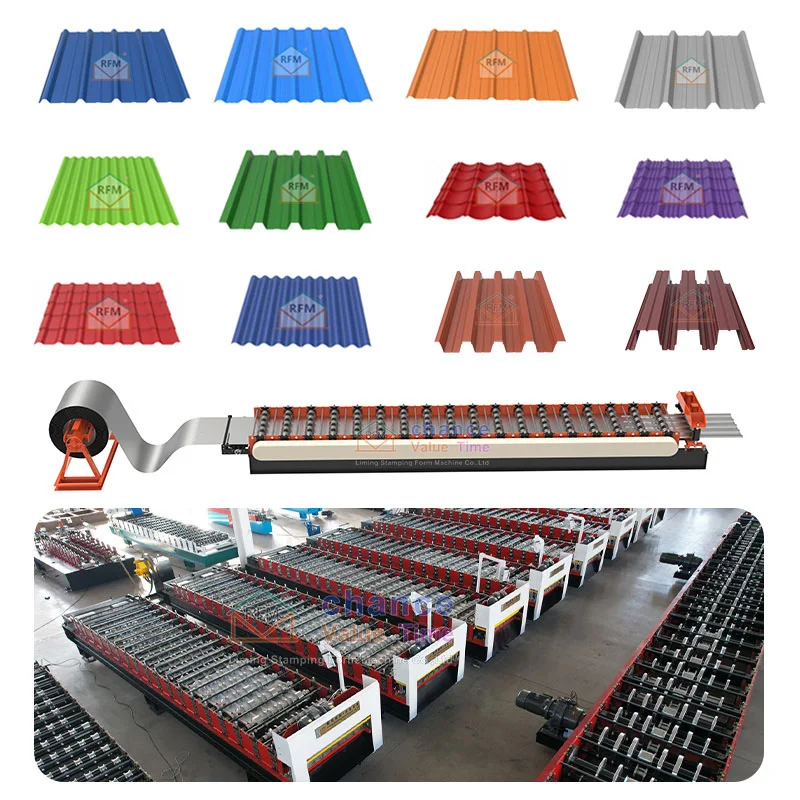
The buyer should provide a dimensional profile drawing that includes feeding width, effective width, rib dimensions, tile step length, tile step height, and overlap design. A physical sample can provide additional reference information when a complete drawing is unavailable.
The buyer should also identify the coil material, thickness range, coil width, and relevant mechanical properties. Roll forming gradually changes a flat strip into a finished profile through a sequence of forming passes, so profile geometry and material characteristics directly influence the tooling design.
Determine the Required Production Capacity
The buyer should define the expected daily or shift output before comparing machine speeds. A stated forming speed does not always represent the actual output of finished roof tiles because pressing, cutting, feeding, and profile geometry can affect the complete production cycle.
The manufacturer should therefore provide an output estimate based on the actual roof profile.
Select the Appropriate Machine Configuration
A roof tile production project may require a dedicated single-profile machine, a multi-profile configuration, or a complete production line.
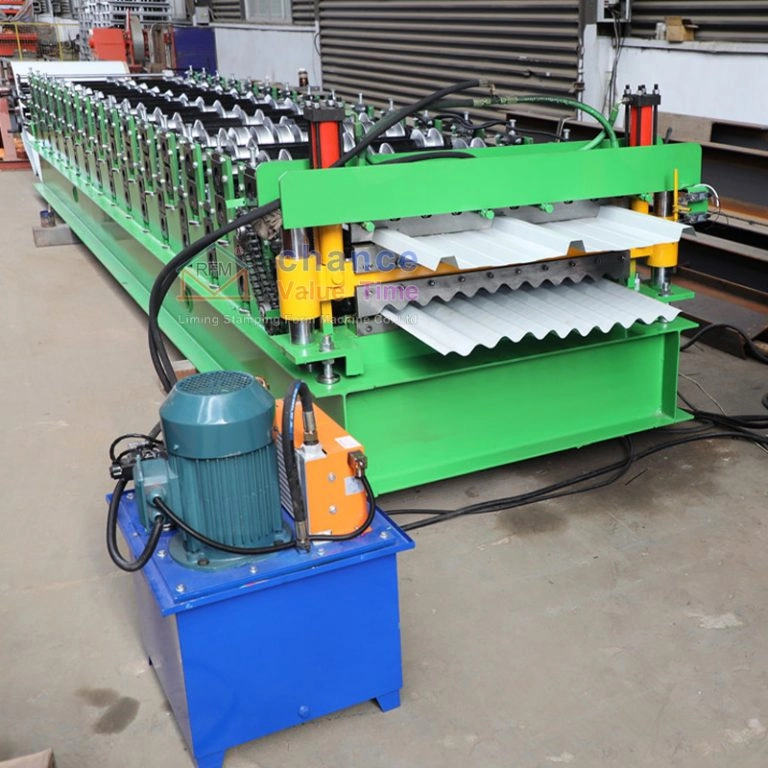
A dedicated machine can support continuous production of one profile. A double-layer or multi-profile configuration can support more than one product when the profiles and production requirements are technically compatible.
A complete line may include:
- A decoiler for controlled coil feeding.
- A guiding unit for strip alignment.
- A roll forming section for profile production.
- A pressing system for repeated tile steps.
- A cutting system for panel length control.
- An output system for finished-product handling.
The quotation should clearly identify which components are included.
How to Verify a Metal Roof Tile Machine Manufacturer in China
Supplier verification should establish whether the company has the manufacturing and engineering capability required for customized industrial equipment.
Verify Manufacturing Capability
A buyer can evaluate the registered company information, factory location, production facilities, assembly areas, engineering resources, testing capability, and consistency between commercial documents and the manufacturing entity.
A live factory inspection can provide additional evidence. The inspection can cover machines under assembly, roller tooling, frames, electrical cabinets, testing areas, and completed production lines.
Evaluate Engineering Capability
A capable engineering team should be able to interpret the roof profile and explain how the machine will produce it. The technical discussion should cover the forming sequence, tooling arrangement, material limits, pressing requirements, cutting method, expected tolerances, and electrical configuration.
Technical explanations provide more useful evidence than general statements about machine quality.
Compare Metal Roof Tile Making Machine Price and Specifications
A price comparison becomes meaningful only when the technical configurations and scopes of supply are comparable.
Examine the Roll Forming System
The buyer should review roller material, roller machining, forming-station arrangement, shafts, frame construction, transmission design, and alignment.
The number of forming stations should not be evaluated independently. The required arrangement depends on profile complexity, material characteristics, forming sequence, production speed, and tolerance requirements.
The engineering logic behind the forming system is therefore more important than a simple station-count comparison.
Review Pressing, Cutting, and Automation
A stepped metal roof tile normally requires controlled pressing to create a repeating tile pattern. The technical proposal should define the step length, step depth, and relationship between pressing and production output.
The cutting system should provide suitable panel-length control and repeatability. The PLC and HMI should support production settings such as length, quantity, and operating status.
The electrical design should also match the voltage, frequency, and phase configuration of the destination factory.
Verify Finished Roof Tile Quality
The finished roof tile provides direct evidence of machine performance.
A buyer can evaluate profile dimensions, effective width, rib geometry, tile-step consistency, straightness, overlap areas, surface condition, and cut quality.
Representative testing should use material that is reasonably close to the intended production specification whenever practical.
The acceptance criteria should be defined before shipment because general descriptions such as “high accuracy” do not establish a measurable standard.
Use a Factory Acceptance Test Before Shipment
A Factory Acceptance Test provides a structured method for checking completed industrial equipment before shipment.
Establish Measurable Acceptance Criteria
The FAT can include:
- The test can verify the agreed machine configuration and profile drawing.
- The test can measure representative finished-panel dimensions.
- The test can verify programmed lengths and quantities.
- The test can demonstrate agreed machine functions.
- The test can record production performance under defined conditions.
- The test can document corrective actions for unresolved deviations.
Shipment approval can follow after the agreed acceptance requirements have been satisfied.
Understand Why Machine Quotations Differ
Two quotations can represent significantly different equipment even when both use the same general machine name.
Price differences can result from the machine frame, tooling, shafts, forming design, motors, control system, hydraulic system, decoiler, cutting arrangement, automation level, optional equipment, documentation, testing requirements, packaging, and commercial terms.
A professional comparison therefore considers the complete scope of supply rather than the final machine price alone.
The landed project cost can also include machine options, export packaging, inland transportation, international freight, insurance where applicable, import charges, unloading, and commissioning-related expenses.
Check Custom Engineering Capability
Roof tile profiles can vary between markets and construction systems. The manufacturer should therefore be able to evaluate a customized drawing before confirming the final machine design.
A complete RFQ normally includes:
- The roof tile profile drawing.
- The coil material and thickness range.
- The coil width.
- The required production capacity.
- The electrical specification.
- The destination country.
- Any special technical requirements.
A technically complete RFQ improves quotation accuracy and makes supplier comparisons more consistent.
Review Compliance, Documentation, and Shipping Terms
The destination market can impose specific machinery, electrical, safety, and documentation requirements. The buyer should establish applicable requirements before the machine design is finalized.
The required documentation may include operating instructions, electrical diagrams, machine layouts, technical specifications, packing documents, and applicable conformity documents.
International contracts should also define the selected trade term so that transportation responsibilities, costs, risks, and delivery obligations are clearly allocated.
Review Warranty and Technical Support
A machinery contract should define the warranty period, covered components, exclusions, replacement procedures, commissioning responsibilities, technical documentation, and available operator training.
The buyer should also understand how electrical, hydraulic, control, or tooling components can be identified when replacement parts are required.
Manufacturer Selection Checklist
A final supplier evaluation can include the following criteria:
- The manufacturer understands the exact roof profile.
- The proposed machine matches the specified material.
- The engineering team can explain the forming process.
- The quotation provides a detailed technical configuration.
- The finished product can be measured against agreed tolerances.
- The machine can undergo a pre-shipment test.
- The quotation clearly defines included and excluded equipment.
- The electrical system matches the destination factory.
- The contract defines warranty and technical support.
- The shipping scope and trade terms are clearly documented.
FAQ
How is a metal roof tile making machine manufacturer in China evaluated?
A manufacturer can be evaluated through company information, factory capability, engineering resources, technical specifications, finished-product samples, machine testing, quotation transparency, export documentation, warranty terms, and technical support.
What information is required for a quotation?
A detailed quotation normally requires the roof tile drawing, coil material, thickness range, coil width, production capacity, voltage and frequency, destination country, and any special production requirements.
How should metal roof tile making machine prices be compared?
Machine prices should be compared after the technical configurations and supply scopes have been aligned. The comparison should include the forming section, tooling, decoiler, pressing system, cutting system, controls, optional equipment, testing, packaging, and shipping basis.
Should the machine receive a test before shipment?
A pre-shipment test provides measurable evidence of production capability. The test can verify machine functions, finished-panel dimensions, programmed lengths, production conditions, and other acceptance criteria defined in the purchasing agreement.
Request a Customized Metal Roof Tile Making Machine Solution from Hebei Liming
Hebei Liming has extensive experience in the design and manufacture of roll forming machinery, including roofing machines, customized roll forming equipment, cut-to-length lines, slitting lines, and related metal forming systems. A buyer can provide the roof tile profile, coil material, thickness range, coil width, required production capacity, electrical standard, and destination country so that Hebei Liming can evaluate the project requirements and prepare a suitable machine configuration.
For a customized metal roof tile making machine solution, detailed technical proposal, and quotation, contact Hebei Liming today. The buyer can submit the roof profile drawing and production requirements through the contact page, and the technical team can review the project specifications and recommend an appropriate machine configuration.