Choosing the right roller shutter door roll forming machine manufacturer requires more than comparing prices. A qualified supplier must understand your drawing, material, tolerances, output target, factory conditions, and market requirements. This guide explains how to choose a roller shutter door roll forming machine manufacturer and how to evaluate a custom roller shutter slat roll forming machine supplier before you approve a proposal or pay a deposit.
Define Your Roller Shutter Product Before Contacting Manufacturers
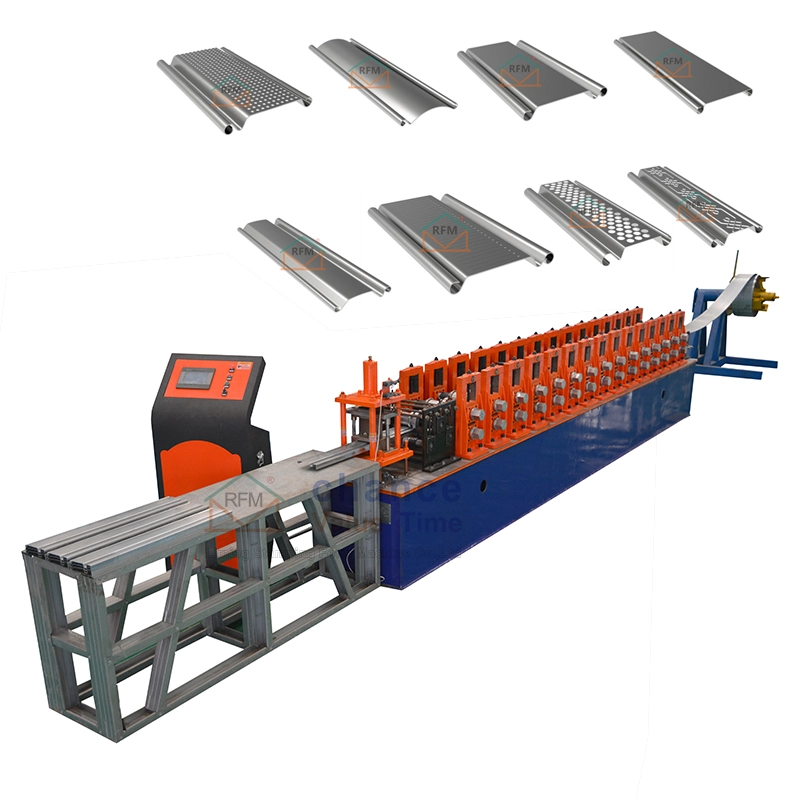
A manufacturer cannot design an accurate line from a product photograph alone. The manufacturer needs a dimensioned profile drawing because the slat width, profile height, bend radii, interlocking hook, ribs, slots, and perforations determine the forming sequence and tooling.
Confirm the Material and Finished Profile
The buyer should identify the material grade, yield strength, thickness range, coil width, coating, and acceptable surface condition. Different metals behave differently during cold forming, so the engineering team must consider forming force, springback, coating sensitivity, and bend geometry.
The buyer should define the application because different shutters require different strength, interlocking performance, punching patterns, and lengths.
Set Measurable Production Requirements
The buyer should define stable production speed instead of requesting only a maximum line speed. The buyer should also state the required length tolerance, profile tolerance, straightness, twist limit, punching accuracy, cutting quality, and acceptable surface marks.
A complete line normally combines coil handling, feeding, progressive forming, punching or cutting, hydraulic functions, automated control, and an output section. The selected configuration should match the actual profile and output target.
How a Custom Roller Shutter Slat Roll Forming Machine Supplier Should Review Your Project
A genuine customization process changes the machine design according to the product. A color change, logo plate, or screen label does not constitute engineering customization.
Review the Forming Sequence and Line Layout
The engineering team should divide the flat strip into controlled steps that avoid excessive stress, distortion, and surface damage.
The manufacturer should explain why the proposed station count suits the profile. A higher count does not automatically produce a better machine because the correct number depends on the material, bend angles, hook geometry, and quality target.
The proposal should specify the decoiler, feeding system, frame, shafts, transmission, punching arrangement, cutting method, hydraulic system, controls, and output table. The proposal should also match the buyer’s voltage, language, floor layout, and utilities.
Inspect the Machine’s Mechanical and Control Quality
The buyer should replace “high quality” claims with observable details and measurable results.
Examine the Frame, Rollers, Shafts, and Transmission
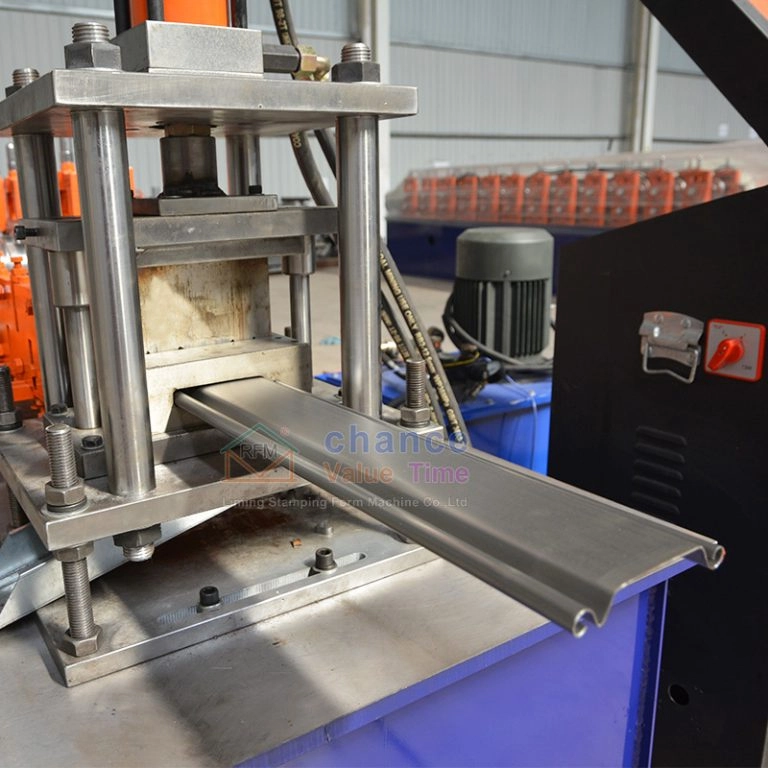
The frame should keep the forming stations aligned, and the buyer should inspect its welding, mounting surfaces, and anchoring.
The manufacturer should identify the roller material, heat treatment, hardness, surface treatment, machining method, and inspection method. The manufacturer should also state the shaft material, diameter, bearing arrangement, and adjustment method.
The transmission should match the required load, speed, and accuracy, and the manufacturer should justify the selected drive structure.
Review Automation, Electrical Design, and Safety
The control system should manage speed, length settings, piece counting, punching, cutting, alarms, and operating modes. The buyer should request clear screens, parameter records, electrical drawings, program backups, and recovery instructions.
The machine design should address risk assessment, guarding, emergency stopping, and electrical safety. Recognized safety principles require systematic risk reduction, while guarding rules identify points of operation, ingoing nip points, and rotating parts as hazards requiring protection. Electrical requirements cover the machine’s electrical, electronic, and programmable systems from the power-supply connection.
Verify the Manufacturer’s Real Production Capability
A polished quotation does not prove that a supplier controls engineering and manufacturing.
Request Evidence from Similar Projects
The buyer should request evidence from machines that produced similar profiles, materials, thicknesses, punching patterns, and speeds. The evidence should include finished samples, dimensional records, full production videos, machine identification, and test results.
The buyer should confirm who designs, assembles, programs, tests, and supports the machine. An on-site, live-video, or independent audit can verify the factory.
Compare Complete Quotations
Every candidate should receive the same drawing and requirement sheet. Each quotation should state the stations, shafts, rollers, motor power, speed, cutting method, controls, tolerances, tooling, spare parts, documents, packing, installation, training, and exclusions.
The buyer should compare total project cost, including packing, freight, customs costs, unloading, foundations, commissioning, and necessary options.
Plan the Factory Acceptance Test Before Ordering
The contract should define the factory acceptance test before the buyer pays the deposit.
Test the Exact Ordered Machine
The test protocol should identify the machine, approved drawing, specified material, test duration, sample quantity, measuring tools, operating conditions, and pass criteria.
The buyer should measure profile width, profile height, hook geometry, length, hole position, straightness, twist, surface condition, cut quality, and interlocking performance. The buyer should also test controls, alarms, emergency stops, guards, punching, and cutting.
Factory acceptance testing should verify completeness, contractual requirements, functionality, quality, and agreed performance before shipment. The test record should identify every nonconformity, corrective action, and retest result.
Confirm Delivery and Site Handover
The manufacturer should provide the layout, foundation plan, electrical load, utilities, lifting points, packing list, and installation instructions.
The contract should separate factory acceptance from site acceptance. Site acceptance should verify installation, commissioning, production performance, operator training, and document handover under the buyer’s actual factory conditions.
Use a Final Manufacturer Selection Checklist
The buyer should complete these checks before placing the order:
- The buyer should approve the drawing and material specification.
- The buyer should approve the complete line scope.
- The buyer should verify the engineering and factory capabilities.
- The buyer should define measurable speed, accuracy, and surface requirements.
- The buyer should approve the control, safety, and documentation requirements.
- The buyer should compare total cost and exclusions.
- The buyer should agree on the factory acceptance test.
- The buyer should confirm warranty, spare parts, installation, and support.
FAQ
What Information Is Required for an Accurate Quotation?
The buyer should provide a profile drawing, material grade, thickness range, coil width, punching pattern, finished length, target speed, tolerance, voltage, destination country, and required functions.
Can One Machine Produce Several Shutter Slat Profiles?
One machine can produce several profiles when its tooling and structure support practical changeovers. The manufacturer must compare the profile dimensions before confirming whether adjustable tooling, replaceable rollers, cassettes, or separate lines are appropriate.
How Can a Buyer Verify Production Accuracy?
The buyer should require multiple measured samples from a continuous production test. A single sample or an empty-running video cannot demonstrate repeatability or stable output.
Is the Lowest Quotation Usually the Best Choice?
The lowest quotation may exclude tooling, punching, cutting, safety equipment, documentation, testing, packing, installation, or support. The buyer should compare the complete technical scope and total landed cost.
Request a Custom Roller Shutter Machine Proposal from Hebei Liming
Hebei Liming states that it has 28 years of experience in roll forming machine design, development, and manufacturing, and its published range includes steel door and window machines, slitting lines, cut-to-length lines, and customized metal-forming equipment. Buyers can send a profile drawing, material type, thickness range, target speed, punching requirements, voltage, and destination country to request a customized roller shutter machine configuration and quotation. Contact Hebei Liming today to discuss your project requirements and receive a tailored technical proposal.