Roofing sheet roll forming defects can reduce panel accuracy, installation quality, and production efficiency. This guide covers common metal roofing sheet defects and solutions, including edge wave, center buckle, end flare, bow, twist, surface damage, and cutting errors. It also explains how to fix roofing sheet roll forming problems by checking the coil, feeding system, rollers, and cutting unit.
Why Roofing Sheet Roll Forming Defects Happen
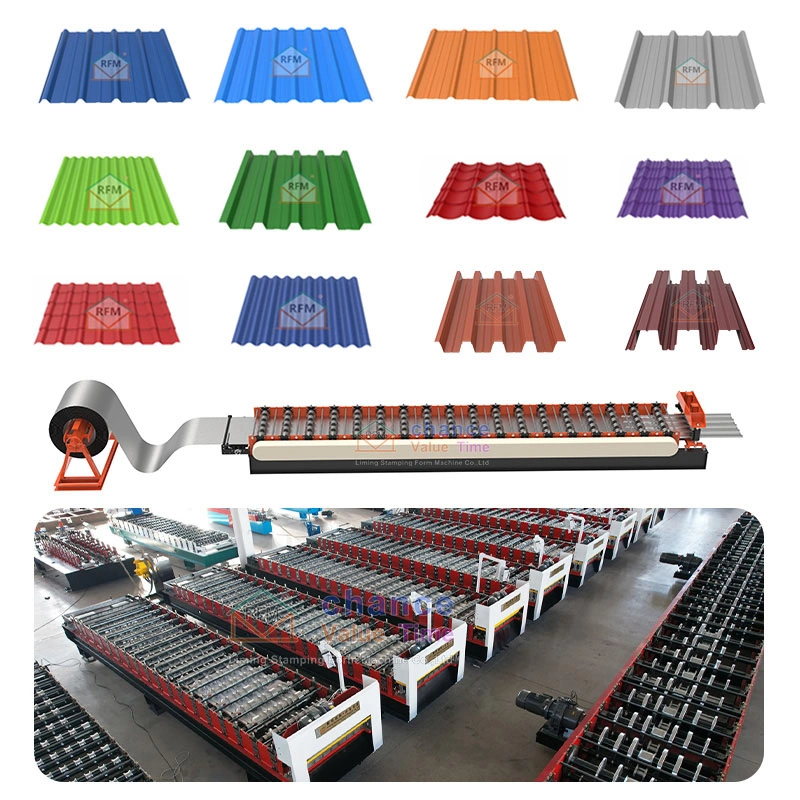
A roofing sheet roll forming machine shapes a steel coil through several roller stations. Each station should create a controlled profile change. Sudden deformation can increase stress and create distortion.
How Steel Coil Quality Influences Forming
The operator should check coil thickness, width, flatness, and coating quality. Thickness variation changes the forming load, while edge wave or camber can transfer into the finished panel. Correct steel sheet making machine selection should match the material thickness, profile dimensions, and required production capacity.
How Feeding and Guiding Problems Create Errors
The coil should enter the first station centrally and squarely. An off-center entry or unequal guide pressure can create different rib heights, twist, or edge deformation.
How Roller Alignment and Pressure Affect Quality
The rollers should remain parallel across the sheet width. Excessive pressure can create waves or scratches, while insufficient pressure can produce incomplete ribs.
Defect 1: Edge Wave in Roofing Sheets
Edge wave appears when the edges become wavy while the center remains relatively flat. The defect can prevent clean side-lap connections.
What Edge Wave Looks Like
A panel with edge wave has repeated ripples along one or both edges and may create gaps between overlapping panels.
Main Causes of Edge Wave
Common causes include excessive edge deformation, incorrect roller spacing, misaligned guides, and pre-existing coil stress. A large distance from the edge to the first forming point can increase strain.
How to Fix Edge Wave
The technician should verify coil dimensions, edge support, and roller parallelism. The technician should reduce edge pressure gradually, and the operator should test the result after each adjustment.
Defect 2: Center Buckle and Center Wave
Center buckle occurs when the middle of the roofing sheet becomes wavy, raised, or compressed along the forming direction.
How to Identify Center Buckle
A center buckle appears as a wave in the middle of a panel that fails to lie flat, even when both edges appear straight.
What Causes Center Buckle?
Central compression, uneven roller loading, incorrect pass-line settings, or unbalanced strip tension can cause center buckle. Incorrect leveling can increase the stress.
How to Correct Center Buckle
The technician should check the pass line and roller gap across the full width. The operator should remove unnecessary feeding tension and check flatness after each adjustment.
Defect 3: End Flare at the Panel Ends
End flare occurs when the profile opens, spreads, or changes shape near the front or rear of a panel.
Why End Flare Occurs
Roll forming creates tensile and compressive stresses. Unsupported ends can release these stresses after leaving the rollers. Insufficient support and incorrect cut-off timing can increase end flare.
How End Flare Affects Installation
End flare can prevent accurate overlap and create gaps or uneven joints, especially on long panels.
How to Reduce End Flare
The technician should inspect the first and final stations and confirm adequate support before cutting. The team should check cut-off timing and compare the front, center, and rear profiles.
Defect 4: Bow, Camber, and Longitudinal Curvature
Bow and camber describe different types of lengthwise distortion.
The Difference Between Bow and Camber
Bow describes curvature along the panel length. Camber describes sideways deviation from a straight reference line. Either defect can make panel positioning difficult.
Common Causes of Bow and Camber
Uneven side pressure, non-parallel rollers, incorrect guides, unequal coil tension, and pre-existing camber can cause both defects.
How to Correct Bowed or Cambered Panels
The operator should measure the panel against a straight reference. The technician should correct entry alignment before changing downstream rollers and should make one adjustment at a time.
Defect 5: Twist and Profile Misalignment
Twist occurs when a panel rotates around its longitudinal axis or when the two sides no longer match.
What a Twisted Panel Looks Like
A twisted panel may have unequal rib heights, fail to lie flat, and prevent side laps from aligning.
Why Roofing Panels Become Twisted
Non-parallel rollers, uneven guide pressure, incorrect station spacing, asymmetrical forming, and uneven coil tension can create twist. A station that bends one side earlier can gradually rotate the profile.
How to Correct Profile Misalignment
The technician should verify the frame level, roller positions, guide rails, and side supports. The operator should measure rib height after each station and avoid several large changes at once.
Defect 6: Scratches, Dents, and Coating Damage
Surface damage can reduce the appearance and protective performance of coated roofing sheets.
Common Sources of Scratches
Sharp roller edges, metal chips, damaged guides, and excessive pressure can scratch the sheet. The operator should inspect contact surfaces and remove debris.
How Dents and Pressure Marks Develop
Dents can result from localized pressure, uneven roller surfaces, incorrect coil loading, or poor support under long panels. Repeating marks usually indicate a tooling or guide-contact problem.
How to Prevent Surface Damage
The technician should confirm that working surfaces are smooth. The team should use protective film when required, and the inspector should record the location of repeated marks.
Defect 7: Cut-Length Errors, Burrs, and Deformed Ends
Cutting defects can create installation problems and increase material waste.
Why Cut Length Becomes Inaccurate
Incorrect encoder settings, measuring slippage, delayed signals, speed changes, and incorrect input can create errors. Pre-cut deformation can also change the measured length.
What Causes Burrs After Cutting?
Burrs can result from incorrect blade clearance, misaligned cutting tools, unsuitable blade condition, or unsupported material near the cutting point. A rough cut edge can affect panel overlap.
How to Improve Cutting Accuracy
The operator should verify the required length. The technician should compare programmed and measured lengths and check the measuring system, tool position, and signal timing. The inspector should measure production samples.
A Step-by-Step Method for Diagnosing Forming Problems
Step 1: Classify the Defect by Location
The operator should determine whether the defect appears at the edges, in the center, at the panel ends, across the full length, or only after cutting.
Step 2: Separate Material Problems from Machine Problems
The team should test another coil with the same specification. If the defect follows one coil, the material may be the main cause. If different coils show the defect, the technician should focus on guides, rollers, pressure, and cutting settings.
Step 3: Inspect the Forming Sequence
The technician should compare the profile after each station. The technician should identify where the profile first changes incorrectly and should adjust that station before changing others.
Step 4: Confirm the Finished Panel
The quality team should inspect profile width, rib height, panel length, straightness, side-lap fit, surface condition, and cut-edge quality.
When Technical Reconfiguration Is Necessary
A machine may require reconfiguration when it cannot produce the specified profile, when tooling does not match material thickness, or when defects continue after alignment checks. Custom tooling may be necessary for special rib profiles, non-standard widths, different thicknesses, or project-specific side laps.
The buyer should prepare the profile drawing, coil width, material thickness, required speed, panel length range, and cutting requirements before requesting a technical proposal.
Request a Roofing Sheet Roll Forming Solution from Hebei Liming
Hebei Liming Stamping Form Machine Co., Ltd. has 30 years of experience in designing and manufacturing roll forming equipment, including roofing machines, purlin machines, sandwich panel machines, deck floor machines, gutter machines, downspout machines, slitting lines, cut-to-length lines, and other metal forming systems. Contact Hebei Liming through its Contact Us page with your profile drawing and material specifications.
FAQ About Roofing Sheet Roll Forming Defects
What Is the Most Common Roofing Sheet Roll Forming Defect?
Edge wave, twisting, and cut-length errors are common problems. The actual defect depends on coil quality, profile design, tooling, alignment, and production settings.
Why Do Roofing Sheets Become Wavy at the Edges?
Roofing sheets usually develop edge wave because of uneven edge deformation, excessive edge pressure, incorrect roller alignment, or pre-existing coil stress.
What Causes Center Buckle in a Roofing Sheet?
Center buckle can result from central compression, uneven roller loading, incorrect pass-line settings, or unbalanced strip tension.
How Can I Fix Roofing Sheet Roll Forming Problems?
The operator should classify the defect, check the raw material, inspect the guides and rollers, verify the forming sequence, and test one controlled adjustment at a time.
Why Do Roofing Panels Become Twisted?
Roofing panels can become twisted because of non-parallel rollers, uneven guide pressure, incorrect station spacing, asymmetrical forming, or uneven coil tension.
Why Do Coated Roofing Sheets Get Scratched?
Coated sheets can become scratched when sharp roller edges, metal chips, damaged guides, foreign particles, or excessive contact pressure touch the surface.