A CZ purlin roll forming machine should fit the sections your factory makes and the changes between its orders. Size adjustment is part of that choice. Hole patterns, material changes and cutting requirements also affect how the next batch gets started. The practical goal is to move between the required jobs with a clear setup routine and an acceptable first member.
Hebei Liming’s purlin roll forming machine range includes adjustable C-profile equipment and a CZ purlin machine. This guide helps purchasing and production teams prepare the drawings and order details needed to discuss a suitable configuration. It focuses on the work your factory expects to run, rather than treating the widest advertised size range as the only selection criterion.
Match CZ purlin roll forming machine changeover to your orders
Start with the changes that occur most often. A factory producing long batches of one section has different priorities from a fabricator moving between several short orders each day. The relevant question is which adjustments interrupt that particular schedule and how the proposed equipment handles them.
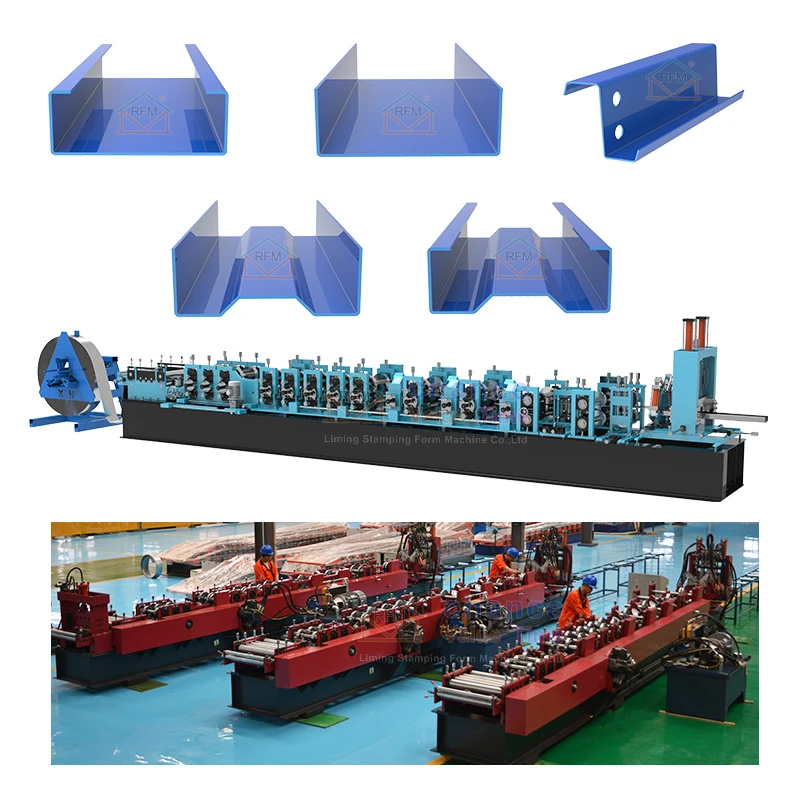
Separate a dimensional change within one profile family from a change between C and Z sections. They describe different requirements. Record both when the planned product range includes both shapes, then confirm the applicable adjustment sequence with Hebei Liming for the selected configuration.
This distinction keeps the machine discussion practical. A C-profile application can be considered against the C-profile range, while a production plan requiring both C and Z needs that requirement stated from the beginning. There is no need to add a capability that the order book does not call for.
Explain what changes and what stays fixed
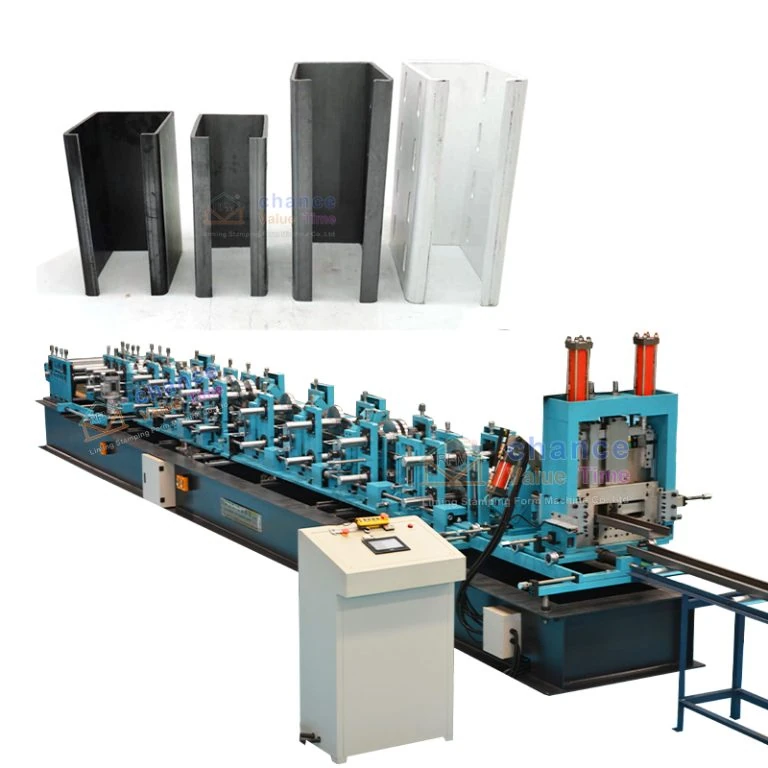
Use the section drawing to identify the web, flanges and lips. Mark the dimensions that change between jobs and those that need to remain the same. If only one flange changes, show that detail instead of describing the job simply as another width.
An adjustable section range does not mean every dimension varies independently. The full drawing gives Hebei Liming the information needed to discuss the available arrangement. It also keeps later conversations about holes and cut ends tied to the same section.
Prepare drawings that represent everyday production
For an adjustable CZ purlin machine quotation, Hebei Liming asks for dimension drawings and material thickness. Begin with a common section, then include a substantially different section and a C/Z transition where required. A small, representative set is easier to discuss than an unlabelled collection of sketches.
Add the material grade and available strength information. Keep drawing revisions visible, especially if an older order uses the same section name with a different thickness or hole pattern. The name alone will not show those differences.
Include the intended finished lengths and typical quantities. These details connect the profile drawing with the actual order, making it easier to discuss the forming, punching and cutting requirements together.
If a profile drawing is not available yet
A new production business may be starting from a local market requirement rather than an established drawing set. Hebei Liming’s quotation guidance also provides a route for discussing models according to local market standards when an outline drawing is not available.
Name the intended market and the section designation used there, and share any existing sketch or product reference. Confirm the agreed drawing before finalising the equipment configuration. This starts a useful conversation without requiring a complete drawing package at the first enquiry.
Include the hole pattern in the changeover plan
The forming section may stay the same while the hole pattern changes. Show the hole shape, dimensions and position, as well as the spacing along the member. Reference the holes from a defined end so the section and punching drawings can be read together.
For each common order change, identify whether hole spacing alone changes or whether a different hole size or position is required. Discuss the corresponding program settings and any tooling or position adjustments for the proposed machine. Programmable spacing and a change of hole shape are different functions.
Putting these requirements into the enquiry early helps the proposed configuration reflect the finished member. It also avoids leaving an important connection detail until after the forming arrangement has been chosen.
Check the member as it will be used
Include the required holes when planning a representative production trial. Inspect their positions on the finished purlin using the agreed references. If connection fit is important, discuss whether a mating-part check would be useful within the project scope.
Dimensional inspection and connection fit serve different purposes. Keep both results clear where both are required. Structural suitability remains a separate design matter; making a section to a drawing does not replace the checks needed for its use in a building.
Plan coil and cutting changes together
Different sections may require different strip widths or materials. List the feedstock for each representative order, including grade and thickness. If the next job needs another coil, include that task in the production plan alongside the forming adjustments.
This is where batch planning becomes useful. Orders using compatible material may offer a different scheduling option from a sequence that repeatedly changes coils. The appropriate sequence depends on delivery priorities as well as machine setup, so give the planned batch sizes and order frequency some attention.
Confirm how the selected cutting arrangement accommodates the required sections. Identify any adjustment or tooling work involved when the profile changes. Then include cut length and end condition in the first-piece check; those details can matter to the next assembly step even when the section dimensions are correct.
Coil handling and equipment adjustments should follow the machine’s operating instructions and the site’s safety procedures. Changeover planning is about a repeatable working routine, including the necessary checks, rather than removing safeguards to shorten a demonstration.
Use the first acceptable purlin as the changeover finish point
For production planning, it is useful to measure a transition through to the first acceptable member of the next order. Define the starting point and included tasks before a trial. That produces a time record the factory can interpret against its own schedule.
A suggested starting point is the last acceptable member of the previous order. The finish point can be the inspection of the first acceptable member of the new one. Agree this definition for the project, including how coil changes, trial pieces and measurement time will be treated.
Record the section pair and material beside the result. A transition between similar sizes and one involving another material or hole arrangement may involve different work. Keeping those conditions visible makes the trial more useful when planning future batches.
Include a repeat order where it matters
If returning to familiar sections is common, propose that sequence for the trial. Record the settings and adjustments needed to return to the earlier job, then inspect the resulting member against its drawing.
This gives attention to a routine part of production that a single size change may not cover. The agreed record can identify what the operator needs to check when restarting that order, rather than relying on memory of the previous setup.
Choose adjustment priorities before discussing the final configuration
The most useful automation is the automation that addresses frequent work. Start with the transitions that occur regularly, then consider occasional changes that are essential to the product range. This helps keep the equipment discussion connected to production rather than a list of features.
A compact order-change list can include:
- Current and next section drawing, with revision identifiers.
- Dimensions that change and dimensions that remain fixed.
- Material grade, thickness and strip width for each job.
- Hole pattern and cut-length changes.
- Typical batch quantity and how often the transition occurs.
- First-piece inspection requirements.
Hebei Liming’s quotation guidance also asks buyers to state requirements for production speed, power, voltage and component brands in advance. Include any site requirements already decided. Where a preference is still open, identify it as a discussion point rather than allowing it to become an assumed specification.
FAQ
Is an adjustable C purlin machine the same as a CZ machine?
No. Adjustable dimensions within a C-profile family and production of both C and Z sections are different requirements. Hebei Liming lists both C-profile and CZ equipment. Describe the required section families and drawings so the appropriate product direction can be discussed from the start.
Does automatic adjustment cover every changeover task?
The scope depends on the selected configuration and the change between orders. Dimensional adjustment, profile switching, punching, coil replacement and cutting can involve different steps. Confirm which actions are controlled through the machine and which remain operator tasks for the section pair being discussed.
What is needed to begin a quotation enquiry?
Send a dimension drawing and material thickness, then add the grade, hole pattern, finished lengths and common order changes. If no drawing is available, explain the local market requirement. State any production speed, power supply or component-brand requirements already fixed for the project.
Discuss your purlin production with Hebei Liming
To discuss your purlin production requirements with Hebei Liming, describe the sections you plan to produce and the changes that occur most often. Existing drawings or a simple order list are enough to start; the enquiry does not need to be a finished technical specification.
For a new workshop, include the intended market and initial product range. For an established factory, identify the transition that takes the most attention today. Either starting point keeps the CZ purlin roll forming machine discussion focused on the work the proposed line needs to do.