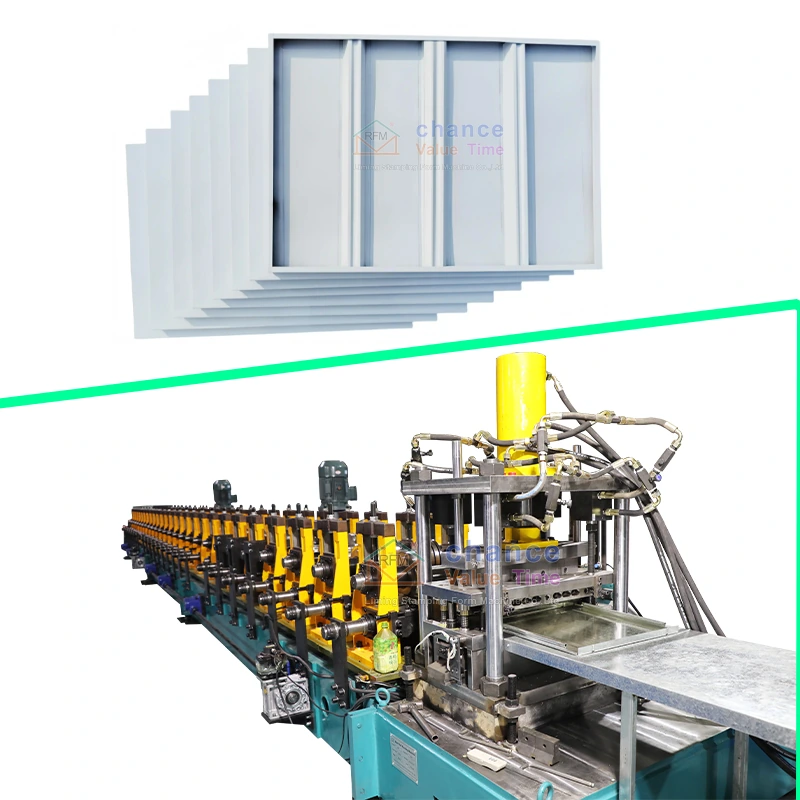
A request for roll forming lines for shelving often starts with a drawing and a target speed. That is useful, but it is not enough to define the line. A warehouse rack system may include uprights, beams, shelf panels, braces and other formed parts. Each profile brings its own strip width, hole pattern, material range and downstream handling needs.
A clear answer gives Hebei Liming a better basis for discussing the machine arrangement, tooling and trial plan. Hebei Liming mainly supplies roll forming equipment for shelving components rather than finished rack products. This keeps the quotation tied to the equipment and actual profiles required, instead of an assumed standard shelf line.
Start with the shelving parts, not a general machine name
Shelving covers several different products. A shelf panel is not the same forming job as an upright, brace or box beam. The cross-section, return lips, stiffening ribs, perforations and connection details all affect how the strip is prepared and formed.
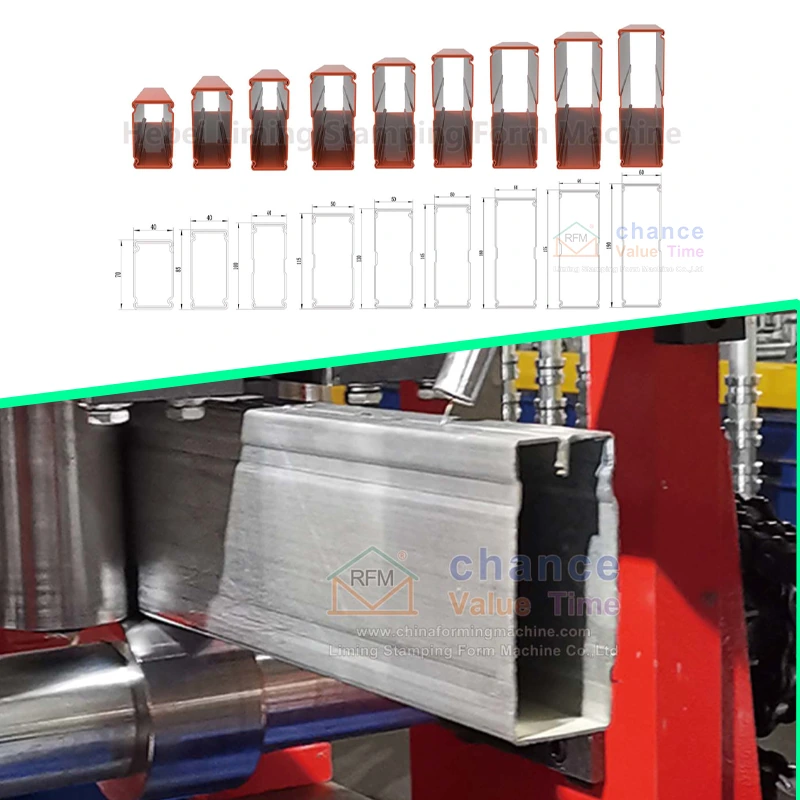
Among Hebei Liming’s shelving equipment, rack upright roll forming machines are ordered most often. Shelf panel, brace and beam forming machines can also be produced when buyers need those parts. A complete rack may use all four, but that does not mean one generic line should be assumed. Hebei Liming can discuss a machine around the buyer’s sample or drawing, so prepare one current reference for every profile in the first purchasing scope and mark which parts are core orders and which are future options.
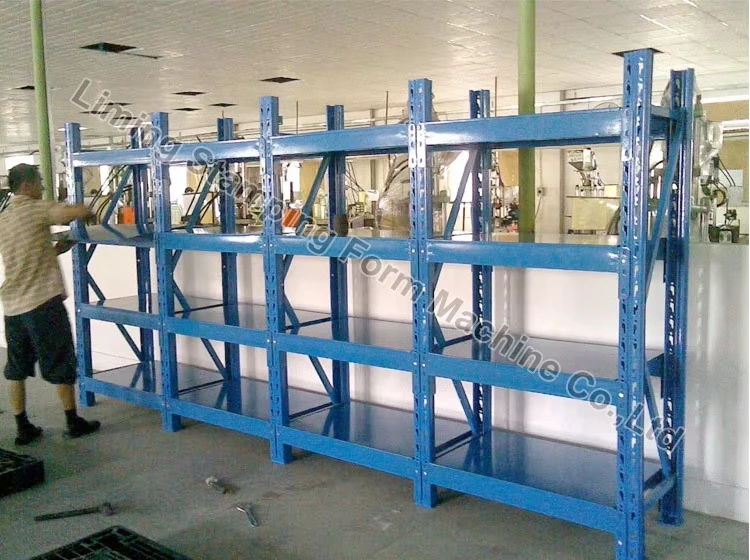
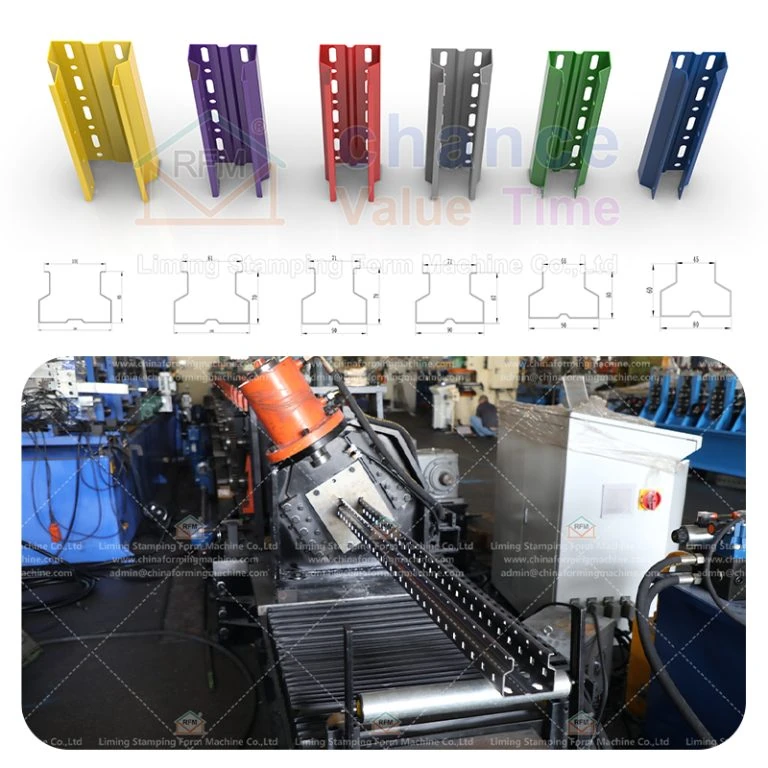
The Hebei Liming steel shelf production line range shows product families for several rack components. Use the closest family as a starting point, then send the actual profile drawings for a model-specific review.
Build a product matrix before asking for a quotation
A short matrix is easier to review than a folder of drawings with no priority. One row per profile is enough. Include the part name, drawing revision, material, thickness, coil width if known, finished length, hole pattern, expected order size and changeover frequency.
The matrix also exposes conflicts early. One profile may use thin pre-painted coil while another uses thicker galvanized material. A buyer may expect both to run on the same machine, but that should be assessed against the specific section and proposed tooling rather than assumed from a broad thickness range.
Mark the highest-volume items and the awkward ones. The everyday part helps define normal production. The difficult part may reveal a tooling, punching or handling requirement that would otherwise appear late in the project. Keep the drawing revision and date in the matrix so the same reference follows the trial samples and acceptance record.
Show which dimensions change between orders
Do not describe a machine as flexible without saying what must change. Width, flange depth, lip size, hole spacing and cut length are different variables. Some changes may be handled through settings or an electric control system on a particular model, while other changes can require tooling work or replacement of cutting blades in a manual section.
For a machine configured for multiple sizes, the electrical control system can automatically adjust selected dimensions. The manual section still requires the cutting blades to be changed by hand when a different size calls for a different cut. Identify the fixed dimensions, the automatically adjustable dimensions and the blade-change steps for each profile family. The exact range remains tied to the proposed model and the buyer’s drawings.
The 195–495 mm shelf layer forming machine provides a concrete product example. Buyers should confirm whether its working range and configuration suit the dimensions in their drawings.
Define punching from the assembly connection
Punching is not just a count of holes. The slot shape, spacing, orientation and relationship to the finished cut end matter when a rack is assembled. Drawings should show the reference points used by the fabricator or installer.
Tell Hebei Liming whether patterns repeat continuously or change by part length. Note any left-hand and right-hand parts. If several stock-keeping units share the same section but use different holes, add a simple schedule showing which pattern belongs to which item. The control discussion should then cover recipe identification, length control and punching coordination for the agreed products.
Include the operations after roll forming
Some rack components go directly to packing. Others need welding, assembly, coating or inspection. These later operations influence how the formed part should be delivered from the line.
Explain whether pieces need a particular orientation, stacking method or identification. The illustrated rack shows how uprights, shelf panels, cross beams and braces meet in the finished structure. That relationship matters when deciding where parts are collected, counted and moved to the next operation.
Packaging can remain outside the machine order and still affect the equipment conversation. If parts are counted into bundles, separated with protective material or moved directly to welding fixtures, note that expected handoff. The forming-line boundary can then be discussed separately from the wider factory flow.
Discuss line layout around the factory, coil and order flow
Available floor space should be shown with dimensions, access routes and the intended direction of material flow. Include the space needed to load coils, remove completed parts and reach normal service points. A line drawing that fits inside a rectangle is only the first check; people and material still need to move around it.
Record the expected coil inner diameter, outer diameter and maximum weight, along with how coils will arrive at the decoiler. Confirm the local power supply and any plant utilities that the proposed configuration may require.
Plan the trial around normal orders and changeovers
A trial should produce parts that can be measured and assembled. Agree on the trial material, drawing revision, sample quantity and inspection method before the run. Profile dimensions, cut length, punching position, visible surface condition and assembly fit can be recorded as separate checks where they apply.
Trial records should keep the sample identity and test conditions visible. This makes it easier to connect the measured result to the material, drawing revision and machine setup used for that run. Agree on acceptance values against the confirmed product drawings and project scope before the trial.
If the order mix changes often, include at least one representative changeover in the plan. Record what operators adjust, what parts are replaced and how the first pieces after the change are checked. A stable run and a successful changeover answer different purchasing questions.
Prepare a useful RFQ for roll forming lines for shelving
The most useful RFQ connects the rack products to the proposed line. Attach the profile drawings and product matrix. Then add the production context:
Hebei Liming accepts orders starting from one machine. Buyers can begin with the profile that drives current production, then list any shelf-panel, brace or beam equipment as separate requirements. Each proposed line can then be checked against an actual part drawing and sample. For the first machine, keep one representative sample and a dimensioned drawing aligned. This gives the configuration discussion a clear baseline before future profile variants are added.
- material grades, coatings and thicknesses;
- coil dimensions and maximum coil weight;
- finished lengths and order quantities;
- punching patterns and drawing references;
- profiles expected on each line;
- which dimensions change and the preferred adjustment method;
- changeover frequency and acceptable method;
- downstream process and part collection needs;
- factory layout, power supply and preferred trial material.
Price comparisons become more meaningful when suppliers are quoting the same scope. Without this information, one proposal may cover a shelf panel only while another includes punching, changeover functions or handling equipment.
FAQ
Can one roll forming line make every shelving component?
Do not assume it can. Shelf panels, uprights, beams and braces can require different forming and punching arrangements. Send each profile drawing and ask Hebei Liming to confirm which products belong on the proposed line and which require separate equipment.
How should a shelving forming machine be selected?
Start with the priority profile and compare its drawing or sample with the proposed machine setup. If several rack components are required, list each one so the forming and punching requirements can be reviewed separately.
Can shelving dimensions be changed automatically?
Some specific configurations may use an electric control system for selected adjustments. Other changes may require manual setup or a replacement cutting blade. The adjustment range, affected dimensions and changeover steps must be confirmed against the proposed model and profile drawings.
What should be checked during a shelving line trial?
Use the agreed drawings and project scope. Typical checks may cover profile dimensions, length, punching position, surface condition, repeatability and assembly fit. The exact method, sample plan and acceptance values should be confirmed for the order.
Send the profiles that matter first
A concise RFQ does not need to describe every rack the factory may ever produce. Start with the parts that drive current orders, plus one or two likely variants. Mark their priority and explain how often production moves between them.
Send the profile matrix and available drawings to Hebei Liming’s enquiry team so the suitable line, punching arrangement, adjustment approach and trial scope can be discussed against real products.