
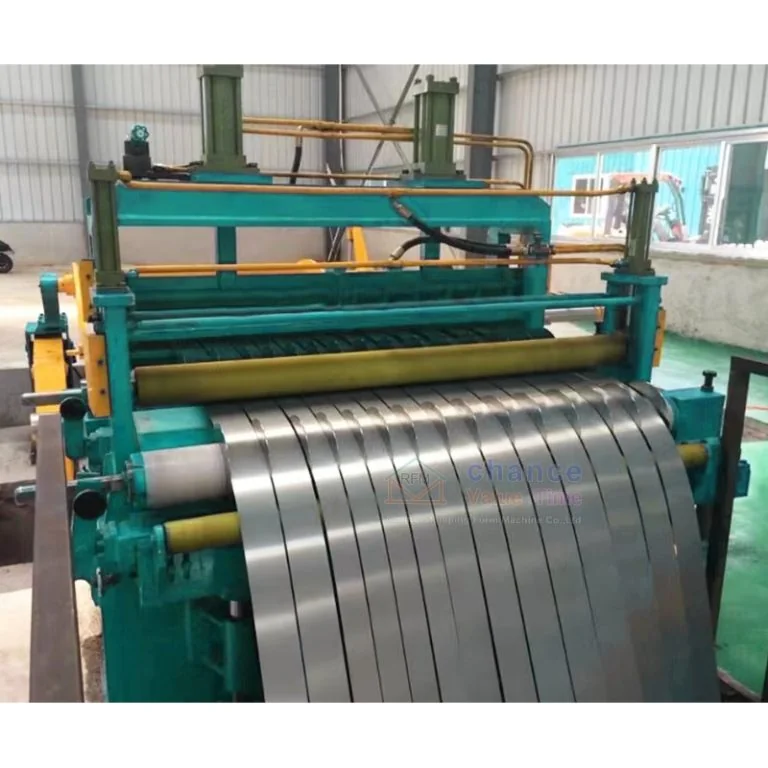
A steel coil slitting machine can produce several narrow strips from one master coil, but a trial is only useful when the output can be checked against the intended order. A single width reading or a quick look at the recoiled coils leaves too much unsaid. The slit pattern, strip position, edge condition, and coil build should be recorded together, with the material and setup identified. That record gives the buyer and production team a practical basis for discussing what happened. It is not a substitute for the order specification or a machine-specific acceptance agreement.
This guide focuses on trial observations after the slit pattern is set. It compares the planned strip layout with the output and separates evidence from possible causes. Hebei Liming’s steel coil slitting line range provides the product context; configuration and operating limits remain model- and order-specific.
Start with the coil and slit pattern

Before a trial, identify the coil and expected pattern. Record its material designation, nominal thickness, incoming width, coil identification if available, and pattern revision. If a substitute is used, note it instead of treating its result as interchangeable with production material.
The pattern should show how the incoming width is divided, including any side trim or scrap. A simple strip map can label each strip from operator side to drive side, its planned width, and its sequence. This lets the team discuss an outlying measurement by position instead of saying only that “one strip was off.”
The coil slitting line product details can help identify the product category being discussed, but a public product description does not establish that every tooling arrangement, capacity, or tolerance applies to a particular order. Confirm the quoted configuration against the actual coil and slit pattern before the trial.
Measure width by strip position
Take measurements at agreed points and label each by strip position and run location. Beginning, middle, and end may suit a trial, if the length allows and both parties agree. The point is comparability, not a universal sampling rule.
Use the drawing or purchase specification as the reference. Record the required width and agreed tolerance beside observed values; do not invent a limit after the run. If the method or measurement location is unspecified, resolve it before judging pass or fail. Instrument condition and material handling can affect the comparison.
A compact table can hold the information:
- Strip position from operator side to drive side
- Planned width and the source drawing or pattern revision
- Measurement location along the run
- Observed width and the agreed acceptance range
- Instrument or measurement method, when the parties require it
- Notes about interruptions, setup changes, or material changes
The table should preserve individual readings instead of averaging away a localized variation. If one strip differs while the others remain close to the planned values, the position and measurement point help guide a focused review. They do not, by themselves, prove what caused the difference.
Record edge condition without guessing at the cause

Edge condition is a separate observation from strip width. Note visible burrs, tearing, waviness, or other edge features only where they can be described consistently and compared with a stated requirement. A close-up photograph can support the record when it includes a scale or a clear location reference. Do not use an image alone as a substitute for a measurable acceptance criterion.
Slitting terminology and acceptable edge quality can depend on the cutting method and the downstream process. The buyer should state what the strip edge needs to do in the next operation, such as feed into a forming or welding process, and identify any specified edge condition. If the end use has no written limit, record the observed condition and leave acceptance for agreement rather than declaring it compliant.
Safety comes first during inspection. A slit strip can have sharp edges, and recoiled material can retain tension. Keep hands away from exposed edges and moving equipment. Inspection should happen only at a safe, agreed point in the process, with the line stopped or guarded as the equipment procedure requires. Do not reach between strips or near rotating components to obtain a closer look.
Check the recoiled output as a separate result
After slit width and edge notes, inspect how the strips are wound. Record which strip corresponds to each coil position, whether the coil is stable for the intended handling, and any visible telescoping, loose wraps, or uneven build that the parties agreed to review. These are observations, not automatic rejection criteria. The required coil appearance should be tied to packaging, transport, storage, or the next production step.
Use the strip map to keep the recoiled coils identifiable. A tag or position label can connect each output coil to its width reading and edge note. If the trial includes several slit patterns or a setup adjustment, keep each run separate. Mixing observations from different setups makes it harder to interpret the result and can lead to an incorrect conclusion about repeatability.
Hebei Liming’s custom coil slitting line configurations are a useful starting point for a configuration discussion. For an actual trial, the parties still need to agree which material, slit pattern, output condition, and records apply to the specific machine and order.
Separate evidence from diagnosis
A trial sheet should separate measurement from suspected cause. “Strip 3 measured wider at the end of the run” is an observation; “the knife setting caused it” needs a separate technical review. Keeping them apart avoids turning an early assumption into a permanent record.
For an investigation, confirm the measurement method, coil, and pattern, then review setup information with the machine team. Record what changed before another run. Changing several variables at once makes a specific difference harder to explain.
The same principle applies to recoiling. A visible coil-build issue may prompt a discussion about tension, alignment, or handling, but the appearance alone does not establish a cause. Record the location, which output coil was affected, and the operating conditions available to the team. Any adjustment should follow the machine’s operating and safety procedures.
Agree what closes the trial
Before the run, decide what evidence will be reviewed and who records it. The package may include coil and pattern identification, strip map, width readings, edge and output-coil notes, photographs, agreed limits, and open items. Match the record to the purchase scope.
If the result is accepted, identify the accepted pattern and material basis so the record can be tied to the order. If an item remains open, state what needs another run or technical decision. A written note is more useful than a broad statement that the line “passed,” especially when the trial covered only one material or one setup.
For a project-specific review, share the coil material and thickness, incoming width, slit pattern, intended strip widths, and the acceptance criteria already agreed by the parties. Hebei Liming can then discuss the applicable slitting line configuration and trial scope through its equipment inquiry channel. The reply should distinguish confirmed order details from items that still need clarification.
Frequently asked questions
Should every strip be measured at the same points?
Use locations agreed for the trial and suitable for its length. There is no universal sampling count here. The important part is labeling each reading by strip position and run location so the records can be compared with the same specification.
Does a visible burr automatically mean the trial failed?
Not without an agreed requirement. Record the edge condition and compare it with the stated specification or downstream need. If no criterion exists, the parties should define one before treating the observation as pass or fail.
Can coil appearance identify the cause of a winding issue?
Appearance can point to a condition worth reviewing, but it does not prove a cause on its own. Keep the observation separate from diagnosis, identify the affected output coil, and review the setup with the machine team under safe operating procedures.