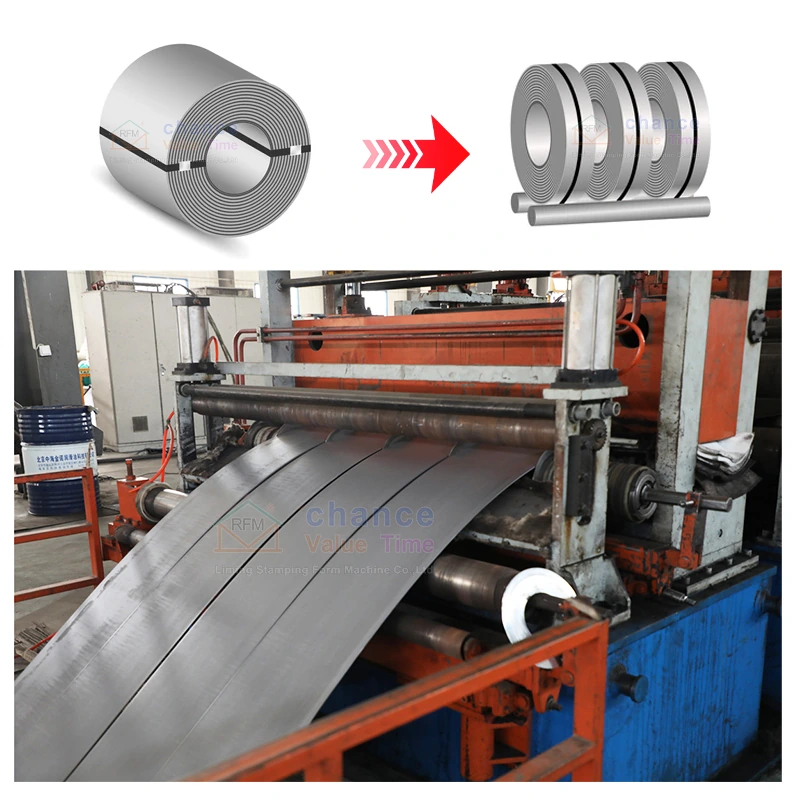
A steel coil slitting line cannot be specified from a target strip width alone. The line has to accept the incoming master coil, cut the material under suitable conditions, separate the strands, and rewind them into coils that can be stored or fed into the next process. If any one of those stages is mismatched, a quotation may look acceptable while the finished line struggles with the real production mix.
For buyers preparing an RFQ, the useful starting point is the material and finished-strip plan. Hebei Liming’s published steel coil slitting machine range illustrates why: its listed models cover different thickness, width, coil-weight, speed, power, and floor-space combinations. Those values are model specific, so the project data must come before the model choice.
Start with the Product Leaving the Line
Define the strip schedule, not just one strip size
List the narrow-coil widths that the factory expects to sell or feed into downstream equipment. Include regular sizes, occasional sizes, and the number of strands required in one pass. A line that only needs to make two wide strips has a different knife arrangement and tension demand from one that regularly produces many narrow strips.
The strip schedule also exposes yield questions. The usable master-coil width has to cover the combined strip widths, edge trim, and any unavoidable balance. Instead of asking for a general “low-scrap” design, provide several real cutting patterns. The machine supplier can then review whether the proposed patterns suit the knife stack and line configuration.
State what happens after recoiling
Finished slit coils may go to a tube mill, roll forming line, stamping press, service center, or customer warehouse. Each route places different demands on coil build, strip shape, surface protection, and handling.
For example, a strip that will feed another continuous line needs stable winding and a clean path into that process. A coil sold as finished stock may need tighter packaging, identification, and surface-protection requirements. The RFQ should describe this next operation rather than treating recoiling as the end of the decision.
Match the Line to the Incoming Coil
Record the full material list
Material name is only the first field. Provide grade or strength range, minimum and maximum thickness, master-coil width, coating or surface condition, and any material that is difficult to cut. Mild steel, galvanized steel, stainless steel, coated coil, and other metals do not place identical loads on the knives or behave the same way during separation and rewinding.
The factory should also identify which combinations occur together. A maximum thickness at a narrow coil width may be feasible on one configuration, while the same thickness across a much wider coil can require a different frame, drive, and arbor arrangement. A single maximum number hides that interaction.
Confirm coil geometry and handling limits
The RFQ should state maximum coil weight, outside diameter, inside diameter, and width. These values affect the uncoiler, coil car, mandrel, loading method, and workshop lifting plan.
Do not base capacity on the average delivery only. The heaviest coil expected from the material supplier is the practical design case. If several suppliers use different inner diameters or packaging methods, note those differences as well. They can affect loading and the accessories needed before production begins.
Describe the Required Strip Quality
Set measurable width and edge requirements
Terms such as “high precision” and “clean edge” are too open for a useful comparison. State the required strip-width tolerance, permitted burr, edge condition, camber or straightness concern, and any inspection method already used by the factory. If the strip is an input for a sensitive downstream process, name that process and explain the defect it cannot accept.
Knife clearance and overlap have to suit the material and thickness. The correct settings are production variables, not universal values. What matters during purchasing is whether the slitting unit, arbors, spacers, and setup method can hold the required result across the approved material range.
Separate surface quality from dimensional quality
A strip can be within width tolerance and still be rejected because the coating is scratched or the coil is wound badly. Include surface-mark limits, protective-film requirements, contact-surface expectations, and handling rules where they matter.
This is especially important for visible coated products and stainless surfaces. The buyer should identify which side is cosmetic and whether the line will process protective film. That information changes how material contact and scrap handling should be discussed.
Review the Complete Steel Coil Slitting Line
Follow the material path from uncoiler to recoiler
A complete line commonly includes coil loading and uncoiling, guiding or leveling, the slitting unit, edge-scrap collection, strand separation, tension control, recoiling, and electrical or hydraulic controls. Hebei Liming’s slitting line product category shows several configurations rather than one universal machine.
Ask the supplier to mark the proposed material path on a layout. This makes it easier to see where coil loading occurs, where loops or tension sections need space, how edge scrap is collected, and how finished coils leave the recoiler. It also reveals whether the building can support the operating and maintenance clearances.
Decide whether leveling belongs in the project
Leveling is not an automatic requirement for every slitting job. Its value depends on incoming coil shape and the condition required by the next process. If strips will feed a roll former or tube line, poor strip shape may create tracking problems later. If the project only rewinds material for another processor, the acceptance criteria may differ.
Describe the incoming shape problems already seen and the flatness expected after slitting. The supplier can then recommend whether a straightener, leveler, or another arrangement belongs in the line.
Give Recoiling and Tension the Same Attention as Cutting
Define the finished coil build
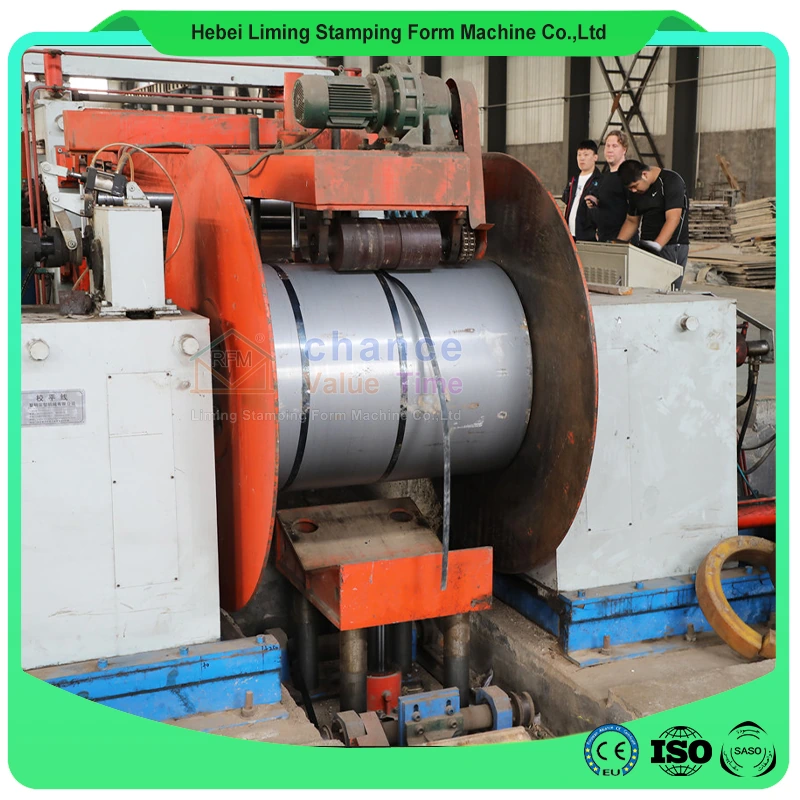
The recoiler must match the incoming coil capacity and the required finished-coil geometry. State the target inside diameter, maximum outside diameter, maximum finished-coil weight, number of strands, and unloading method.
Poorly controlled tension can lead to loose winding, telescoping, damaged edges, or uneven coil faces. The risk increases when many strips with small dimensional or length differences are rewound together. Separator discs, tension devices, and strand management should therefore be discussed against the real strip schedule.
Plan coil removal and identification
Buyers often focus on line speed but leave finished-coil removal vague. The RFQ should explain whether coils will be pushed off onto a receiving device, lifted by crane, moved by coil car, or handled another way. Include the available aisle space and lifting capacity.
Identification also matters when one master coil becomes several customer coils. Decide where labels, batch references, strip widths, and material details will be recorded. A clear plan reduces mix-ups after the machine has completed its cutting job.
Compare Automation by Changeover Work
Automation is most valuable where it removes frequent, repeatable setup work or improves control of a demanding process. Ask how operators set line speed, synchronize sections, store recipes, position guides, manage knife setup, and record faults.
The production mix should guide the decision. A factory running long batches of one strip pattern has different priorities from a service center changing widths several times per shift. In the second case, setup time, knife preparation, recipe storage, and verification may matter more than the headline maximum speed.
The existing Hebei Liming steel slitting process guide is useful for reviewing the basic sequence. The RFQ should go one step further and identify which steps must be faster, easier to repeat, or less dependent on operator judgment.
Prepare the Factory Information Before Quotation
Share the layout and utilities
Provide the available installation length and width, floor condition, crane or loading access, electrical supply, compressed-air availability, and any local restrictions affecting the line. Allow space for operation, knife handling, maintenance, scrap removal, and finished-coil movement. Machine footprint alone is not the same as a workable production area.
Agree on Trial Material and Acceptance Records
Before ordering, agree on the trial coil, cutting pattern, inspection points, and record to be signed. Hebei Liming’s roll forming inspection checklist gives a useful starting principle: use the customer’s actual material and thickness, retain agreed samples, and record acceptance. A slitting project needs its own agreed criteria for strip width, edge condition, surface quality, and coil build.
Ask the supplier to record the trial settings and results, including any adjustments or items still to be corrected. Confirm which manuals, electrical drawings, wear-parts lists, and operator demonstrations are included in the quotation. The roll forming checklist covers these handover topics, but the slitting-line scope should be agreed separately.
Use a short RFQ checklist
Material grades, coatings, and strength range
Minimum and maximum thickness and master-coil width
Coil weight and inside and outside diameters
Target strip widths and typical cutting patterns
Required strip-width tolerance, burr, shape, and surface condition
Number of strands and finished-coil dimensions
Expected batches, changeover frequency, and production schedule
Preferred automation, controls, and production records
Factory layout, utilities, lifting, and unloading method
Required sample test, inspection record, training, and support scope
FAQ
What is the first specification needed for a steel coil slitting line?
Start with the complete material range and target strip schedule. Thickness, strength, master-coil width, strip widths, and number of strands influence the line together.
Can one slitting line process every metal and thickness?
No. Every line has a defined capacity and tooling range. The supplier should confirm each material and thickness combination against the proposed configuration.
Is maximum speed the best way to compare quotations?
Not by itself. Compare acceptable strip quality, setup time, changeover work, tension control, finished-coil handling, and the speed available for the actual material mix.
What should be sent with a slitting line inquiry?
Send the material list, coil dimensions, strip patterns, quality requirements, output plan, factory layout, power supply, and finished-coil handling method.
Discuss the Slitting Project with Hebei Liming
Hebei Liming has 30 years of experience in roll forming and metal-processing equipment. Buyers can review the company’s manufacturing background and contact Hebei Liming with their coil data, strip schedule, quality requirements, and factory layout. That information gives the technical team a sound basis for recommending a model-specific steel coil slitting line configuration and preparing a relevant quotation.