
A factory making long runs of one stud-and-track pair has a different buying decision from a workshop changing sizes throughout the day. Both may ask for the same line speed. That does not make their equipment needs the same.
Choosing a stud and track roll forming machine starts with the profiles that sell, the sizes that run together and the changes between orders. A long list of possible sections is less useful than a clear picture of a normal working day.
Which profiles actually belong together?
Start with the application: interior partitions, ceiling sections or structural framing. Similar-looking channels can belong to different specifications. State the intended use before comparing machines.
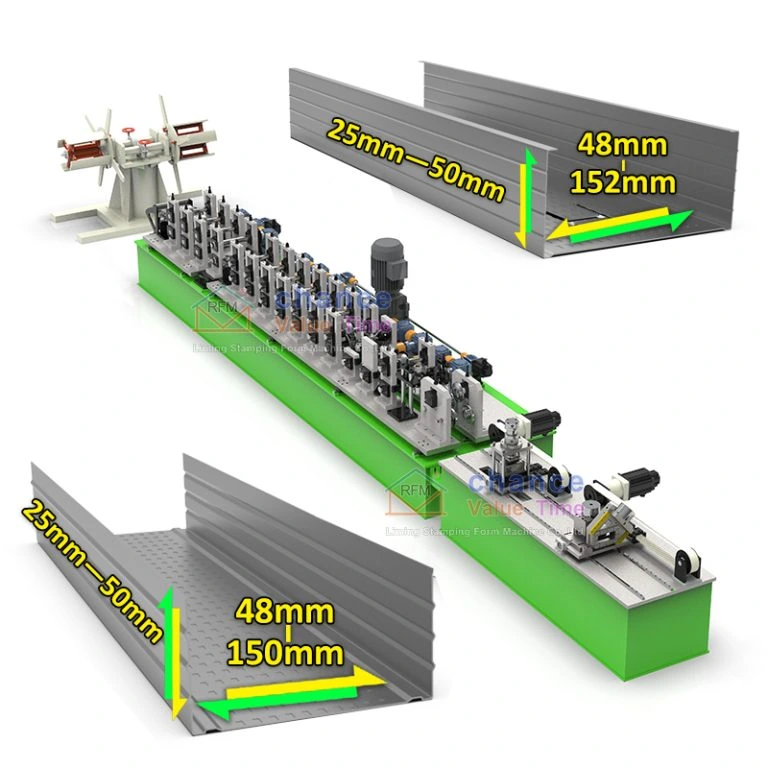
For a stud-and-track pair, place the drawings side by side. Include web and flange dimensions, lips where required, steel grade, thickness and cut lengths. Mark any punching or surface features. If the enquiry also includes CD/UD or CW/UW profiles, identify their drawings and applications separately rather than treating every section as interchangeable.
When discussing C and U profiles with Hebei Liming, separate the sizes needed for initial production from those being considered for later. The proposed tooling and configuration should be checked against that list, not against the profile names alone.
A fit check between matching samples is useful, particularly where the buyer is still confirming how the studs and tracks fit into the framing system. Keep the dimensional checks as well: a pair that fits together is not, by itself, proof that both parts meet their drawings.
Do not reduce the material specification to a gauge number alone. Put the required thickness in a stated unit beside the material grade, and make the measurement basis clear. Where the purchase specification distinguishes base steel thickness from coated thickness, carry that distinction into the enquiry. Otherwise, a familiar label can conceal a different requirement.
A length change is not a profile change
Changing the cut length is one question. Changing web width, flange height or lip geometry is another. Ask which changes use settings, which need mechanical adjustment and which require different tooling on the proposed machine.
There is more to check than the forming rollers. When the width changes, does the cut-off tooling need a different insert? Does the punching setup need to move or change? An adjustable forming section does not settle those questions.
Frequency matters. A change made once a month can be planned differently from one repeated several times each shift. When discussing changeover requirements with Hebei Liming, include a typical order sequence so the discussion reflects the work the operators will actually do.
Take one regular transition as an example: a stud order finishes, then its matching track is needed in another length. List what remains the same and what changes. Does the next product use the same coil material and width? Which tools or settings need attention? This is a more useful question than asking whether the machine can simply “change sizes.”
What happens between the first order and the next?
For a metal stud roll forming machine, compare acceptable output across that order sequence, not just speed during an uninterrupted run. Include punching, cutting, adjustments and collection wherever they affect the schedule.
If a double-line metal stud machine is being considered, identify the product assigned to each line and ask how feeding, controls and finished-part handling are arranged. Two lines should not be read as an automatic promise of twice the output.
This is also the point to discuss how different lengths and profiles will be kept apart after cutting. A production plan is incomplete if the right parts leave the machine but become difficult to identify at collection.
Use a short order list to make the comparison tangible. Give each profile a drawing reference, quantity and cut length, then arrange the jobs in the order they would normally run. A long batch followed by one change tells a different story from several small batches with repeated changes. No invented production scenario is needed; recent orders or a clearly labelled launch forecast will do.
Look at the balance between matching products as well. A fast run of studs does not complete an order if the tracks are still waiting to be made. Discuss whether the proposed arrangement suits the required mix, including how operators will move between jobs. Keep the comparison tied to completed orders rather than the largest speed figure in the offer.
Put holes and cut ends on the specification
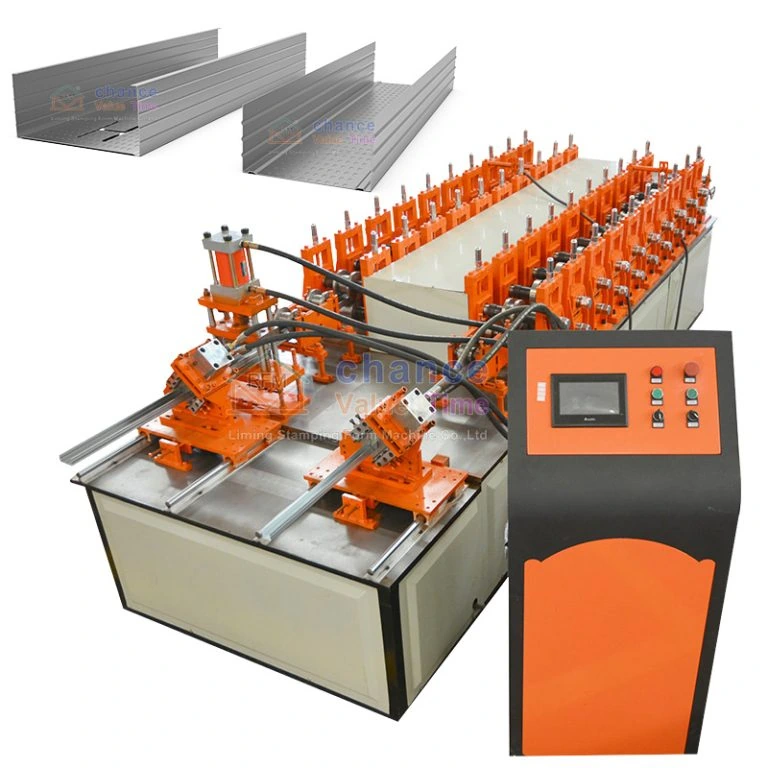
Show which profiles need holes, their dimensions and their positions relative to the ends. If only some orders need punching, say so. That distinction belongs in the quotation.
Agree the checks for burrs, distortion and end condition using the actual product requirements. Trial material should represent the grade, thickness and coating intended for production. A successful run on one material does not confirm every other combination on the enquiry list.
If a hole pattern is repeated along the profile, show what should happen near the cut ends and on shorter pieces. Include any surface embossing or other specified feature on the drawing too. These details should not be left to a general product photograph. The drawing needs to distinguish a required feature from one that merely appears on an example section.
End the trial on a different order
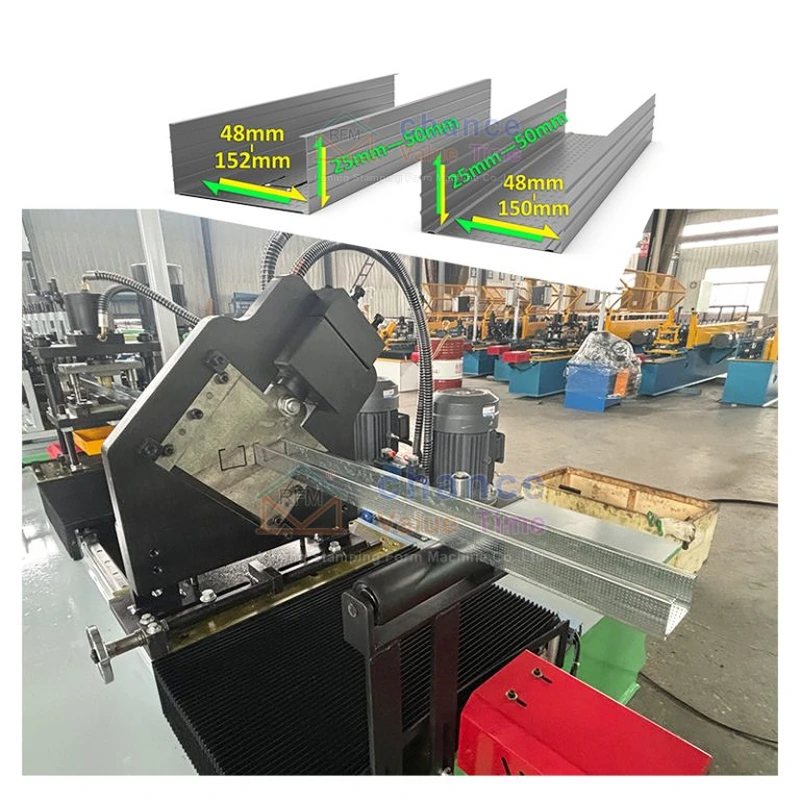
After checking a stable run, carry out a representative order change. Record the adjustments, tooling work, trial material and operator tasks needed before the first acceptable part of the next order is produced. Check that part against its own drawing.
This gives the buyer something more useful than an isolated changeover claim: a record of what was changed and what had to be checked before production could continue.
Also identify who carried out the change and which steps required manual intervention. Record any parts put aside during setup separately from the accepted batch. Those observations make a later discussion about training, tooling or operating routines much more specific. They do not establish a universal changeover time; they describe the transition that was actually demonstrated.
Retain the settings record for both orders with the sample labels. If the trial needs another adjustment, note it against the affected profile rather than treating the whole run as one undifferentiated result.
For an initial quotation, send Hebei Liming the matching drawings, normal material specifications and a typical sequence of orders. Keep launch requirements distinct from future possibilities. The aim is a line suited to the profile mix the business expects to make, not the longest possible list of profiles.