
Two floor deck machine quotations can look similar and cover quite different production jobs. One may include a basic receiving table; another may include automatic stacking. A shared deck depth tells only part of the story. Check the cover width and embossing drawing too: a price comparison is of little help if the quotations describe different sheets.
A useful floor deck roll forming machine inquiry starts with the sheet the factory plans to sell. Bring together the profile drawing, material specification, common lengths and required operations. Then use that same information throughout the quotation discussion with Hebei Liming.
Start with one current deck drawing
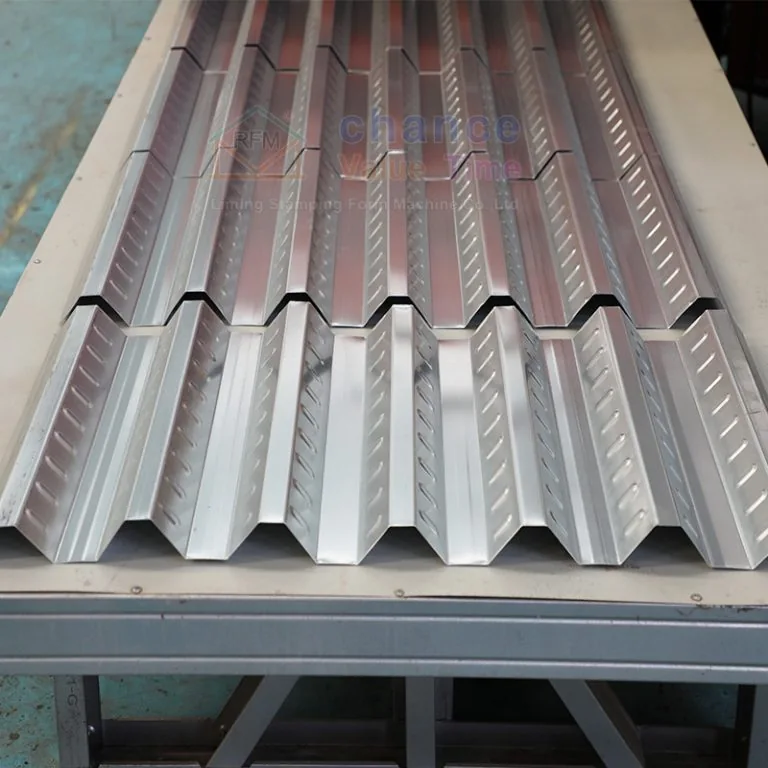
The starting document is a dimensioned cross-section. Put the drawing number and revision where they are easy to find, then check the details around the section: rib depth and pitch, flanges, side edges and effective cover width. Embossments need to be shown as well. An email attachment called “latest drawing” is less useful once several revisions have passed between the buyer and the factory.
There are two widths to keep straight here. Coil width describes the incoming strip. Cover width describes how much width the installed sheets cover, allowing for the way their edges meet. Identify both where they are known. If the developed strip width still needs calculation, mark it as open instead of copying a value from a similar profile.
A photograph can help explain the sheet, but dimensions make the inquiry usable. For a replacement line, an existing sample can also help identify details that a small drawing leaves unclear. Keep the sample and drawing tied to the same product revision.
State whether the sheet is intended for a composite floor system or another deck application. The project designer should approve the structural profile and its use. That gives the equipment discussion a defined starting point without asking the machine quotation to settle span or load questions.
Give the material range for that profile
Check what sits behind the description “galvanized steel” on the purchase order. There should be a grade or material standard, a thickness and a coating designation. Is the stated thickness for the base metal, or does it include the coating? Keep the same measurement basis in the equipment inquiry and the coil order, and add the available coil dimensions.
List the combinations the factory actually expects to run. For example, if the thin and thick sheets use different grades, give each its own entry. A thickness range by itself leaves the grade associated with each end of that range unclear.
This also makes the trial discussion more useful. The material used in the trial matters. Hebei Liming’s inspection guidance favors the steel the customer intends to run, with the appropriate grade and thickness, over a substantially different substitute. Arrange that coil early. For a line expected to handle several combinations, agree which will be demonstrated and keep the coil details with each set of trial results.
Put the included equipment beside the price
Hebei Liming’s floor deck roll forming equipment provides a starting point for the production discussion. The quotation should then identify the equipment included for the actual drawing and workshop.
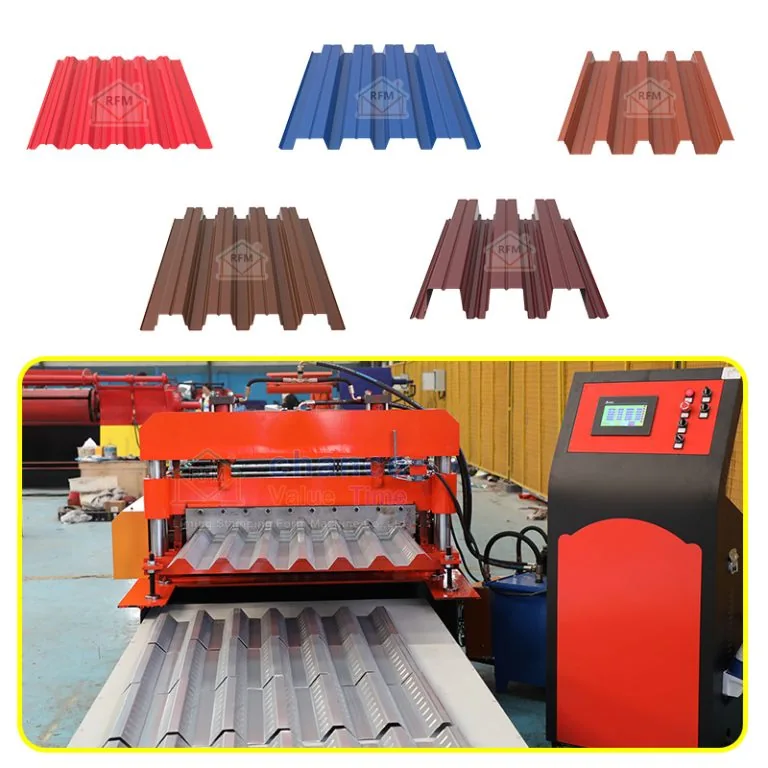
Check the scope from coil loading through finished-sheet collection:
– Coil support, loading arrangements and feeding.
– Forming equipment for the specified section.
– Embossing or punching, where the product requires it.
– Cutting to the required lengths.
– Receiving tables, stacking and any further handling requested.
Mark each item as included, optional or outside the quoted scope. This simple distinction matters when one proposal assumes manual collection and another includes additional equipment.
For embossing, attach the required pattern and its location on the deck. For holes, show their position and any repeating layout. These features belong in the product specification before tooling is discussed; their structural suitability remains part of the approved deck design.
Changes between profiles need the same attention. Put every required section in the inquiry to Hebei Liming, including profiles planned for later. A small difference at a rib or side edge is still a difference to discuss. The proposal needs to explain which profiles the selected setup covers and what a change to another profile involves.
Describe a normal production day
A speed figure is easier to assess when the operating conditions are stated. Ask whether it describes forming speed or output with cutting and other required operations included. Give common sheet lengths, typical batch sizes and the expected order mix so the discussion reflects daily work.
A long run of one sheet length is a different working day from a sequence of short orders. In the second case, the crew has more order changes to manage and more separate batches to collect. Describe which pattern is closer to the planned work. Otherwise, a discussion about maximum forming speed may say very little about the output the factory needs.
Include a workshop sketch showing material entry, discharge direction and usable space. Add the coil-handling method and power supply. Leave room in the discussion for finished sheets and access around the line; the machine footprint alone does not describe the whole production area.
Agree on the trial before arranging acceptance
Use the released drawing and agreed material as the trial reference. Before the trial date, go through the measurement points and acceptance limits with the people who will review the sheets. Put the agreed method in writing. It is much easier to resolve a question about where to measure a feature at this stage than after the trial has finished.
The review can cover the section dimensions, cover width, cut length and specified embossing or hole positions. Follow the sheet all the way to the receiving equipment. Look at its surface and shape there, as well as at the cut end. Marks or handling damage are part of the review even when the dimensions measured earlier were acceptable.
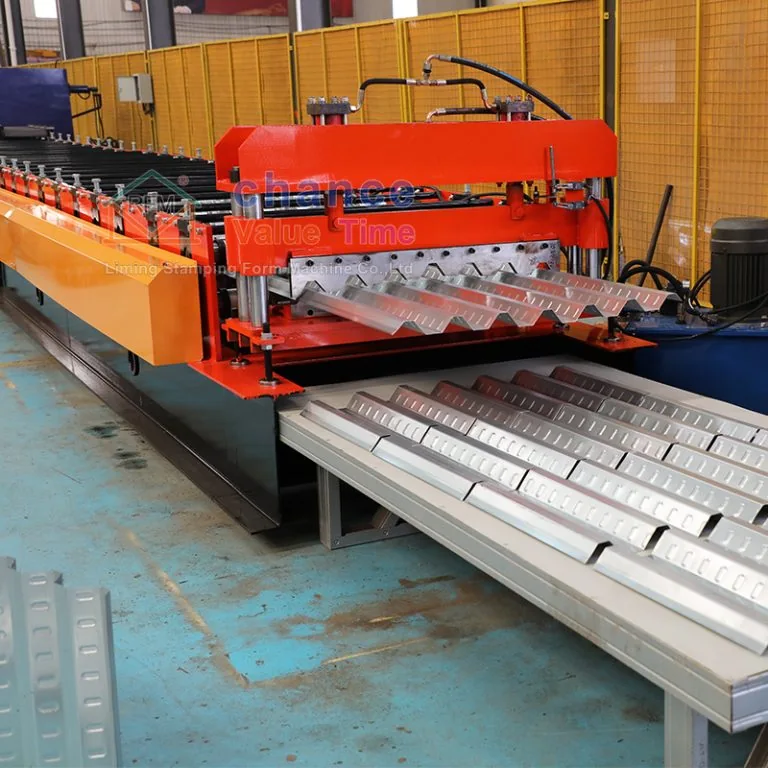
Material travel, the cut and the way the finished piece lands are all covered in Hebei Liming’s inspection guidance. It also calls for both sides to confirm and retain samples. Keep those samples identifiable, with the material and drawing revision recorded, so there is a clear reference if a question comes up later.
Agree how many sheets will be inspected for this order. The general checklist helps organize the trial; the deck drawing and agreed acceptance requirements supply the limits used to judge the result.
Send a quotation brief that can stay with the order
Begin with the files already available: the current profile drawing, coil specification and normal sheet lengths. Add the operations required from the line. Output targets and a workshop sketch can follow if they are still being worked out; note that they remain open so a preliminary quotation does not become the final specification by accident.
A short revision note is useful whenever something changes. It can say that the coating is still awaiting approval, or identify a second profile as a future requirement. Keep that note with the quotation instead of leaving it buried in an older email.
To discuss a floor deck production line with Hebei Liming, send those files together. The discussion can then stay on the practical questions: what is included, which requirements are still open and what will be checked before acceptance.