
The size label on a solar channel is a starting point. Look more closely at the drawing and the questions begin: which face has the slots, how far is the first hole from the cut end, and are the lips identical on both parts? These are useful questions to settle before ordering a photovoltaic bracket roll forming machine.
Start with the actual parts and the order changes the factory expects to make. The useful question is how the proposed line will handle that combination of profiles, hole patterns and materials during production.
Define the finished channel beyond its size label
For C/U-shaped support channels, the discussion with Hebei Liming can begin with its photovoltaic bracket roll forming equipment and the drawings for the proposed parts. Custom profiles are considered from those drawings. Include a separate section for each part, with a note identifying the ones required on this line.
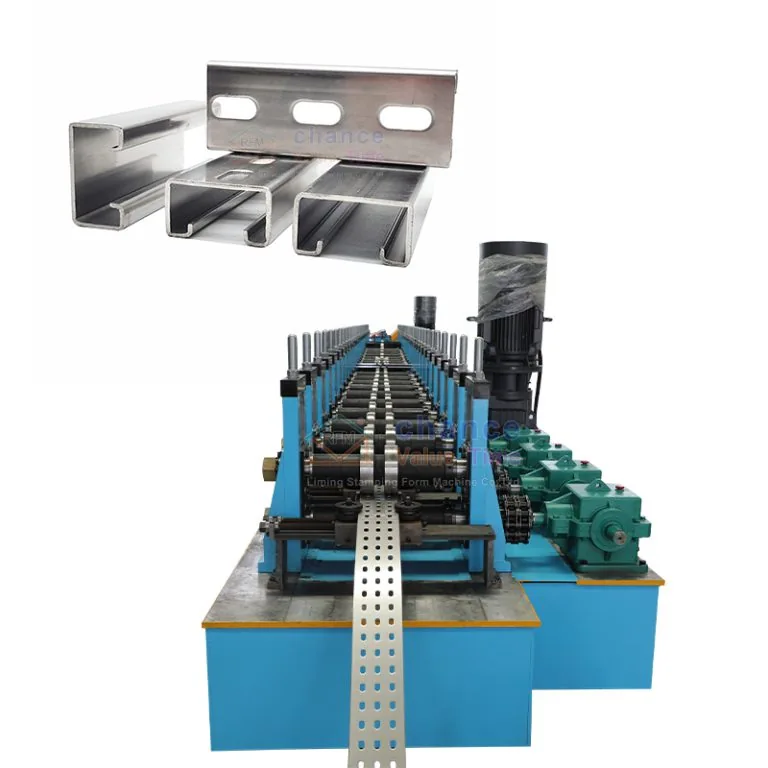
Show the web, flanges, lips and any returns or local features. Add the thickness and the tolerances shown on the approved product drawing. Separate part numbers help when two channels share a nominal size but differ elsewhere. Without them, a request to change “the channel drawing” can be ambiguous once more than one version is in circulation.
A short product list helps here. Mark what the factory plans to produce first. Keep possible future sections on the list too, but label them as future requirements. That leaves room to discuss expansion without adding unconfirmed products to the present order.
Make the hole drawing as clear as the section drawing
A section drawing can be complete and still leave the punching job undefined. The hole layout belongs alongside it. Together, the two drawings show the shape to be formed and the features needed for the connections.
For each hole or slot, show its size, orientation and position from a defined reference. Include the spacing between features and the distance from the cut end to the first feature. Identify which face of the channel carries the pattern.
Take a repeated slot pattern as an example. If the part becomes longer, does the first slot stay the same distance from the end? Does the repeated pattern continue, or must the last slot also finish at a specified distance from the opposite end? Put that requirement on the drawing. “Same holes, longer channel” leaves room for different interpretations.
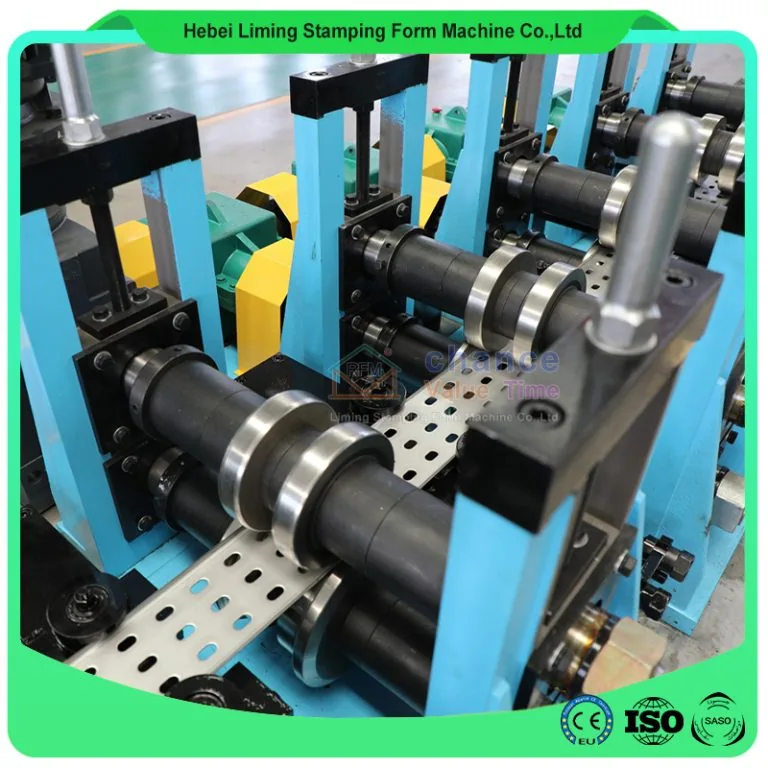
Hebei Liming’s described PV production sequence includes feeding and punching before forming, followed by cutting and receiving. Confirm the tooling and production sequence against the actual part drawings. Where a feature needs separate treatment, its place in the process should be clear in the proposal.
The mounting-system designer remains responsible for approving the section and connection details for the project. The equipment discussion can then concentrate on producing that approved part.
Separate the changes that happen between orders
“Adjustable” is only useful when the adjustment is defined. A different finished length, a new hole pattern and a different channel cross-section each raise different equipment questions.
| Planned order change | Point to confirm with Hebei Liming |
| Same profile and holes, different length | How the length setting and hole pattern work together |
| Same profile, different hole spacing | Available control settings and any punching setup required |
| Different hole or slot shape | Whether punching tooling must change |
| Different web, flange or lip dimensions | Supported size range and the forming setup required |
| Different material grade or thickness | Suitable settings and any additional trial needed |
Use actual part pairs when discussing changeover. Choose one part from the production list and the part that follows it. Walk through that change with Hebei Liming: what does the operator stop, what is reset or replaced, and what is checked on the first piece? A written sequence makes the meaning of “changeover” much easier to discuss.
Any time allowance for that change should refer to the steps just described. A figure that leaves out tooling work or the first-piece check would answer a different question. If production will mostly involve one channel, say so. If several sections alternate through the week, the changeover sequence deserves more attention in the quotation.
Match each part to its material and length
Record the steel grade or material standard, thickness and coating for each profile. Add the coil width if it has been settled. If several materials are planned, keep them next to their part numbers. A maximum thickness on its own does not tell Hebei Liming which grade will be used for which section.
What should the coating and visible surface look like after forming? Refer to the project specification and identify anything that needs checking after collection. If an appearance requirement is still open, say so in the inquiry; it should not have to be guessed from a product photograph.
List the common finished lengths and quantities per order. Then identify how parts should leave the line: on receiving tables, in stacks or through another agreed handling arrangement. Hebei Liming describes material receiving and optional automatic packaging in its PV line information; confirm which equipment is included in the selected proposal.
For output discussions, use the required hole pattern and finished length. Ask what is included in any quoted speed or production figure, particularly where punching, cutting or order changes affect the cycle.
Check the part after the line has made it
A useful trial follows the material through feeding, punching, forming, cutting and discharge. Hebei Liming’s published inspection guidance calls for trial material matching the customer’s production material and thickness, checks against drawing tolerances, and a review of surface condition. The trial plan should also cover how finished parts leave the line.
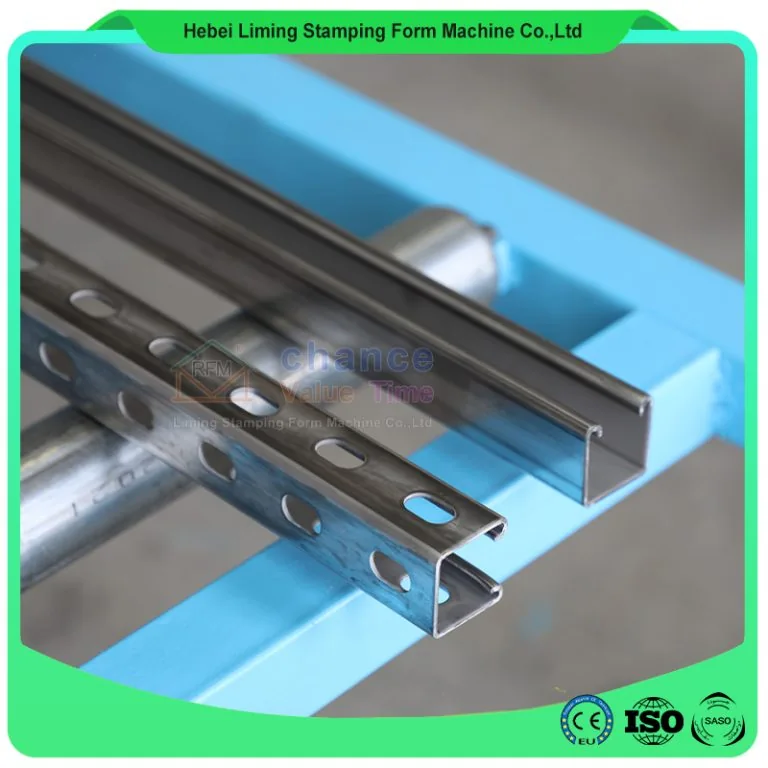
For PV channels, agree on checks for section dimensions, hole position, cut length and visible surface condition. Where mating hardware is available and suitable for the review, an assembly check can supplement the dimensional measurements. It does not replace the project’s structural assessment.
If changeover is part of the purchase decision, include an agreed part change in the trial plan. Review the setup steps and the first accepted pieces after the change. That makes the test relevant to the factory’s planned orders.
Keep the accepted samples with their drawing revision and material record. Decide the inspection quantity and acceptance limits with the order, before the trial. The checklist organizes what to look at, but the approved part requirements still determine whether the result is acceptable.
Prepare the first production discussion
Start with the section and hole-layout drawings. Alongside them, a short part list can identify the material, normal lengths and likely order changes. Mark the items awaiting approval and keep them visible through the quotation revisions.
Those files give Hebei Liming a useful starting point for discussing a photovoltaic bracket production line. Keep them with the proposal as it develops. Before placing the order, check that the agreed part numbers, punching work and changeover arrangements appear in the quotation, together with the equipment used to collect the finished channels.